
Ramchaura Mandir, Hajipur
The Ramchaura Mandir is a significant Hindu temple located in Hajipur, Bihar, India, dedicated to Lord Rama. According to local folklore, it marks a site visited by Rama, with his footprints preserved and worshipped as the central icon. The temple is renowned for its annual Rama Navami celebrations and operates under a traditional Sangat and monastic math system.
Key Facts
- ›Dedicated to the Hindu deity Rama.
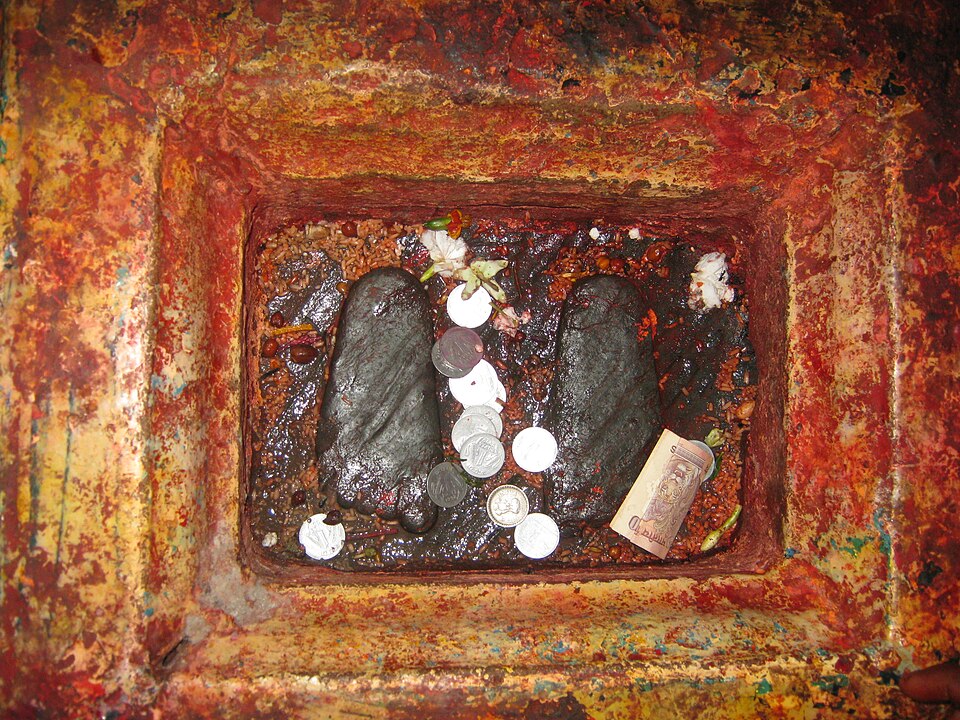
- ›Features sacred footprints of Rama, believed to have been left during his journey to Janakpur.
- ›Celebrates Rama Navami annually, marking the birth anniversary of Lord Rama.
- ›Governed by a Guru-Chela succession system spanning over 20 generations.
- ›Archaeological objects excavated from the site are housed at the Patna Museum.
Rama
- Religious Pilgrimage Site
- Site of Rama's Footprints
- Location of Rama's First Haircut Ceremony According To Legend
- Center For Rama Navami Celebrations
- Operates Under A Traditional Sangat and Monastic Math System
Rama Navami
Footprints of Rama
About Ramchaura Mandir, Hajipur
The Ramchaura Mandir is a significant Hindu temple located in the city of Hajipur, in the Indian state of Bihar. Dedicated to the deity Rama, the temple is situated near Helabazar at a place called Rambhadra. Its importance is deeply rooted in local folklore and religious tradition.
Religious Significance and Iconography
According to local legends, the god Rama is believed to have visited this site on his journey to Janakpur. His presence is commemorated by his footprints, which are preserved and worshipped as the central icon of the temple. Furthermore, tradition holds that Rama had his first haircut ceremony, known as Mundan, performed here. The footprint is noted to be at an altitude of 45 meters from the ground.
Administration and Tradition
The Ramchaura Mandir operates under a traditional Sangat and monastic math system, specifically the Bari Sangat. This institution has maintained spiritual custody over the holy site and Lord Rama's footprints for centuries. The administration is guided by a long-standing, lineage-based Guru-Chela (teacher-disciple) succession that has continued for over 20 generations. The residing Mahant oversees the math's traditional rights, property management, and daily religious rituals. Notable spiritual heads in the recent line of succession include Mahant Raghubar Das, Mahant Narayan Das, and the current chief custodian, Mahant Ramsumiran Das. Under their hereditary administration, the math has been instrumental in preserving temple properties, maintaining religious traditions, and managing significant regional cultural events.
Festivals and Local Culture
The chief temple festival is Rama Navami, which celebrates the birth anniversary of Lord Rama. This festival is observed annually on the ninth day of the Hindu month of Chaitra (March–April). A popular fair is also organized on the eve of Rama Navami, and Bael fruit is traditionally taken as prasad during this time. The term 'Chaura' in the temple's name is a Bhojpuri word meaning 'orchid', reflecting the local linguistic heritage.
Archaeological Context
Archaeological objects excavated from the Ramchaura site have been collected and are kept at the Patna Museum, underscoring the historical depth and material culture associated with the temple.
Source: Wikipedia ↗
Frequently Asked Questions
What is the significance of the footprints at Ramchaura Mandir?
Local legend states that Lord Rama visited this place and left his footprints, which are now worshipped as the central icon of the temple. It is also believed that Rama had his first haircut ceremony (mundan) done here.
When is Rama Navami celebrated at the temple?
Rama Navami, the birth anniversary of Lord Rama, is the chief festival celebrated at the Ramchaura Mandir. It is observed annually on the ninth day of the Hindu month of Chaitra, which typically falls in March or April.
What is the administrative system of Ramchaura Mandir?
The temple operates under a traditional Sangat and monastic math system known as Bari Sangat. This institution has spiritual custody over the site and is governed by a lineage-based Guru-Chela succession that has continued for over 20 generations.
What is the meaning of 'Chaura' in Ramchaura Mandir?
The word 'Chaura' is derived from the Bhojpuri language and means 'orchid'. The temple's name likely reflects a local linguistic heritage.
Are there any historical artifacts associated with Ramchaura Mandir?
Yes, archaeological objects excavated from the Ramchaura site have been preserved and are kept at the Patna Museum. These findings contribute to the historical and cultural significance of the temple.
Related Temples (Hindu)

Taraknath Temple
The Taraknath Temple, located in Tarakeswar, West Bengal, India, is a significant Hindu pilgrimage site dedicated to Lord Shiva, worshiped here as Tarakanatha. Constructed in 1729, it features a distinct Bengal architectural style with an 'atchala' structure and an adjacent 'natmandir'. The temple is renowned for its belief that a dip in the nearby Dudhpukur tank fulfills prayers and is considered one of the 64 Jyotirlingas.

Tanot Mata Temple
The Tanot Mata Temple is a significant Hindu shrine located in the Jaisalmer district of Rajasthan, India, near the Pakistan border. Revered as a form of Goddess Hinglaj Mata, the temple is famously associated with the Indian victories in the Indo-Pakistani Wars of 1965 and 1971, with local folklore attributing the successful outcomes to divine intervention. The Border Security Force of India now manages the temple complex, which also includes a victory tower and a war museum.
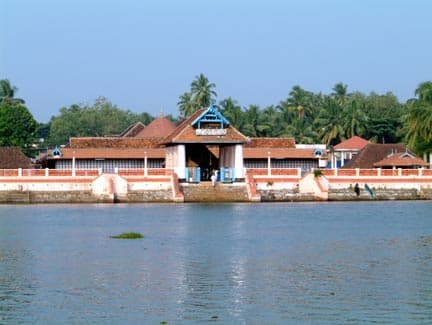
Thriprayar Temple
The Thriprayar Temple, also known as the Shree Ramaswami Temple, is a significant Hindu temple located in Triprayar, Thrissur district, Kerala, India. It is dedicated to Lord Rama, the seventh incarnation of Vishnu, who is depicted with four arms holding a conch, discus, bow, and garland. The temple's origin story involves the idol being worshipped by Krishna in Dwarka, later immersed in the sea, and eventually found by fishermen.