
Ramappa Temple
The Ramappa Temple, also known as Rudreshwara Temple, is a 13th-century Hindu temple dedicated to Shiva, located in Telangana, India. Renowned for its Kakatiya-style architecture and intricate sculptures, it was designated a UNESCO World Heritage Site in 2021. The temple is celebrated for its unique construction techniques and artistic achievements, including its lightweight bricks and detailed carvings of dancers and mythical creatures.
Key Facts
- ›Dedicated to Lord Shiva, the temple was constructed between 1212 and 1234 CE.
- ›It was built by Recherla Rudra, a general under Kakatiya ruler Ganapati Deva.
- ›The temple's architect, Ramappa, is the namesake of the complex.
- ›It features a star-shaped base and a five-storied vimana in the Vesara architectural style.
- ›The temple complex includes subsidiary shrines like Kateswara and Kameshwara temples.
- ›It is constructed using sandstones, granite, dolerite, and innovative lightweight porous bricks.

Shiva
- Unesco World Heritage Site
- Masterpiece of Kakatiya Art and Architecture
- Example of Innovative Construction Techniques
- Rich Repository of Dance Traditions Depicted In Sculptures
Kakatiya
Sandstone, Granite, Dolerite, Lightweight Porous Bricks, Iron Dowels
Recherla Rudra, Ganapati Deva
- Bracket Figures of Gaja-Vyala
- Madanikas
- Nagini
- Mardala
- Rati
- Gayani
- Puranic Narratives On Pillars
- Ceiling Depictions From Ramayana, Mahabharata, and Bhagavata Purana
Ramappa Lake
About Ramappa Temple
The Ramappa Temple, also recognized as the Rudreshwara Temple, stands as a significant example of Kakatiya architectural and artistic achievements in Palampet village, Telangana, India. Dedicated to the Hindu deity Shiva, this 13th-century temple complex was constructed between 1212 and 1234 CE under the patronage of the Kakatiya ruler Ganapati Deva, with its construction overseen by his general Recherla Rudra. The temple's design and execution are attributed to the master sculptor Ramappa, after whom the complex is famously named, making it one of the few temples in India to be named after its craftsman.
Architectural and Structural Marvels
The temple is built on a star-shaped base (upapitha) set on a raised platform, facing east towards the rising sun. Its principal structure features a five-storied vimana in the Vesara architectural style, a fusion of Dravidian and Nagara styles. The construction materials are noteworthy, employing locally sourced sandstones, granite, and dolerite. Particularly innovative was the use of lightweight, porous bricks for the vimana's superstructure, which were designed to float in water, thereby reducing the structural load and enhancing earthquake resistance. The temple complex is enclosed by a stone perimeter wall and includes subsidiary shrines such as the Kateswara Temple and Kameshwara Temple, alongside ancillary structures like the Nandi Mandapa and a former kitchen.
Exquisite Sculptures and Artistic Heritage
Ramappa Temple is celebrated for its exceptionally detailed sculptures, primarily carved from dolerite. These carvings, which have maintained a mirror-like polish for over eight centuries, depict mythical creatures, celestial dancers, and musicians with remarkable artistry. Prominent among these are the bracket figures of Gaja-Vyala and the Madanikas, portrayed in various dance poses and roles. The interior pillars of the Natya Mandapa (dance hall) feature intricate relief work and depictions of Puranic narratives, while the ceiling is adorned with scenes from major Hindu epics. The temple offers a rich visual record of ancient Indian dance traditions, with approximately 600 dance-related sculptures.
Historical Recognition and Conservation
In July 2021, the Ramappa Temple was inscribed as a UNESCO World Heritage Site, acknowledging its outstanding universal value and cultural significance. Formal conservation efforts began in the early 20th century and have continued under various archaeological departments. The temple and its surroundings are designated as a Conservation Area to preserve its historical and natural setting. Its unique engineering and artistic qualities led the renowned traveler Marco Polo to reportedly describe it as "the brightest star in the galaxy of temples."
Source: Wikipedia ↗
Frequently Asked Questions
What is the architectural style of Ramappa Temple?
The Ramappa Temple primarily features the Vesara architectural style, particularly evident in its five-storied vimana. The overall design, however, is characteristic of the Kakatiya style, which integrates elements and influences from various regional architectural traditions.
Who built the Ramappa Temple and when was it constructed?
The temple was constructed by Recherla Rudra, a general of the Kakatiya ruler Ganapati Deva. Construction took place between 1212 and 1234 CE, with an inscription indicating completion in 1213 CE.
What makes the construction materials of Ramappa Temple unique?
Ramappa Temple is notable for its use of lightweight, porous bricks made from kaolinitic clay, resinous gum, jute fiber, and rice husks. These bricks, when fired, became less dense than water, reducing the load on the stone roof, especially for the vimana.
What are some of the famous sculptures found in Ramappa Temple?
The temple is famed for its intricate dolerite sculptures, including bracket figures of Gaja-Vyala (a mythical creature) and Madanikas (female dancers). The Natya Mandapa's pillars display elaborate relief work, and the ceiling depicts scenes from epics and Puranas.
Why is Ramappa Temple significant?
Its significance lies in its exceptional Kakatiya-style architecture, masterful sculptures, and innovative engineering, particularly the use of lightweight bricks for earthquake resistance. It was declared a UNESCO World Heritage Site in 2021, recognizing its outstanding universal value.
Is Ramappa Temple an active place of worship?
Yes, Ramappa Temple is an active Hindu temple dedicated to Lord Shiva and continues to be a site of worship.
Related Temples (Hindu)

Lakshmi Narasimha Temple, Bhadravati
The Lakshmi Narasimha Temple, located in Bhadravati, Karnataka, is a 13th-century Hindu temple constructed by the Hoysala ruler Vira Someshwara. Dedicated to Vishnu, it is distinguished by its Vesara architectural style and features three sanctums, with extensive artwork depicting deities and legends from various Hindu traditions, including Vaishnavism, Shaivism, and Shaktism.
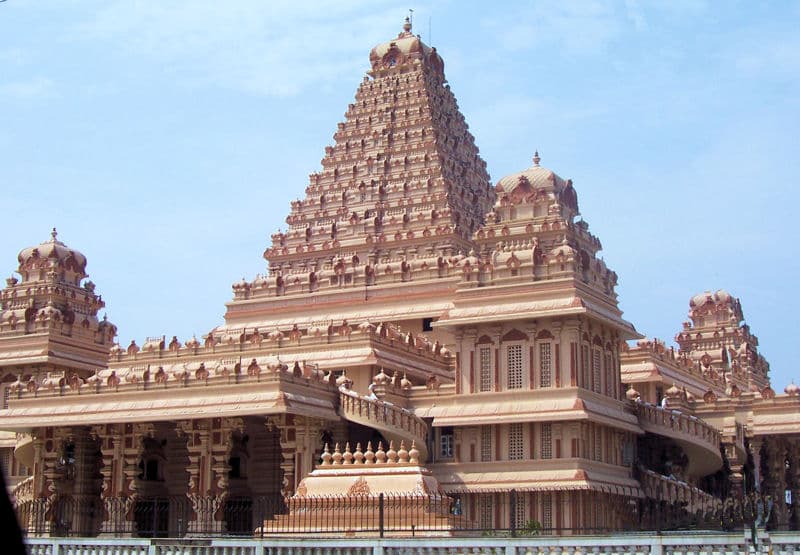
Chhatarpur Temple
Shri Aadya Katyayani Shakti Peeth, commonly known as Chhatarpur Temple, is a prominent Hindu temple located on the southwestern outskirts of New Delhi. Dedicated to Goddess Katyayani, a form of Durga, the temple complex is spread over 28 hectares and is recognized as the second-largest temple in Delhi. It is noted for its marble construction, intricate jaali work, and a blend of North and South Indian architectural styles.

Konark Sun Temple
The Konark Sun Temple, a 13th-century Hindu temple in Odisha, India, is dedicated to the Sun god Surya. Designed as a colossal chariot with immense stone wheels and horses, it represents the zenith of Kalingan architecture and artistic achievement. Though much of the temple now lies in ruins, its surviving structures are celebrated for their intricate carvings, depicting religious themes, daily life, and erotic scenes.