
Lakshmi Narasimha Temple, Bhadravati
The Lakshmi Narasimha Temple, located in Bhadravati, Karnataka, is a 13th-century Hindu temple constructed by the Hoysala ruler Vira Someshwara. Dedicated to Vishnu, it is distinguished by its Vesara architectural style and features three sanctums, with extensive artwork depicting deities and legends from various Hindu traditions, including Vaishnavism, Shaivism, and Shaktism.
Key Facts
- ›The temple is dedicated to Vishnu and features three sanctums dedicated to Venogopala, Lakshminarasimha, and Vishnu-Puroshottama.
- ›It was built in the 13th century by the Hoysala ruler Vira Someshwara.
- ›The temple is a prime example of Vesara architecture, known for its stellate (star-shaped) outer walls and intricate decorative reliefs.
- ›Artwork within the temple complex illustrates legends and deities from Vaishnavism, Shaivism, Shaktism, and Vedic traditions.
- ›The monument is protected by the Archaeological Survey of India, Karnataka state division.
- ›The temple originally had different shikaras, which have since been restored with a conical structure.

Vishnu, Venogopala, Lakshminarasimha, Vishnu-Puroshottama
- Architectural Example of the Hoysala Period
- Illustrates Vesara Architectural Style
- Features Diverse Iconography From Multiple Hindu Traditions
Hoysala
Soapstone
Vira Someshwara
Ganesha, Chandika, Bhairava, Harihara, Dakshinamurti, Nataraja With Khatvanga, Dancing Durga, Durga Mahisasuramardini, Rati and Kamadeva, Saraswati, Brahma, Surya Panels, Surya Image Signed By Shilpin Maba
Bhadra River
About Lakshmi Narasimha Temple, Bhadravati
The Lakshmi Narasimha Temple, situated in Bhadravati, Karnataka, is a significant 13th-century Hindu temple constructed during the reign of the Hoysala ruler Vira Someshwara. Dedicated to Lord Vishnu, the temple is renowned for its distinctive Vesara architectural style, a complex amalgamation of Dravidian and Nagara styles. It features a trikuta arrangement, meaning it has three sanctums, each consecrated to different forms of Vishnu: Venogopala, Lakshminarasimha, and Vishnu-Puroshottama.
Location and Context
Bhadravati, a historic city in west-central Karnataka, is now recognized as a steel-producing center. The temple is strategically located to the north of the town, on the eastern bank of the Bhadra River, approximately 20 kilometers southeast of Shimoga.
Architectural Marvel
The temple's architecture is a testament to the sophistication of the Hoysala period. Built from soapstone, it rests on a raised platform known as a jagati, which allows for circumambulation. The outer walls are characterized by a stellate, or star-shaped, plan, featuring numerous recesses and projections that are elaborately decorated with relief sculptures. Art historians like Adam Hardy and Gerard Foekema have highlighted the temple's exceptional stellate structures and its two-tiered decorative scheme, which includes miniature shrines and a panel of deities.
Artistic Depictions
The inner walls of the shrine are plain, but the outer walls are a canvas of intricate artwork. These reliefs showcase not only Vaishnava legends and deities but also significant imagery from Shaivism, Shaktism, and Vedic traditions. Notable depictions include Ganesha, Dakshinamurti, Bhairava, Sarasvati, Brahma, Surya, and the unique representation of Harihara, a deity embodying half Shiva and half Vishnu. The temple's original shikaras were damaged and have since been replaced with a conical structure.
Protection and Legacy
The Lakshmi Narasimha Temple is a protected monument under the Archaeological Survey of India, Karnataka state division. Its construction, particularly the lathe-turned pillars and the overall design, reflects the architectural idiom prevalent during the 11th-13th century Chalukya-Hoysala period.
Source: Wikipedia ↗
Frequently Asked Questions
Where is the Lakshmi Narasimha Temple located?
The Lakshmi Narasimha Temple is situated in Bhadravati, in the Shimoga District of Karnataka state, India. It is located to the north of the town and on the east bank of the Bhadra river.
What is the architectural style of the Lakshmi Narasimha Temple?
The temple is a notable example of Vesara architecture, characterized by its complex trikuta (three-sanctum) design, square plan, and stellate outer walls. It stands on a jagati, which serves as a circumambulatory path.
Who commissioned the construction of the Lakshmi Narasimha Temple?
The temple was built by Vira Someshwara, a ruler of the Hoysala dynasty. It dates back to the 13th century.
What kind of artwork can be found in the Lakshmi Narasimha Temple?
The temple's walls are adorned with extensive artwork, including reliefs of Vaishnava legends and deities, as well as significant depictions from Shaivism, Shaktism, and Vedic traditions. Notable figures include Ganesha, Dakshinamurti, Bhairava, Sarasvati, Brahma, Surya, and Harihara.
What is the current condition of the temple's original shikaras?
The original shikaras (superstructures) of the temple were ruined over time. They have since been restored and now feature a conical structure.
Related Temples (Hindu)

Ramappa Temple
The Ramappa Temple, also known as Rudreshwara Temple, is a 13th-century Hindu temple dedicated to Shiva, located in Telangana, India. Renowned for its Kakatiya-style architecture and intricate sculptures, it was designated a UNESCO World Heritage Site in 2021. The temple is celebrated for its unique construction techniques and artistic achievements, including its lightweight bricks and detailed carvings of dancers and mythical creatures.
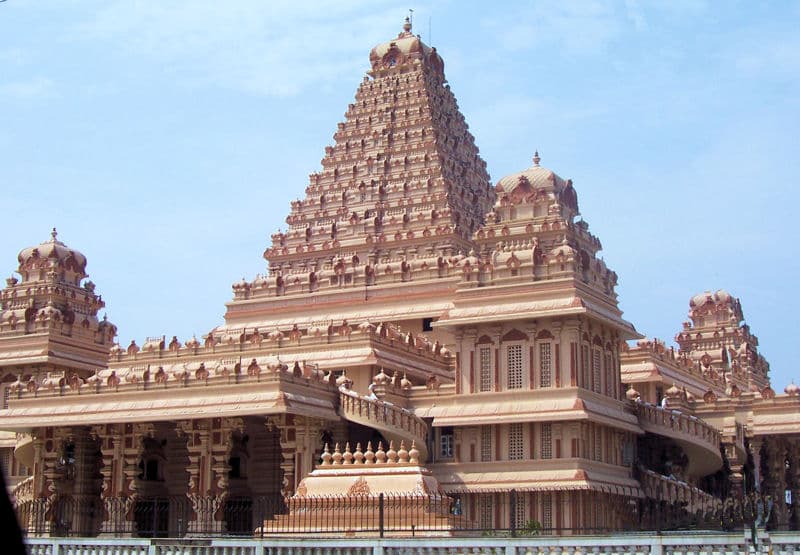
Chhatarpur Temple
Shri Aadya Katyayani Shakti Peeth, commonly known as Chhatarpur Temple, is a prominent Hindu temple located on the southwestern outskirts of New Delhi. Dedicated to Goddess Katyayani, a form of Durga, the temple complex is spread over 28 hectares and is recognized as the second-largest temple in Delhi. It is noted for its marble construction, intricate jaali work, and a blend of North and South Indian architectural styles.

Kapila Theertham
Kapila Theertham is a Shaivite temple located at the foot of the Tirumala hills in Andhra Pradesh, India. The temple is dedicated to Lord Shiva, referred to as Kapileswara, and is believed to have been installed by Sage Kapila. It is situated at the entrance of a mountain cave, with a temple tank fed by a mountain stream, and holds significant religious importance for pilgrims.