
Radha Kund
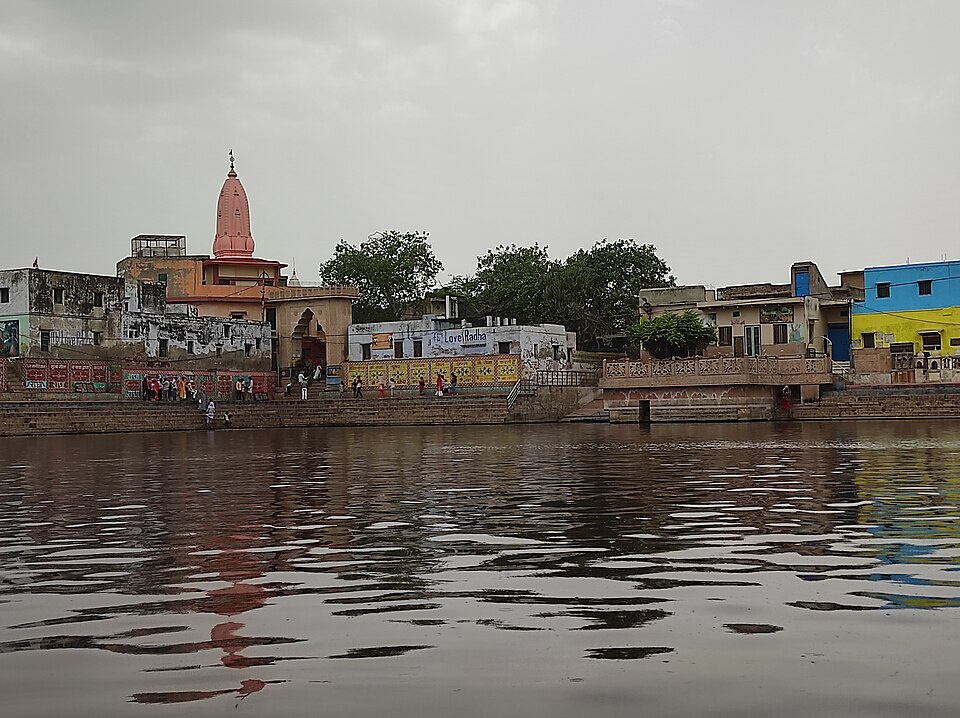
Radha Kund is a significant pilgrimage town in Mathura district, Uttar Pradesh, India, dedicated to the Hindu goddess Radha. It is revered by many Vaishnavas as the supreme holy place, particularly associated with the legend of Lord Krishna and Radha creating the sacred kunds (temple tanks). Millions of pilgrims visit annually seeking to bathe in its waters for divine love.
Key Facts
- ›Considered the supreme holy place by many Vaishnavas, based on Rupa Goswami's Upadesamrta.
- ›Legend states Radha Kund and Shyam Kund were created by Lord Krishna and Radha.
- ›Pilgrims bathe first in Radha Kund, then Shyam Kund, and finally Radha Kund again, often at midnight.
- ›Bathing in Radha Kund is believed to bestow intense love for Radha-Krishna.
- ›Located in the Mathura district of Uttar Pradesh, India.
- ›Has an average literacy rate of 65%, higher than the national average.
Radha, Krishna
- Supreme Holy Place For Many Vaishnavas
- Pilgrimage Site For Divine Love
- Associated With the Legends of Radha and Krishna
Radha, Krishna, Rupa Goswami
Radha Kund, Shyam Kund
About Radha Kund
Radha Kund, meaning 'Radha’s Pond,' is a significant town and nagar panchayat located in the Mathura district of Uttar Pradesh, India. It holds immense spiritual importance as a pilgrimage site dedicated to the Hindu goddess Radha, the beloved consort of Lord Krishna. Many followers of Vaishnavism consider Radha Kund to be the most sacred of all holy places, a belief popularized by the teachings of Rupa Goswami, an associate of Chaitanya Mahaprabhu.
Legend and Significance
The legend surrounding Radha Kund is central to its veneration. It is said that after Lord Krishna vanquished a powerful demon in the form of a bull, Radha requested him to cleanse himself in holy waters. Krishna, in a playful gesture, struck the ground with his foot, causing all the river goddesses to appear and fill the area with their waters, forming the tank known as Shyam Kund. Subsequently, Radha and her companions dug into the ground opposite Shyam Kund, and Krishna filled this new reservoir with holy water, naming it Radha Kund. Krishna then bathed in Radha Kund, declaring that anyone who bathed there would be blessed with the profound love that Radha held for him. Devotees believe that bathing in Radha Kund bestows intense love for Radha-Krishna, and a similar blessing is associated with bathing in Shyam Kund.
Pilgrimage Rituals
Millions of pilgrims journey to Radha Kund each year, drawn by the desire to experience divine love. The traditional pilgrimage involves a specific bathing ritual: devotees first bathe in Radha Kund, then in Shyam Kund, and finally return for a second bath in Radha Kund. This auspicious bathing is notably performed at midnight, a practice that sets it apart from many other holy sites. The town itself serves as a focal point for these devotional activities, attracting visitors seeking spiritual solace and divine connection.
Demographics and Context
Radha Kund is also a populated area, with a recorded population of 5889 as of the 2001 India census. The town has a literacy rate of 65%, which is higher than the national average. Its location within the larger Braj region, an area deeply associated with the life and pastimes of Radha and Krishna, further enhances its spiritual and cultural significance.
Source: Wikipedia ↗
Frequently Asked Questions
What is Radha Kund and why is it significant?
Radha Kund is a sacred town and temple tank in Mathura, India, dedicated to the goddess Radha. It is considered by many Vaishnavas to be the most holy of all pilgrimage sites, especially for devotees seeking profound love for Radha-Krishna.
What is the legend behind Radha Kund and Shyam Kund?
According to legend, after Lord Krishna slew a demon, Radha asked him to wash off his sins. Krishna struck the ground, creating Shyam Kund. Later, Radha and her friends dug Radha Kund, which Krishna filled with holy water. Krishna then bathed in Radha Kund, declaring that bathers would receive the intense love he had for Radha.
What is the ritualistic bathing practice at Radha Kund?
Millions of pilgrims visit to bathe in Radha Kund and Shyam Kund. The tradition involves bathing first in Radha Kund, then Shyam Kund, and finally returning to Radha Kund. This ritual is often performed at midnight, a unique practice among pilgrimage sites.
What blessings are associated with bathing in Radha Kund?
It is believed that those who bathe in Radha Kund are blessed with the intense love (Prem-Bhakti) that Radharani has for Lord Krishna. Similarly, bathing in Shyam Kund is said to bestow the love that Krishna has for Radha.
Where is Radha Kund located and what are its demographics?
Radha Kund is situated in the Mathura district of Uttar Pradesh, India. As of 2001, it had a population of 5889, with 54% males and 46% females. Its average literacy rate was 65%.
Related Temples (Hindu)

Taraknath Temple
The Taraknath Temple, located in Tarakeswar, West Bengal, India, is a significant Hindu pilgrimage site dedicated to Lord Shiva, worshiped here as Tarakanatha. Constructed in 1729, it features a distinct Bengal architectural style with an 'atchala' structure and an adjacent 'natmandir'. The temple is renowned for its belief that a dip in the nearby Dudhpukur tank fulfills prayers and is considered one of the 64 Jyotirlingas.

Tanot Mata Temple
The Tanot Mata Temple is a significant Hindu shrine located in the Jaisalmer district of Rajasthan, India, near the Pakistan border. Revered as a form of Goddess Hinglaj Mata, the temple is famously associated with the Indian victories in the Indo-Pakistani Wars of 1965 and 1971, with local folklore attributing the successful outcomes to divine intervention. The Border Security Force of India now manages the temple complex, which also includes a victory tower and a war museum.
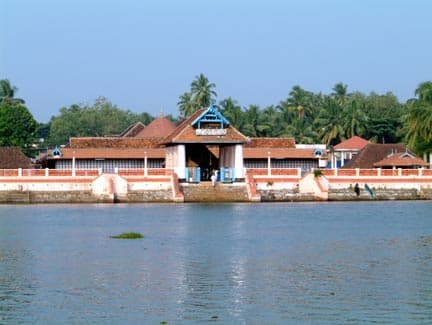
Thriprayar Temple
The Thriprayar Temple, also known as the Shree Ramaswami Temple, is a significant Hindu temple located in Triprayar, Thrissur district, Kerala, India. It is dedicated to Lord Rama, the seventh incarnation of Vishnu, who is depicted with four arms holding a conch, discus, bow, and garland. The temple's origin story involves the idol being worshipped by Krishna in Dwarka, later immersed in the sea, and eventually found by fishermen.