
Radha Krishna Vivah Sthali, Bhandirvan
Radha Krishna Vivah Sthali is a Hindu temple located in the Bhandirvan forest of Mathura district, Uttar Pradesh, India. It commemorates the divine wedding of Radha and Krishna, which is believed to have taken place in this forest according to ancient Sanskrit scriptures. The temple complex also features a sacred well and a temple dedicated to Balarama, along with a pair of ancient banyan trees marking the site of the celestial marriage.
Key Facts
- ›The temple is dedicated to Radha and Krishna, commemorating their divine marriage.
- ›It is situated in the historic Bhandirvan forest in the Mathura district of Uttar Pradesh, India.
- ›According to scriptures like the Braham Vaivarta Purana and Garga Samhita, Radha and Krishna were married here with Brahma officiating as the priest.
- ›The divine wedding is annually celebrated during the Phulera Dooj festival, typically in February or March.
- ›Within the complex, a temple depicts Krishna applying sindoor to Radha's head, symbolizing a key wedding ritual.
- ›A sacred well, Venu Kup, believed to have been created by Krishna's flute, is also located nearby.
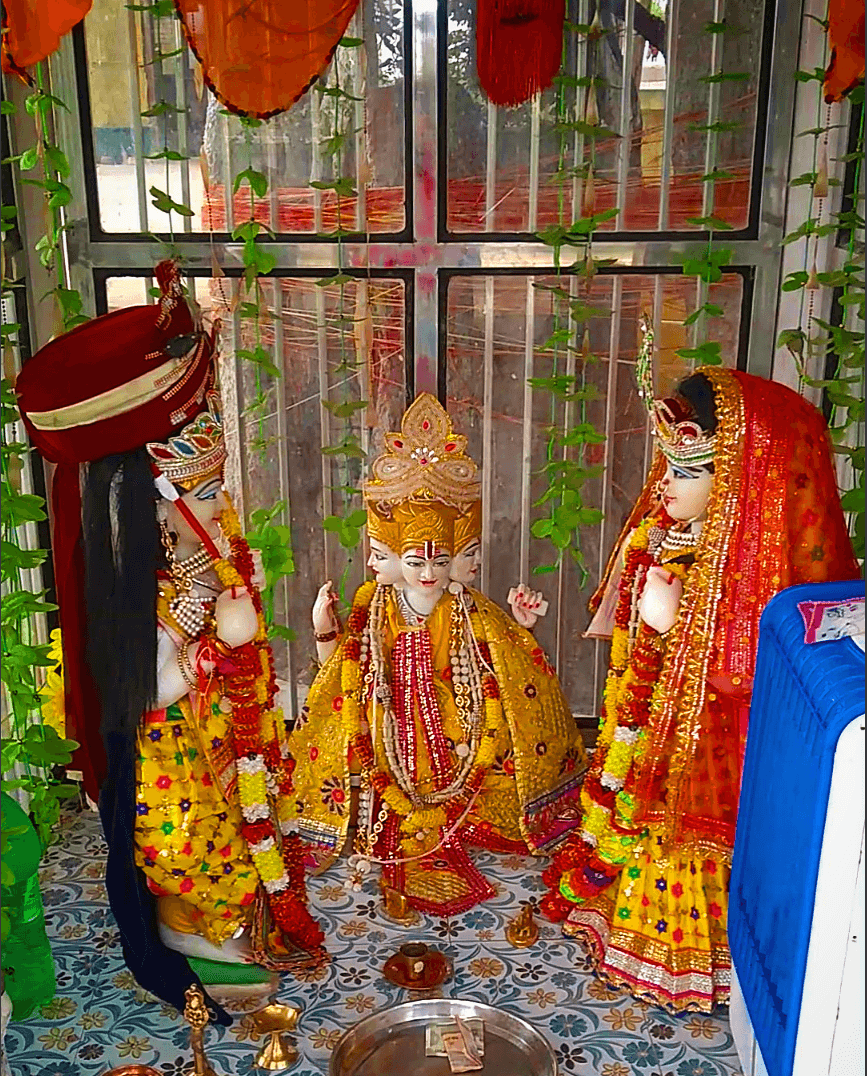
Radha, Krishna, Balarama
- Commemorates the Divine Marriage of Radha and Krishna
- Sacred Site Mentioned In Ancient Sanskrit Scriptures
- Cultural Importance As A Place of Divine Pastimes
Phulera Dooj, Byahula Utsav
Krishna Applying Sindoor On Radha's Head
Yamuna River
About Radha Krishna Vivah Sthali, Bhandirvan
Radha Krishna Vivah Sthali is a significant Hindu temple situated in the sacred Bhandirvan forest, located in the Mathura district of Uttar Pradesh, India. This hallowed site is revered as the place where the divine wedding of Radha and Krishna is believed to have taken place. According to ancient Sanskrit scriptures, including the Braham Vaivarta Purana and Garga Samhita, Lord Brahma himself officiated as the priest for this celestial union.
The temple complex preserves the sanctity of this event through various elements. Within its premises, a temple depicts the symbolic ritual of Krishna applying sindoor (vermilion) to Radha's head, a significant act in Hindu wedding ceremonies. The site is also marked by a pair of ancient, massive banyan trees, under which the divine marriage is said to have occurred. Adjacent to these is Venu Kup, a sacred well believed to have been created by Krishna's flute. Furthermore, a temple dedicated to Balarama, Krishna's elder brother, is also present within the complex, underscoring the interconnected divine narratives of the region.
The divine wedding of Radha and Krishna at Bhandirvan is celebrated annually through a festival known as Byahula Utsav, observed on the occasion of Phulera Dooj. This festival typically falls in February or March, drawing devotees to commemorate the eternal love and union of Radha and Krishna. Bhandirvan itself is recognized as one of the most important sacred forests of the Braj region, rich with legends and divine pastimes associated with Lord Krishna and his devotees.
Source: Wikipedia ↗
Frequently Asked Questions
Where is Radha Krishna Vivah Sthali located?
Radha Krishna Vivah Sthali is located in the Bhandirvan forest, within the Mant constituency of Mathura district in Uttar Pradesh, India. It is situated in a historically significant area known for its association with the divine pastimes of Radha and Krishna.
What is the religious significance of Radha Krishna Vivah Sthali?
The temple holds immense religious significance as it is believed to be the site where Radha and Krishna were divinely married. This event is documented in ancient Sanskrit scriptures, making it a sacred place for devotees to commemorate their eternal union.
What scriptures mention the marriage of Radha and Krishna at Bhandirvan?
The primary Sanskrit scriptures that mention the divine marriage of Radha and Krishna in Bhandirvan are the Braham Vaivarta Purana and the Garga Samhita. These texts describe the ceremony and the presence of Brahma as the officiating priest.
When is the divine wedding of Radha and Krishna celebrated at the temple?
The divine wedding is celebrated annually at the temple on the occasion of Phulera Dooj. This festival usually falls in the Hindu month of Phalguna, which typically corresponds to February or March in the Gregorian calendar.
What other significant features are found within the Bhandirvan temple complex?
Within the Bhandirvan temple premises, there is a temple where Krishna is depicted applying sindoor to Radha's head, symbolizing a marriage ritual. Additionally, a sacred well known as Venu Kup, believed to have been created by Krishna's flute, and a pair of large banyan trees marking the wedding site are present.
Is there any other deity worshipped at Radha Krishna Vivah Sthali?
Yes, a temple dedicated to Balarama is also located within the premises of the Radha Krishna Vivah Sthali complex. This indicates the presence of worship for other important deities associated with Krishna's divine play.
Related Temples (Hindu)

Taraknath Temple
The Taraknath Temple, located in Tarakeswar, West Bengal, India, is a significant Hindu pilgrimage site dedicated to Lord Shiva, worshiped here as Tarakanatha. Constructed in 1729, it features a distinct Bengal architectural style with an 'atchala' structure and an adjacent 'natmandir'. The temple is renowned for its belief that a dip in the nearby Dudhpukur tank fulfills prayers and is considered one of the 64 Jyotirlingas.

Tanot Mata Temple
The Tanot Mata Temple is a significant Hindu shrine located in the Jaisalmer district of Rajasthan, India, near the Pakistan border. Revered as a form of Goddess Hinglaj Mata, the temple is famously associated with the Indian victories in the Indo-Pakistani Wars of 1965 and 1971, with local folklore attributing the successful outcomes to divine intervention. The Border Security Force of India now manages the temple complex, which also includes a victory tower and a war museum.
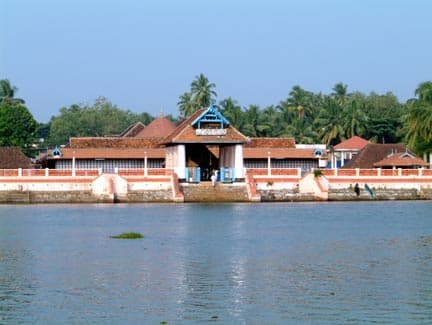
Thriprayar Temple
The Thriprayar Temple, also known as the Shree Ramaswami Temple, is a significant Hindu temple located in Triprayar, Thrissur district, Kerala, India. It is dedicated to Lord Rama, the seventh incarnation of Vishnu, who is depicted with four arms holding a conch, discus, bow, and garland. The temple's origin story involves the idol being worshipped by Krishna in Dwarka, later immersed in the sea, and eventually found by fishermen.