
Punnainallur Mariamman
The Punnainallur Mariamman Temple, located near Thanjavur in Tamil Nadu, India, is a significant Hindu shrine dedicated to Goddess Mariamman. It is renowned for its legendary origins, with Sage Sadashiva Brahmendra credited for its installation, and historical patronage from the Thanjavur kings. The temple attracts thousands of devotees annually and is known for its unique idol made of sand and its association with various forms of Lakshmi depicted in paintings.
Key Facts
- ›The temple is dedicated to Goddess Mariamman, a form of the divine feminine.
- ›It is located in Punnainallur, a village near Thanjavur, Tamil Nadu, India.
- ›Sage Sadashiva Brahmendra is believed to have played a key role in establishing the deity's idol.
- ›Thanjavur kings, including Venkoji Maharaja and Thuljaji Raja, were significant patrons and renovated the temple.
- ›The presiding deity is represented by an idol made of sand over an ant-hill, covered with a silver kavacham.
- ›Sundays are considered the most auspicious days for worship, drawing large crowds.

Mariamman
- Religious Pilgrimage
- Historical Patronage By Thanjavur Kings
- Legendary Origin Involving Sage Sadashiva Brahmendra
Thanjavur Kings
Mariamman Festival
Sand, Silver
Sage Sadashiva Brahmendra, King Venkoji Maharaja, King Thuljaji Raja, Serfoji Ii, Chola King Keerthi Cholan
Paintings of Different Forms of Ashta Sakthi
Mani Muktha Nadhi
About Punnainallur Mariamman
Punnainallur Mariamman Temple
The Punnainallur Mariamman Temple, popularly known as Thanjavur Mariamman Kovil, is a prominent Hindu temple situated in Punnainallur, a village located on the outskirts of Thanjavur in Tamil Nadu, India. This temple, dedicated to the goddess Mariamman, holds significant importance in both legend and history, attracting a large number of devotees throughout the year.
Legend and History
Numerous stories contribute to the temple's origin. A widely accepted account credits Sage Sadashiva Brahmendra with playing a crucial role. It is believed that the Devi herself instructed the sage to install her image at this location. With his yogic abilities, Sadashiva Brahmendra is said to have created the idol of Punnainallur Mariamman from a snake pit and enshrined a powerful yantram, after which the Devi is said to have manifested in the idol to bless her devotees.
Historical records indicate that King Venkoji Maharaja Chatrapathi, during a pilgrimage, had a dream in which a young girl, identifying herself as Mariamman, requested him to construct a proper temple for her. Following this dream, the king returned to his capital and made arrangements for the installation of the Goddess, after whom the deity eventually became known as Punnainallur Mariamman.
Further patronage came from Thuljaji Raja, son of Venkoji Maharaja. When his daughter suffered from poor eyesight, he worshipped Mariamman, who appeared in his dream and advised him to bring his daughter to the Punnainallur Mariamman shrine. The daughter's eyesight was miraculously restored, leading King Thuljaji Raja to renovate the temple. He also arranged for priests and, with the guidance of Sri Sadasiva Brahmendra Swamigal, installed a powerful yanthram beneath the idol and conducted a grand Kumbhabhishekham. The Thanjavur kings endowed substantial landed gifts for the temple's upkeep, and an underground passage was even constructed from their palace to the shrine for safe access.
Other historical anecdotes include a Chola King named Keerthi Cholan, who, lacking an heir, was blessed with a son, Theva Cholan, after devoutly worshipping the Goddess. Additionally, a European named Mr. Wilson is said to have been cured of an eye ailment through his devotion.
Architecture and Features
The temple faces east and comprises three prakarams, covering an area of approximately one acre. It features a 90-foot high Rajagopuram, which is a relatively recent addition. The complex includes various mandapams, such as the Arthamandapam, Mahamandapam, Narthanamandapam, Dwajamandapam, Alankaramandapam, and Thirumalaipathimandapam. The Sukravaramandapam, located in the Amman Sannadhi, is noted for its beautifully carved pillars. Within the temple, paintings depict the different forms of Ashta Sakthi, including Gajalakshmi, Veera Lakshmi, Sowbhagya Lakshmi, Santhana Lakshmi, Dhana Lakshmi, Dhanya Lakshmi, Vidhya Lakshmi, and Karunya Lakshmi.
The Sthala Viruksham of the temple is the Neem Tree ('Vembu'), and the sacred Theertham is the Mani Muktha Nadhi (Vadavar River). The presiding deity, Goddess Mariamman, is represented by an idol made of sand atop an ant-hill, adorned with a silver kavacham. Poojas are performed four times daily, with an anointment with Thailam (oil) conducted once every five years. Abhishegam is performed thrice daily to Durgai, whose sanctum is situated to the right of the main deity, facing north.
Worship and Offerings
Sundays are considered the most auspicious days for worshipping the Goddess, attracting a large number of devotees, predominantly women and children. Devotees suffering from ailments like small-pox often take vows such as 'Thotti Kattuthal,' symbolizing a cooling effect. Practices like offering salt to the temple and mixing jaggery in the temple tank are also common. Votive offerings from the public can include cattle and fowl. A devotee has donated an elephant, and another has gifted a Ther (chariot) costing around Rs. 10,000.
There is a separate shrine for Pechi Amman, where flesh food is offered. The Mariamman of Punnainallur is deeply venered in the locality, with many devotees considering themselves blessed by her divine grace. The Mariamman festival is a major event, attracting an annual crowd of approximately 20,000 visitors.
Administration
The Punnainallur Mariamman Temple is part of the Thanjavur Palace Devasthanam, which encompasses 88 temples. These temples are maintained and administered by the Hindu Religious and Charitable Endowments Department of the Government of Tamil Nadu.
Location
The temple is located in Punnainallur, about five kilometers east of Thanjavur, and is easily accessible by bus. Town buses operate regularly between Thanjavur and Punnainallur.
Source: Wikipedia ↗
Frequently Asked Questions
What is the legend behind the Punnainallur Mariamman Temple?
Legend states that Sage Sadashiva Brahmendra was instructed by the Devi herself to install her image. He is believed to have created the idol from a snake pit using his yogic powers. Another legend involves King Venkoji Maharaja, who dreamt of a young girl identifying herself as Mariamman, asking him to build a temple for her near a forest of Punnai trees.
Who were the historical patrons of the Punnainallur Mariamman Temple?
The Thanjavur kings were significant patrons of the temple. King Venkoji Maharaja was prompted by a dream to arrange for the deity's installation. His son, Thuljaji Raja, renovated the temple after his daughter regained her eyesight through devotion to the Goddess. Later Thanjavur kings also endowed landed gifts for its maintenance.
What is unique about the idol of Goddess Mariamman at Punnainallur?
The presiding deity is represented by an idol made of sand, situated over an ant-hill. This sand idol is covered with a protective silver kavacham.
What are some of the architectural features of the Punnainallur Mariamman Temple?
The temple faces east and has three prakarams, occupying an area of about one acre. It features a 90-foot high Rajagopuram, which is of recent origin. Several mandapams, including the Arthamandapam, Mahamandapam, and Narthanamandapam, are part of the complex. Paintings of various forms of Ashta Sakthi adorn the temple walls.
What are some of the practices followed by devotees at the Punnainallur Mariamman Temple?
Devotees facing ailments like small-pox may take vows such as 'Thotti Kattuthal,' signifying a cooling effect. Other practices include offering salt to the temple and mixing jaggery in the temple tank. Votive offerings can also include cattle and fowl.
When was the temple renovated or rebuilt?
During the reign of Tulaja of Thanjavur (1727-1735 CE), a small structure of the temple was built. Serfoji II (1798-1832 CE) oversaw the construction of the mahamandapa, narthana mandapa, gopura, and the second inner prakara, conducting a Kumbhabhishekham. Later Kumbhabhishekhams were held in 1950 and on June 6, 1987.
Related Temples (Hindu)

Taraknath Temple
The Taraknath Temple, located in Tarakeswar, West Bengal, India, is a significant Hindu pilgrimage site dedicated to Lord Shiva, worshiped here as Tarakanatha. Constructed in 1729, it features a distinct Bengal architectural style with an 'atchala' structure and an adjacent 'natmandir'. The temple is renowned for its belief that a dip in the nearby Dudhpukur tank fulfills prayers and is considered one of the 64 Jyotirlingas.

Tanot Mata Temple
The Tanot Mata Temple is a significant Hindu shrine located in the Jaisalmer district of Rajasthan, India, near the Pakistan border. Revered as a form of Goddess Hinglaj Mata, the temple is famously associated with the Indian victories in the Indo-Pakistani Wars of 1965 and 1971, with local folklore attributing the successful outcomes to divine intervention. The Border Security Force of India now manages the temple complex, which also includes a victory tower and a war museum.
Thriprayar Temple
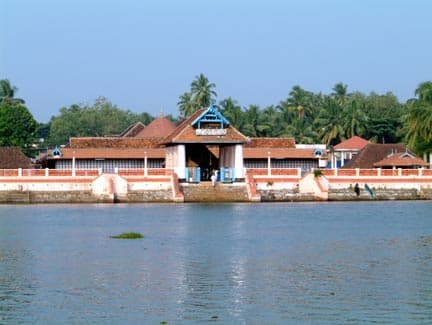
The Thriprayar Temple, also known as the Shree Ramaswami Temple, is a significant Hindu temple located in Triprayar, Thrissur district, Kerala, India. It is dedicated to Lord Rama, the seventh incarnation of Vishnu, who is depicted with four arms holding a conch, discus, bow, and garland. The temple's origin story involves the idol being worshipped by Krishna in Dwarka, later immersed in the sea, and eventually found by fishermen.