
Pazhamudhircholai Temple
Pazhamudhircholai Temple is a significant Hindu temple located atop a hill on the outskirts of Madurai, Tamil Nadu. Dedicated to the god Murugan, it is recognized as one of his six abodes, known as Arupadaiveedu. The temple's name derives from a mythological event involving Murugan and the Tamil poet Avvaiyar, signifying a place where fruits were dispersed.
Key Facts
- ›It is one of the six abodes of Lord Murugan (Arupadaiveedu).
- ›The temple's name originates from a mythological story involving Murugan and poet Avvaiyar.
- ›The name Pazhamudhircholai is derived from Tamil words for fruit, disperse, and orchard.
- ›It is mentioned in ancient Tamil literature like Tirumurukāṟṟuppaṭai and Cilappatikaram.
- ›The temple is administered by the Hindu Religious and Charitable Endowments Department of the Government of Tamil Nadu.

Murugan
- One of the Six Abodes of Murugan
- Mentioned In Sangam and Post-Sangam Literature
About Pazhamudhircholai Temple
Pazhamudhircholai Temple is a significant Hindu shrine dedicated to Lord Murugan, located atop a hill on the outskirts of Madurai in Tamil Nadu, India. It holds the distinction of being one of the six revered abodes of Murugan, collectively known as Arupadaiveedu, making it a prime destination for religious pilgrimage.
Mythology and Naming
The temple's name, Pazhamudhircholai, is deeply intertwined with a notable episode from Hindu mythology, as recounted in the Kanda Puranam. According to the legend, the Tamil poet Avvaiyar encountered Murugan, who was disguised and seated atop a naaval tree. To test her, Murugan shook the tree, causing fruits to fall. The name itself is a composite of Tamil words: 'Pazham' (fruit), 'udir' (disperse), and 'cholai' (orchard), directly referencing this event where fruits were dispersed at the location.
Religious and Literary Significance
Historically, the site's religious importance was initially associated with the worship of the 'Vel,' Murugan's divine weapon. Over time, shrines dedicated to Lord Murugan himself, along with his consorts Deivanai and Valli, and the deity Ganesha, were established. The antiquity and spiritual significance of Pazhamudhircholai are further underscored by its mention in ancient Tamil literary works. It is referenced in the Sangam literature text Tirumurukāṟṟuppaṭai by Nakkeerar and in post-Sangam literature like Cilappatikaram by Ilango Adigal. Additionally, the renowned Tamil saint and poet Arunagirinathar composed hymns in praise of Murugan, including those dedicated to this temple, most notably in his work Tiruppukal.
Administration
The maintenance and administration of Pazhamudhircholai Temple are overseen by the Hindu Religious and Charitable Endowments Department of the Government of Tamil Nadu, ensuring its continued preservation and accessibility for devotees and visitors.
Source: Wikipedia ↗
Frequently Asked Questions
What is the significance of Pazhamudhircholai Temple?
Pazhamudhircholai Temple is one of the six most revered abodes of Lord Murugan, making it a significant pilgrimage site for devotees. Its name is rooted in a mythological event that highlights the divine presence and the abundance of nature.
What is the origin of the name Pazhamudhircholai?
The name is a combination of Tamil words: 'Pazham' meaning fruit, 'udir' meaning disperse, and 'cholai' meaning orchard. This name originates from a story where Murugan, disguised, shook a tree to offer fruits to the poet Avvaiyar.
What ancient literature mentions Pazhamudhircholai Temple?
The temple is referenced in Sangam literature, specifically in Tirumurukāṟṟuppaṭai by Nakkeerar. It is also mentioned in post-Sangam literature such as Cilappatikaram by Ilango Adigal.
Who is the primary deity worshipped at Pazhamudhircholai Temple?
The primary deity worshipped at Pazhamudhircholai Temple is Lord Murugan. Initially, only his divine weapon, the Vel, was worshipped, but later shrines for Murugan with his consorts Deivanai and Valli were established.
Related Temples (Hindu)

Taraknath Temple
The Taraknath Temple, located in Tarakeswar, West Bengal, India, is a significant Hindu pilgrimage site dedicated to Lord Shiva, worshiped here as Tarakanatha. Constructed in 1729, it features a distinct Bengal architectural style with an 'atchala' structure and an adjacent 'natmandir'. The temple is renowned for its belief that a dip in the nearby Dudhpukur tank fulfills prayers and is considered one of the 64 Jyotirlingas.

Tanot Mata Temple
The Tanot Mata Temple is a significant Hindu shrine located in the Jaisalmer district of Rajasthan, India, near the Pakistan border. Revered as a form of Goddess Hinglaj Mata, the temple is famously associated with the Indian victories in the Indo-Pakistani Wars of 1965 and 1971, with local folklore attributing the successful outcomes to divine intervention. The Border Security Force of India now manages the temple complex, which also includes a victory tower and a war museum.
Thriprayar Temple
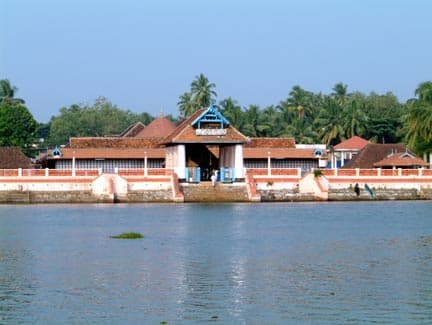
The Thriprayar Temple, also known as the Shree Ramaswami Temple, is a significant Hindu temple located in Triprayar, Thrissur district, Kerala, India. It is dedicated to Lord Rama, the seventh incarnation of Vishnu, who is depicted with four arms holding a conch, discus, bow, and garland. The temple's origin story involves the idol being worshipped by Krishna in Dwarka, later immersed in the sea, and eventually found by fishermen.