
Parumala Valiya Panayannarkavu Devi Temple
Parumala Valiya Panayannarkavu Devi Temple is an ancient Hindu temple in Kerala, India, dedicated to Sri Badrakali and Lord Shiva. It is renowned for its significant mural paintings and is considered one of the most important Bhadrakali temples in the state.
Key Facts
- ›The temple is situated on the banks of the Pampa river in Pathanamthitta District, Kerala.
- ›It is dedicated to Sri Badrakali (Chamundi) and Lord Shiva.
- ›Parumala Valiya Panayannarkavu Devi Temple is recognized as one of the three most important Bhadrakali temples in Kerala.
- ›References to the temple are found in classic Malayalam literature such as Aithihyamala and Unnuneeli Sandesam.
- ›The temple complex spans approximately four acres and is surrounded by palm trees and forest.
- ›The temple is part of the 108 famous Shiva temples in Kerala.

Sri Badrakali, Lord Shiva, Saptha Matha, Chamundi
- One of the Three Most Important Bhadrakali Temples In Kerala
- References In Classic Malayalam Literature
- Part of the 108 Famous Shiva Temples In Kerala
- Renowned For Its Mural Paintings
Odanad Royal House
Sage Parashurama, Sage Durvasa, Sage Narada
Mural Paintings
Pampa River
About Parumala Valiya Panayannarkavu Devi Temple
Parumala Valiya Panayannarkavu Devi Temple is an ancient Hindu temple located in the Pathanamthitta District of Kerala, India. Situated on the banks of the Pampa River, it is a significant religious site dedicated to Sri Badrakali and Lord Shiva. The temple is recognized as one of the three most important Bhadrakali temples in Kerala, holding a place of high regard alongside Thirumandhamkunnu Temple and Kodungallur Temple.
Historical and Literary References
References to the Parumala Valiya Panayannarkavu Devi Temple can be found in classic works of Malayalam literature, including Kottarathil Sankunni's Aithihyamala and the Unnuneeli Sandesam. Folklore traditions suggest that the idol of Lord Shiva was installed by sage Parashurama, while the devi idol was installed by sages Durvasa and Narada during the Treta Yuga. The temple is also listed among the 108 famous Shiva temples in Kerala, underscoring its historical and spiritual importance.
Temple Complex and Architecture
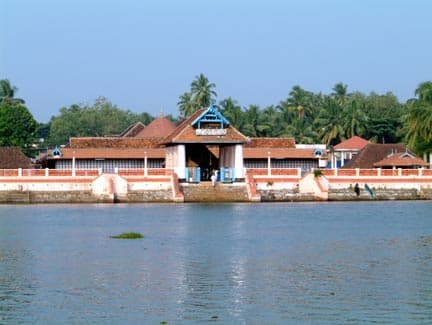
The temple complex covers an area of approximately four acres, surrounded by tall Palmyra trees and lush green forest. The Pampa River flows along the western side of the temple. The overall temple complex faces north, and the presence of Lord Shiva temples is noted as significant in architectural considerations.
Deities and Worship
While Lord Shiva is a principal deity, the presiding power in the day-to-day pujas at Parumala Valiya Panayannarkavu Devi Temple is Saptha Matha (Seven Goddesses). Among these, Chamundi, a fierce manifestation of Kali, holds a particularly strong place. According to Hindu mythology, Goddess Chamundi is revered for destroying the asura Raktabija, a feat described in the Devi-Mahatma, where she prevented the creation of new asuras from his blood.
Notable Murals
The temple is renowned for its collection of mural paintings, celebrated for their precision and artistic merit. The age of these murals is difficult to ascertain, but it is believed they were created in two distinct phases. The earlier frescoes surround the main shrine, while later paintings adorn the square sanctum sanctorum. It is thought that these murals were completed during the reign of the last king of the Odanad Royal House, a period when Vaishnava customs and worship practices were observed in a more vibrant and ceremonial manner.
Source: Wikipedia ↗
Frequently Asked Questions
What deities are worshipped at Parumala Valiya Panayannarkavu Devi Temple?
The main deities worshipped at Parumala Valiya Panayannarkavu Devi Temple are Sri Badrakali and Lord Shiva. The temple is particularly significant for the worship of Saptha Matha (Seven Goddesses), with Chamundi, the fierce form of Kali, holding a strong presiding power.
What is notable about the murals at this temple?
The temple is famous for its collection of mural paintings, noted for their precision and color combinations. These frescoes are believed to have been completed in two stages, with the earliest surrounding the main shrine and later paintings adorning the sanctum sanctorum, possibly during the period of the last king of the Odanad Royal House.
Where is Parumala Valiya Panayannarkavu Devi Temple located?
The temple is located in Parumala village, on an island formed by the Pampa River, within the Pathanamthitta District of Kerala state, India.
Is this temple historically significant?
Yes, Parumala Valiya Panayannarkavu Devi Temple is considered ancient, with folklore suggesting the idols were installed by sages in Treta Yuga. Its references in classic Malayalam literature further attest to its historical importance.
Related Temples (Hindu)

Taraknath Temple
The Taraknath Temple, located in Tarakeswar, West Bengal, India, is a significant Hindu pilgrimage site dedicated to Lord Shiva, worshiped here as Tarakanatha. Constructed in 1729, it features a distinct Bengal architectural style with an 'atchala' structure and an adjacent 'natmandir'. The temple is renowned for its belief that a dip in the nearby Dudhpukur tank fulfills prayers and is considered one of the 64 Jyotirlingas.

Tanot Mata Temple
The Tanot Mata Temple is a significant Hindu shrine located in the Jaisalmer district of Rajasthan, India, near the Pakistan border. Revered as a form of Goddess Hinglaj Mata, the temple is famously associated with the Indian victories in the Indo-Pakistani Wars of 1965 and 1971, with local folklore attributing the successful outcomes to divine intervention. The Border Security Force of India now manages the temple complex, which also includes a victory tower and a war museum.
Thriprayar Temple
The Thriprayar Temple, also known as the Shree Ramaswami Temple, is a significant Hindu temple located in Triprayar, Thrissur district, Kerala, India. It is dedicated to Lord Rama, the seventh incarnation of Vishnu, who is depicted with four arms holding a conch, discus, bow, and garland. The temple's origin story involves the idol being worshipped by Krishna in Dwarka, later immersed in the sea, and eventually found by fishermen.