
Panchalingeshwar
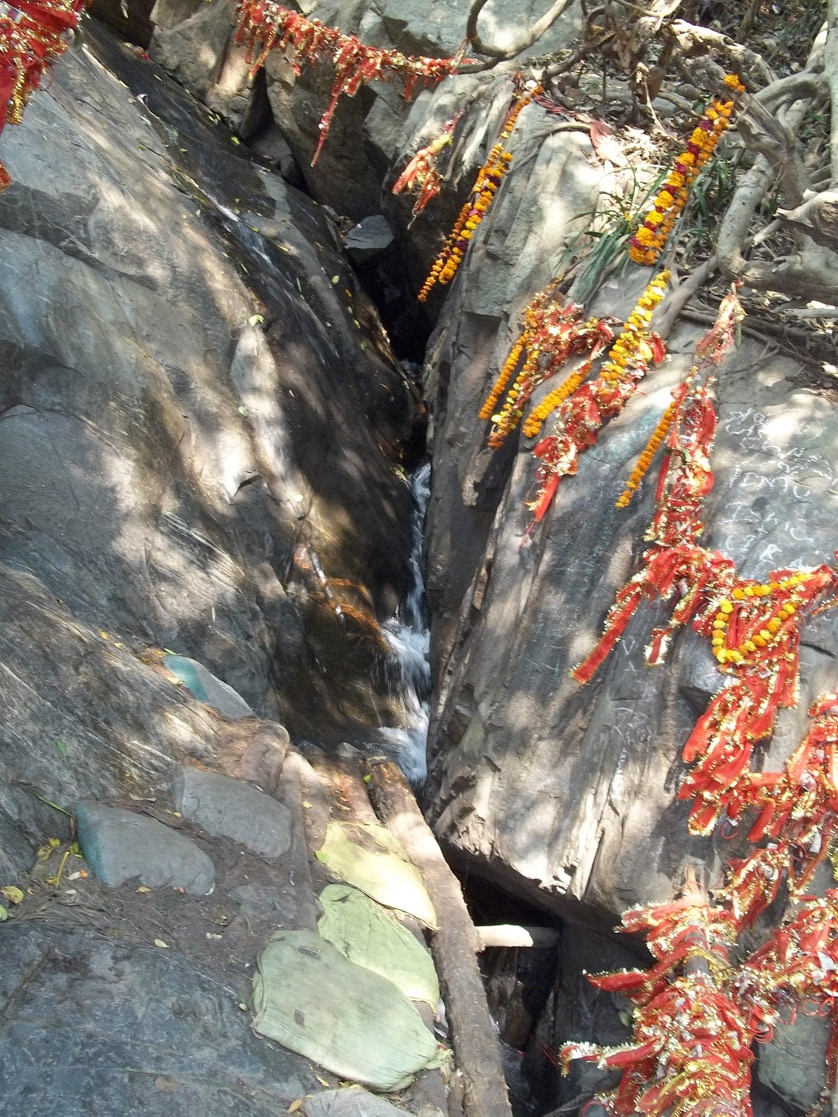
The Panchalingeswar Temple, located in the Balasore district of Odisha, India, is renowned for the five Shivalingas enshrined within its premises. These sacred lingams are continuously washed by a perennial stream, a unique feature that draws many devotees and visitors.
Key Facts
- ›The temple is named after five Shivalingas housed inside.
- ›It is situated atop a hillock near the Nilagiri hill.
- ›Legends attribute the enshrinement of the Shivalingas to Sita, wife of Lord Rama, or King Banasura.
- ›A perennial stream flows over and washes the Shivalingas.
- ›Visitors must lie flat to touch and worship the lingas within the stream's natural reservoir.
- ›The temple is located 27.7 km southwest of Balasore.
Shiva
- Religious Pilgrimage
- Unique Natural Water Feature Associated With Worship
Sita, King Banasura
Stream
About Panchalingeshwar
Panchalingeswar Temple
The Panchalingeswar Temple is an important Hindu shrine located in the Balasore district of Odisha, India. Its name, Panchalingeswar, translates to 'five lingas,' referring to the five Shivalingas that are the central deities enshrined within the temple. The temple is situated atop a hillock in close proximity to the Nilagiri hill, making it a site of both religious devotion and natural beauty.
Sacred Streams and Legends
A distinctive feature of Panchalingeswar Temple is the perennial stream that flows directly over the five Shivalingas, an act that is considered a form of continuous purification and worship. To perform worship, devotees often lie flat on the rock adjacent to the stream and reach into the natural reservoir to touch and venerate the lingas. According to local legends, these Shivalingas were first enshrined by Sita, the wife of Lord Rama, during their period of exile. Another account suggests that King Banasura worshipped the self-manifested lingas at this picturesque location.
Location and Accessibility
The temple is located approximately 27.7 km southwest of Balasore city. Balasore serves as the nearest major city, with Nilagiri being the closest urban locality. Visitors can reach Balasore by air via Bhubaneswar Airport, which is about 200 km away, or Kolkata Airport, approximately 250 km away. Regular bus services are available from Bhubaneswar to both Nilagiri and Balasore, and transportation facilities connect Panchalingeswar to Balasore, making it accessible for pilgrims and tourists.
Source: Wikipedia ↗
Frequently Asked Questions
Where is Panchalingeswar Temple located?
Panchalingeswar Temple is situated in the Balasore district of Odisha, India. It is specifically located on top of a hillock near the Nilagiri hill, approximately 27.7 km southwest of Balasore city.
What is the significance of the five Shivalingas at Panchalingeswar?
The temple is named Panchalingeswar, meaning 'five lingas', after the five Shivalingas enshrined within. These lingas are a central focus of worship and are believed by tradition to have been placed by Sita, the wife of Lord Rama, during their exile.
How are the Shivalingas at Panchalingeswar worshipped?
A unique aspect of the Panchalingeswar Temple is that a perennial stream flows directly over the five Shivalingas, continuously washing them. To worship these lingas, visitors must lie flat on the rock parallel to the stream and reach into the natural reservoir to touch them.
What are the legends associated with Panchalingeswar?
According to local lore, the Shivalingas were enshrined by Sita, the wife of Lord Rama, during their period of exile. Another tradition suggests that King Banasura worshipped the self-manifested (Swayambhu) lingas at this beautiful location.
How can one reach Panchalingeswar Temple?
Panchalingeswar is accessible via Balasore, which is the nearest city. Regular bus services operate from Bhubaneswar to Nilagiri and Balasore. Visitors can fly into Bhubaneswar Airport (200 km away) or Kolkata Airport (250 km away) and then take further transportation to the temple.
Related Temples (Hindu)

Taraknath Temple
The Taraknath Temple, located in Tarakeswar, West Bengal, India, is a significant Hindu pilgrimage site dedicated to Lord Shiva, worshiped here as Tarakanatha. Constructed in 1729, it features a distinct Bengal architectural style with an 'atchala' structure and an adjacent 'natmandir'. The temple is renowned for its belief that a dip in the nearby Dudhpukur tank fulfills prayers and is considered one of the 64 Jyotirlingas.

Tanot Mata Temple
The Tanot Mata Temple is a significant Hindu shrine located in the Jaisalmer district of Rajasthan, India, near the Pakistan border. Revered as a form of Goddess Hinglaj Mata, the temple is famously associated with the Indian victories in the Indo-Pakistani Wars of 1965 and 1971, with local folklore attributing the successful outcomes to divine intervention. The Border Security Force of India now manages the temple complex, which also includes a victory tower and a war museum.
Thriprayar Temple
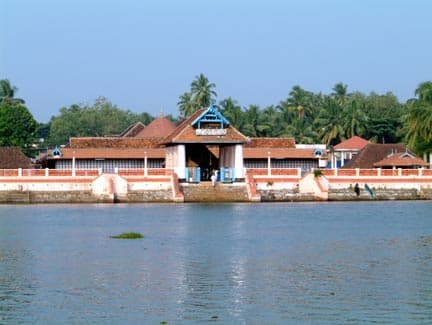
The Thriprayar Temple, also known as the Shree Ramaswami Temple, is a significant Hindu temple located in Triprayar, Thrissur district, Kerala, India. It is dedicated to Lord Rama, the seventh incarnation of Vishnu, who is depicted with four arms holding a conch, discus, bow, and garland. The temple's origin story involves the idol being worshipped by Krishna in Dwarka, later immersed in the sea, and eventually found by fishermen.