
Nidhivan, Vrindavan
Nidhivan is a sacred forest site in Vrindavan, India, revered as the primary location for the pastimes of Radha and Krishna. It is believed that the deities continue to perform their divine dance, the rasa-lila, here nightly, leading to the site's closure from dusk till dawn to preserve its sanctity.
Key Facts
- ›Considered the most prominent sacred site for Radha and Krishna's pastimes in Vrindavan.
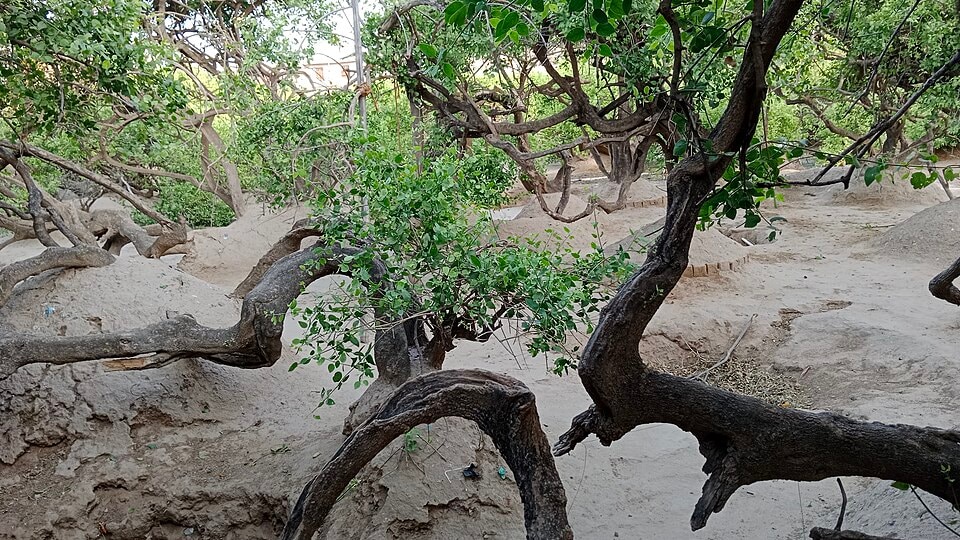
- ›Features numerous Tulasi trees, believed to transform into cowherds and gopis at night for the rasa-lila.
- ›Houses Rang Mahal, where Radha and Krishna are thought to rest after their nightly dance.
- ›The temple complex is closed at night, with priests preparing a resting place for the deities.
- ›Associated with the appearance of the Banke Bihari idol, created by Swami Haridas.
- ›Monkeys and peacocks inhabit the premises, and are said to leave before sunset.
Radha, Krishna
- Sacred Site For Radha and Krishna's Pastimes
- Believed Site of Nightly Rasa-Lila
- Associated With the Appearance of Banke Bihari Idol
Swami Haridas
Lalita Pond
About Nidhivan, Vrindavan
Nidhivan, translating to 'Tulsi Forest,' is a profoundly sacred forest located in Vrindavan, within the Mathura district of Uttar Pradesh, India. It holds immense significance as the foremost site dedicated to the divine pastimes of the Hindu deities Radha and Krishna, along with their devoted cowherd companions, the Gopikas. A central belief among devotees is that Nidhivan continues to be the stage for the nightly rasa-lila, the celestial dance of Radha and Krishna. To preserve the sanctity of these nightly occurrences, the forest is traditionally closed to the public with barricades from dusk until dawn.
Features and Beliefs
The forest is characterized by a dense collection of Tulasi trees, which are considered holy in Vaishnavism. These trees are notably short, grow in pairs with entangled trunks, and remain lush with green leaves year-round despite the dry land and hollow bark. It is a widespread belief that these trees transform into the gopi cowherds during the night to participate in the Raslila, reverting to their arboreal form at dawn. Every plant within Nidhivan is found in pairs, symbolizing the divine couple and their companions.
Within Nidhivan is the Rang Mahal, meaning 'Colourful Palace.' This temple is believed to be where Radha and Krishna retire each night after their elaborate dance. The temple contains sandalwood beds prepared by priests nightly with offerings of ornaments, flowers, sweets, and fresh water. Astonishingly, each morning, these preparations are found to be used, suggesting the deities' presence and rest. The premises are completely shut after sunset, and locals in the vicinity often report hearing the sounds of anklets from within Nidhivan at night. Even the resident monkeys and peacocks are said to depart before nightfall.
Nidhivan is also historically significant as the place where the idol of Banke Bihari is said to have first appeared. This divine manifestation occurred before Saint Swami Haridas, a testament to his profound devotion. Later, the idol was enshrined in a separate temple. The area is known for its tranquil yet mysterious atmosphere, drawing pilgrims and devotees seeking spiritual connection to the divine romance of Radha and Krishna.
Source: Wikipedia ↗
Frequently Asked Questions
What is Nidhivan and why is it significant?
Nidhivan is a sacred forest in Vrindavan, India, considered the most important site for the divine pastimes of Radha and Krishna. It is believed that the deities perform their rasa-lila dance here every night, making it a deeply revered spiritual location.
Why is Nidhivan closed at night?
Nidhivan is closed to the public at night to safeguard the sanctity of the rasa-lila, the divine dance believed to be performed by Radha and Krishna. Devotees believe that the deities come here to rest and engage in their celestial activities undisturbed.
What is Rang Mahal within Nidhivan?
Rang Mahal, meaning 'Colourful Palace,' is a temple within Nidhivan where it is believed Radha and Krishna spend their nights after their exhausting dance. Priests prepare a resting place for them each evening, and evidence of their presence is found each morning.
What is the belief about the Tulasi trees in Nidhivan?
The Tulasi trees in Nidhivan are believed to be transformed cowherd companions of Radha and Krishna. It is thought that these trees turn into the gopis and cowherds at night to participate in the rasa-lila dance before returning to their original form at dawn.
Is Nidhivan associated with any famous idols?
Yes, Nidhivan is considered the place where the idol of Banke Bihari first appeared. This appearance is attributed to the intense devotion of Saint Swami Haridas, who is said to have propitiated Radha and Krishna.
What happens if someone tries to enter Nidhivan at night?
Local beliefs and accounts suggest dire consequences for those who attempt to trespass Nidhivan at night to witness the divine activities. It is said that such individuals may lose their eyesight, their sanity, or even their lives.
Related Temples (Hindu)

Taraknath Temple
The Taraknath Temple, located in Tarakeswar, West Bengal, India, is a significant Hindu pilgrimage site dedicated to Lord Shiva, worshiped here as Tarakanatha. Constructed in 1729, it features a distinct Bengal architectural style with an 'atchala' structure and an adjacent 'natmandir'. The temple is renowned for its belief that a dip in the nearby Dudhpukur tank fulfills prayers and is considered one of the 64 Jyotirlingas.

Tanot Mata Temple
The Tanot Mata Temple is a significant Hindu shrine located in the Jaisalmer district of Rajasthan, India, near the Pakistan border. Revered as a form of Goddess Hinglaj Mata, the temple is famously associated with the Indian victories in the Indo-Pakistani Wars of 1965 and 1971, with local folklore attributing the successful outcomes to divine intervention. The Border Security Force of India now manages the temple complex, which also includes a victory tower and a war museum.
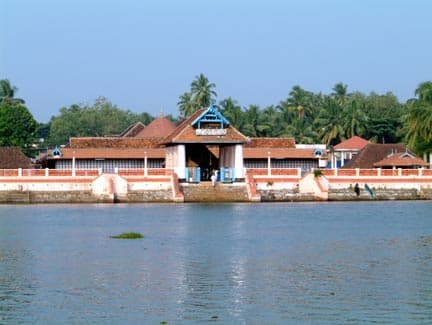
Thriprayar Temple
The Thriprayar Temple, also known as the Shree Ramaswami Temple, is a significant Hindu temple located in Triprayar, Thrissur district, Kerala, India. It is dedicated to Lord Rama, the seventh incarnation of Vishnu, who is depicted with four arms holding a conch, discus, bow, and garland. The temple's origin story involves the idol being worshipped by Krishna in Dwarka, later immersed in the sea, and eventually found by fishermen.