
Naina Devi
The Shri Naina Devi Temple, located in Himachal Pradesh, India, is a significant Hindu pilgrimage site dedicated to Goddess Naina Devi. It is believed to be the location where the right eye of Goddess Sati fell, making it one of the sacred Shakti pithas. The temple is also recognized for its role in the legend of the defeat of the demon Mahishasur by the Goddess.
Key Facts
- ›The temple is dedicated to Goddess Naina Devi, believed to be a form of Sati.
- ›It is considered a Shakti pitha, marked by the falling of Goddess Sati's right eye.
- ›Naina Devi is also known as Mahishapeeth, commemorating the Goddess's victory over the demon Mahishasur.
- ›The temple is situated on a hilltop in Bilaspur District, Himachal Pradesh.
- ›A stampede occurred at the temple on August 3, 2008, resulting in numerous fatalities.
- ›It is accessible by road and concrete steps, with a cable car facility also available.
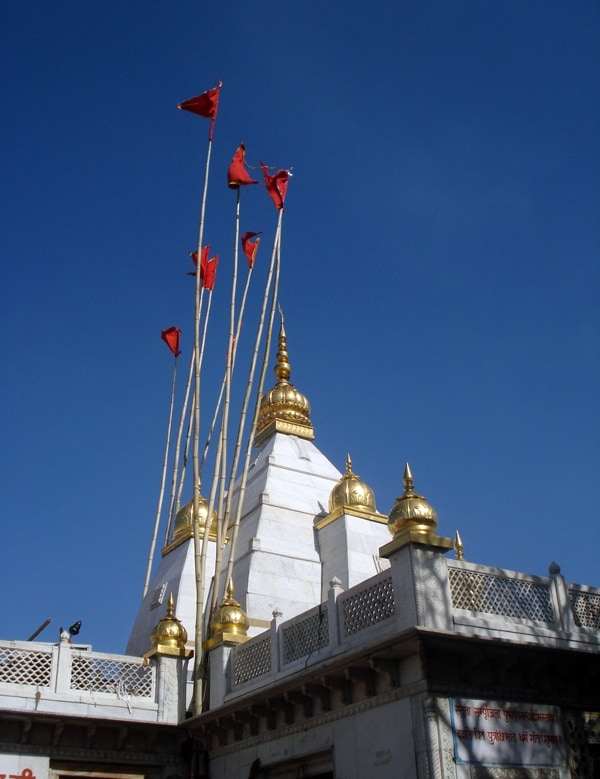
Naina Devi, Sati, Mahishasur Mardini
Shakti Pitha, Pilgrimage Site, Legend of Mahishasur's Defeat
Chand Dynasty
Navaratri, Sawan
Stone
Raja Bir Chand, Gurjar Boy
Gobind Sagar Lake
About Naina Devi
Shri Naina Devi Temple
The Shri Naina Devi Temple is a prominent Hindu temple situated atop a hill in the Bilaspur District of Himachal Pradesh, India. It is a significant pilgrimage destination, revered as one of the sacred Shakti pithas. The temple is dedicated to Goddess Naina Devi, a form of the Goddess Sati, believed to be where her right eye fell after she immolated herself. This event is central to the mythology surrounding the establishment of the Shakti pithas across the Indian subcontinent.
History and Legends
The temple's origins are steeped in legend. According to the Devi Bhagavata Purana, after Goddess Sati's sacrifice, Lord Shiva's grief led him to wander the cosmos with her body, prompting Lord Vishnu to sever it into 51 parts. The places where these parts fell became sacred Shakti pithas. The Shri Naina Devi Temple specifically marks the spot where Sati's right eye is said to have fallen.
Later accounts describe how the temple was rediscovered by a Gurjar boy named Naina, who observed a cow mysteriously showering milk on a stone. After experiencing a divine vision confirming the stone as the Goddess's pindi, Naina informed Raja Bir Chand. Impressed by the miraculous events, Raja Bir Chand constructed a temple on the site, naming it after Naina.
The temple is also known as Mahishapeeth due to its association with the Goddess's victory over the demon Mahishasur. Legends tell of Mahishasur's reign of terror and how the Goddess, created by the combined powers of the gods, defeated him in battle.
Location and Access
The Shri Naina Devi Temple is perched on a hilltop overlooking the Gobind Sagar lake, a reservoir created by the Bhakra-Nangal Dam. The temple can be reached via National Highway No. 21. Pilgrims can ascend the hill by road, which curves partway up, followed by a climb via concrete steps. For added convenience, a cable car facility transports devotees from the base of the hill directly to the temple.
Notable Incidents
A tragic stampede occurred at the temple on August 3, 2008, during the holy month of Sawan. The event, which took place amidst a large gathering of devotees, resulted in the deaths of at least 123 people. Conflicting reports attributed the cause to a broken guard railing, panic caused by rumors, or police actions.
Cultural and Religious Importance
As a Shakti pitha and a site of significant mythological events, the Shri Naina Devi Temple draws a large number of devotees, particularly during festivals such as Navaratri. The surrounding area also includes the samadhi of bhagat Jeona Morh, a 20th-century devotee, adding to the spiritual landscape of the location.
Source: Wikipedia ↗
Frequently Asked Questions
What is the significance of the Shri Naina Devi Temple?
The Shri Naina Devi Temple is a highly revered Shakti pitha, believed to be the site where the right eye of Goddess Sati fell. It is also known as Mahishapeeth, recognizing the Goddess's triumph over the demon Mahishasur.
What is the legend behind the Naina Devi temple?
According to legend, the temple was established after a Gurjar boy discovered a stone on which a cow was showering milk. The Goddess appeared to him in a dream, identifying the stone as her pindi. Raja Bir Chand then built a temple on the spot and named it after the boy, Naina.
How can one reach the Shri Naina Devi Temple?
The temple is located on a hilltop and is accessible via National Highway No. 21. Pilgrims can reach the top by road, followed by concrete steps, or by utilizing the cable car facility.
What is the story of the 2008 stampede at Naina Devi?
On August 3, 2008, a tragic stampede occurred at the temple, resulting in at least 123 deaths. Reports suggest the cause was a combination of factors including a broken guard railing, panic from rumors of a fight, and police action.
What is the connection between Naina Devi and the Gobind Sagar lake?
The hills of Naina Devi overlook the Gobind Sagar lake, which was formed by the Bhakra-Nangal Dam. The lake is a prominent geographical feature in the vicinity of the temple.
Related Temples (Hindu)

Taraknath Temple
The Taraknath Temple, located in Tarakeswar, West Bengal, India, is a significant Hindu pilgrimage site dedicated to Lord Shiva, worshiped here as Tarakanatha. Constructed in 1729, it features a distinct Bengal architectural style with an 'atchala' structure and an adjacent 'natmandir'. The temple is renowned for its belief that a dip in the nearby Dudhpukur tank fulfills prayers and is considered one of the 64 Jyotirlingas.

Tanot Mata Temple
The Tanot Mata Temple is a significant Hindu shrine located in the Jaisalmer district of Rajasthan, India, near the Pakistan border. Revered as a form of Goddess Hinglaj Mata, the temple is famously associated with the Indian victories in the Indo-Pakistani Wars of 1965 and 1971, with local folklore attributing the successful outcomes to divine intervention. The Border Security Force of India now manages the temple complex, which also includes a victory tower and a war museum.
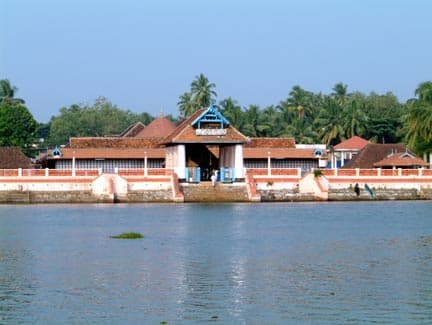
Thriprayar Temple
The Thriprayar Temple, also known as the Shree Ramaswami Temple, is a significant Hindu temple located in Triprayar, Thrissur district, Kerala, India. It is dedicated to Lord Rama, the seventh incarnation of Vishnu, who is depicted with four arms holding a conch, discus, bow, and garland. The temple's origin story involves the idol being worshipped by Krishna in Dwarka, later immersed in the sea, and eventually found by fishermen.