
Muthappan Temple
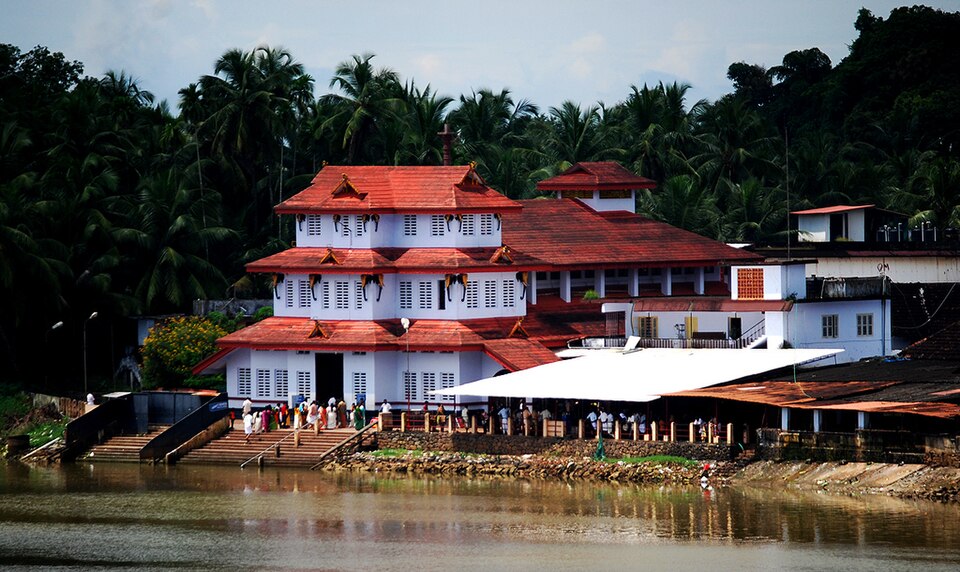
The Muthappan Temple, located in Parassinikadavu, Kerala, India, is dedicated to Sree Muthappan, a manifestation of Lord Shiva. Worship is primarily through ritualistic theyyam enactments known as Thiruvappan and Vellattam, with fish, meat, and toddy as customary offerings.
Key Facts
- ›The principal deity is Sree Muthappan, considered a manifestation of Lord Shiva.
- ›Worship involves ritualistic Theyyam enactments called Thiruvappan and Vellattam.
- ›Traditional offerings include fish, meat, and toddy.
- ›The temple is situated on the banks of the Valapattanam river.
- ›Dogs are considered divine and are symbolized by idols at the temple entrance.
- ›The major festival is Muthappan Thiruvoppana Mahothsavam, celebrated for three days in March.
Sree Muthappan, Lord Shiva
Unique Ritualistic Worship Through Theyyam, Sacred Site For the Thiyya Community, Important Pilgrimage Destination
Muthappan Thiruvoppana Mahothsavam, Puthari Thiruvappana Festival
Chantan Family
Idols of Dogs At the Temple Entrance
Valapattanam River
About Muthappan Temple
The Muthappan Temple is a prominent Hindu temple located in Parassinikadavu, within the Anthoor municipality of Kannur district, Kerala, India. Situated on the banks of the Valapattanam river, it is approximately 10 km from Taliparamba and 20 km from Kannur town. The temple is primarily dedicated to Sree Muthappan, revered as a manifestation of Lord Shiva, particularly in his form as a hunter. It is a significant religious site for the Thiyya community.
Worship and Rituals
A distinctive feature of the Muthappan Temple is its unique form of worship, which deviates from the traditional Satvic Brahminical practices found in many other Hindu temples in Kerala. The principal mode of worship involves the ritualistic enactment of Sree Muthappan through a traditional dance form known as Theyyam. These performances are presented in two primary versions: Thiruvappan, the grander enactment with elaborate regalia, and Vellattam, a more minimalistic version emphasizing dynamic movements and vocalizations. These ritualistic Theyyam performances are conducted daily, both in the early morning and in the evening.
Legend and Significance
According to local tradition and legend, Sree Muthappan is considered a manifestation of Lord Shiva. One version of the legend recounts the story of a divine child found floating in a basket of flowers by Padikutty Amma, who believed it to be a blessing from Lord Shiva. This child, who grew up to champion the cause of the downtrodden, eventually left home and was later known as Muthappan. The legend also associates Muthappan with a tribal friend named Chantan, and it is from this association that the Chantan family began conducting rituals to propitiate the deity, calling him 'Muthappan'. The temple also holds dogs in divine regard, stemming from the legend of a dog that consistently accompanied Muthappan on his travels; idols of dogs are thus present at the temple's entrance.
Festivals and Offerings
Fish, meat, and toddy are traditionally offered to Sree Muthappan, reflecting the temple's distinct ritualistic practices. The major annual festival celebrated at the temple is the Muthappan Thiruvoppana Mahothsavam, a three-day event occurring on March 3, 4, and 5 (corresponding to the Malayalam dates 19, 20, and 21 of Kumbham). Another significant festival is the Puthari Thiruvappana, observed on December 1 or 2 (16 Vrichikam), which is linked to the region's harvest season. The temple year concludes with the last Thiruvappana on October 17 (30 Kanni).
Source: Wikipedia ↗
Frequently Asked Questions
Who is Sree Muthappan, the deity worshipped at the temple?
Sree Muthappan is the principal deity of the Muthappan Temple and is considered a manifestation of Lord Shiva in a hunter format. Local tradition also views the presiding deity as a manifestation of Lord Shiva.
What are the main forms of worship at the Muthappan Temple?
The primary mode of worship is through ritualistic enactments of Sree Muthappan in two versions: Thiruvappan (the full version with royal regalia) and Vellattam (a minor version emphasizing dance and speech). These are performed daily.
What are the customary offerings to Sree Muthappan?
The customary offerings to Sree Muthappan at the temple are fish, meat, and toddy. These offerings are unique compared to the Satvic Brahminical form of worship found in many other Hindu temples.
When is the major festival celebrated at the Muthappan Temple?
The major festival of the temple is the Muthappan Thiruvoppana Mahothsavam, which is celebrated for three days every year on March 3, 4, and 5 (corresponding to the Malayalam dates 19, 20, and 21 of Kumbham).
What is the significance of dogs at the Muthappan Temple?
According to legend, a dog always accompanied Muthappan during his journeys. Consequently, dogs are considered divine in the temple, and idols of dogs are placed at both sides of the temple entrance.
Related Temples (Hindu)

Taraknath Temple
The Taraknath Temple, located in Tarakeswar, West Bengal, India, is a significant Hindu pilgrimage site dedicated to Lord Shiva, worshiped here as Tarakanatha. Constructed in 1729, it features a distinct Bengal architectural style with an 'atchala' structure and an adjacent 'natmandir'. The temple is renowned for its belief that a dip in the nearby Dudhpukur tank fulfills prayers and is considered one of the 64 Jyotirlingas.

Tanot Mata Temple
The Tanot Mata Temple is a significant Hindu shrine located in the Jaisalmer district of Rajasthan, India, near the Pakistan border. Revered as a form of Goddess Hinglaj Mata, the temple is famously associated with the Indian victories in the Indo-Pakistani Wars of 1965 and 1971, with local folklore attributing the successful outcomes to divine intervention. The Border Security Force of India now manages the temple complex, which also includes a victory tower and a war museum.
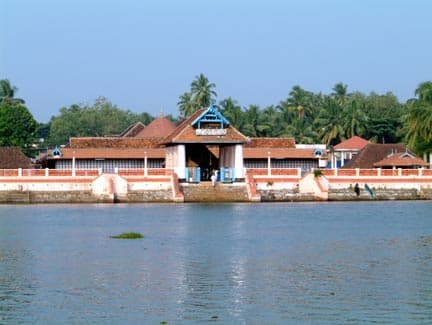
Thriprayar Temple
The Thriprayar Temple, also known as the Shree Ramaswami Temple, is a significant Hindu temple located in Triprayar, Thrissur district, Kerala, India. It is dedicated to Lord Rama, the seventh incarnation of Vishnu, who is depicted with four arms holding a conch, discus, bow, and garland. The temple's origin story involves the idol being worshipped by Krishna in Dwarka, later immersed in the sea, and eventually found by fishermen.