
Mumbra Devi Temple
The Mumbra Devi Temple is an ancient Hindu temple located atop Parsik Hill near Mumbai, India. Dedicated to the Navadurga, it features nine stone-carved idols of goddesses, each with engraved vertebrae. The temple is a significant pilgrimage site, particularly during Navratri, and is also frequented by trekkers.
Key Facts
- ›The temple is situated atop Parsik Hill, approximately 210 meters above sea level.
- ›It houses idols of nine goddesses, carved in stone with vertebrae engraved upon them.
- ›The name 'Mumbra' translates to Navadurga, referring to the nine forms of the mother goddess.
- ›According to legend, the temple's deity was discovered through a burning flame on the hill.
- ›The temple is managed and its recent construction was undertaken by the Bhagat family.
- ›It features a mural depicting the 10 faces of the mother goddess Mumbra, the prime deity of local fishing tribes.

Maa Mumbra Devi, Navadurga
- Religious Pilgrimage Site, Especially During Navratri
- Cultural Significance For Koli and Agri Fishing Tribes
- Popular Destination For Trekkers
Navratri
Stone
Bhagat Family
- Mural of 10 Faces of Mumbra Devi
- Nine Stone-Carved Idols of Goddesses With Engraved Vertebrae
About Mumbra Devi Temple
The Mumbra Devi Temple is an ancient Hindu place of worship situated on the summit of Parsik Hill in Mumbra, a suburb within the Thane district, near Mumbai, India. The temple is positioned at an altitude of approximately 210 meters above sea level.
Deities and Idols
The Mumbra Devi Temple is dedicated to the Navadurga, the nine forms of the mother goddess. It houses nine distinct idols of goddesses, each intricately carved from stone and featuring engraved vertebrae. A notable mural within the temple complex depicts the ten faces of Mumbra Devi, who holds significant importance as the prime deity for the Koli and Agri fishing communities residing in the Mumbra region.
History and Legend
The name "Mumbra" itself is derived from Navadurga. Historical accounts suggest the temple is an old Hindu goddess temple that was established during the British period. According to local lore, the existence of the goddess was revealed through a divine sign: a burning flame observed on the hill. Following this phenomenon, local people, accompanied by Nana Bhagat, ascended the hill and discovered a lamp burning near the site, leading to the finding of the statue of Maa Mumbra Devi. The temple is currently maintained and its recent constructions have been undertaken by the Bhagat family.
Significance and Accessibility
The Mumbra Devi Temple is a significant pilgrimage destination, drawing large crowds of devotees, particularly during the Navratri festival. The scenic location also attracts many trekkers who visit the area to climb the hill. The temple was temporarily closed to devotees during the COVID-19 pandemic lockdown for a period of one and a half years, but it was subsequently reopened on the auspicious occasion of Navratri, adhering to the guidelines set by the Maharashtra government.
The nearest railway station is Mumbra, located on the Central line of the Mumbai Suburban Railway. The location is also conveniently situated near Thane and is approximately 40 kilometers away from Mumbai, facilitating access for visitors.
Source: Wikipedia ↗
Frequently Asked Questions
Where is the Mumbra Devi Temple located?
The Mumbra Devi Temple is situated at the top of Parsik Hill in Mumbra, a suburb of the Thane district, near Mumbai, India. It is approximately 210 meters above sea level.
What is the significance of the idols in Mumbra Devi Temple?
The temple contains idols of nine goddesses, which are carved in stone. Each of these idols has vertebrae engraved on them, signifying their divine form.
What is the origin story of the Mumbra Devi Temple?
Local legend recounts that people saw a burning flame on the hill, leading them to discover a lamp burning near the temple and the statue of Maa Mumbra Devi. The temple is believed to have been built during the British period.
Who is the primary deity worshipped at Mumbra Devi Temple?
The primary deity is Maa Mumbra Devi, who is one of the Navadurga. The temple also features a mural of her 10 faces. She is the prime deity of the Koli and Agri fishermen tribes in the Mumbra area.
How accessible is the Mumbra Devi Temple?
The nearest railway station is Mumbra on the Central line of the Mumbai Suburban Railway. The temple is also relatively close to Thane and about 40 km from Mumbai.
Related Temples (Hindu)

Taraknath Temple
The Taraknath Temple, located in Tarakeswar, West Bengal, India, is a significant Hindu pilgrimage site dedicated to Lord Shiva, worshiped here as Tarakanatha. Constructed in 1729, it features a distinct Bengal architectural style with an 'atchala' structure and an adjacent 'natmandir'. The temple is renowned for its belief that a dip in the nearby Dudhpukur tank fulfills prayers and is considered one of the 64 Jyotirlingas.

Tanot Mata Temple
The Tanot Mata Temple is a significant Hindu shrine located in the Jaisalmer district of Rajasthan, India, near the Pakistan border. Revered as a form of Goddess Hinglaj Mata, the temple is famously associated with the Indian victories in the Indo-Pakistani Wars of 1965 and 1971, with local folklore attributing the successful outcomes to divine intervention. The Border Security Force of India now manages the temple complex, which also includes a victory tower and a war museum.
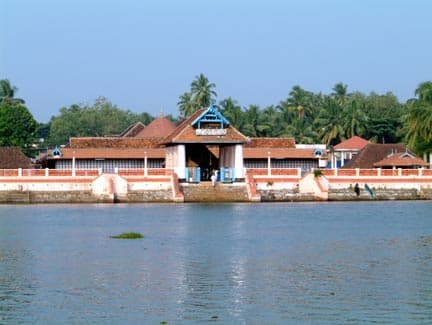
Thriprayar Temple
The Thriprayar Temple, also known as the Shree Ramaswami Temple, is a significant Hindu temple located in Triprayar, Thrissur district, Kerala, India. It is dedicated to Lord Rama, the seventh incarnation of Vishnu, who is depicted with four arms holding a conch, discus, bow, and garland. The temple's origin story involves the idol being worshipped by Krishna in Dwarka, later immersed in the sea, and eventually found by fishermen.