
Moteshwar Mahadev
Shree Moteshwar Mahadev, also known as Shree Bheem Shankar Mahadev, is a significant Hindu temple located in Kashipur, Uttarakhand, India. Historically known as Dakini State or Govishn, the temple enshrines a large Jyotirlingam believed to be the Bheem Shankar Jyotirlingam, one of the twelve principal Jyotirlingas of Lord Shiva. The temple complex also features other shrines and a sacred kund.
Key Facts
- ›The temple is dedicated to Lord Shiva, worshipped here as Bheem Shankar Jyotirlingam.
- ›It is believed to have been built around 302 AD.
- ›The lingam is exceptionally large, earning it the name 'Moteshwar Mahadev' (Moteshwar meaning 'fat lord').
- ›The temple is situated in an area historically known as Dakini State and Govishan.
- ›It is associated with the epic Mahabharata and the sage Dronacharya.
- ›The temple complex includes a Bhairav Nath temple and the Shiv Ganga Kund.

Shiva
- Religious Pilgrimage
- One of the 12 Jyotirlingas
- Historical Importance Associated With Mahabharata and Sage Dronacharya
Chand Kings of Kumaon
Maha Shivratri Fair, Chaiti Mela, Shrawan Mela
Guru Dronacharya
Shiv Ganga Kund, River Bahela
About Moteshwar Mahadev
Shree Moteshwar Mahadev
Shree Moteshwar Mahadev, also recognized as Shree Bheem Shankar Mahadev, is a revered Hindu temple situated in Kashipur, within the state of Uttarakhand, India. Historically, this region was known as the Dakini State and Govishan. The temple is celebrated for housing a Jyotirlingam believed to be the Bheem Shankar Jyotirlingam, counted among the twelve principal Jyotirlingas dedicated to Lord Shiva.
History and Mythology
According to local traditions and historical texts such as the Shiva Purana and the Linga Purana, the site is identified with the Bheem Shankar Jyotirlingam. The area's ancient name, Dakini, is linked to the mythical demoness Hidimba, who married the Pandava Bheem. The temple's lingam is notably massive, leading to its name 'Moteshwar Mahadev,' meaning 'fat lord.' Historical accounts suggest the temple was built around 302 AD. The site is also associated with the epic Mahabharata, with legends indicating that Guru Dronacharya inspired Bheemsen to reconstruct the temple, which then became known as Bheem Shankar.
Temple Complex and Worship
The temple complex includes the primary shrine dedicated to Shiva, along with associated deities and structures. Among these are a Bhairav Nath temple and a sacred pond known as Shiv Ganga Kund. The river Bahela flows near the temple. Worship timings are from 6:00 AM to 12:00 Noon and 4:00 PM to 8:00 PM, with Sandhya aarti at 7:10 PM during summers. Important deities besides Shiva include Parvati, Kartikeya, Ganesha, Hanuman, Kali, Bhairo, Krishna, and Lord Rama.
Significance and Festivals
Shree Moteshwar Mahadev is a significant pilgrimage site, drawing devotees from across the country. The temple is particularly important during major festivals such as Maha Shivratri, the Chaiti Mela, and the Shrawan Mela. The Chaiti Mela, held annually in the month of Chaitra, is a prominent event celebrated in Kashipur. The temple's historical connections to figures like Guru Dronacharya and the Pandavas further add to its cultural and religious importance.
Source: Wikipedia ↗
Frequently Asked Questions
Where is Shree Moteshwar Mahadev located?
Shree Moteshwar Mahadev is located in the Ujjanak area of Kashipur, in the Udham Singh Nagar district of Uttarakhand state, India. It is approximately 3 km from the Kashipur bus station.
What is the significance of the Bheem Shankar Jyotirlingam at this temple?
This temple is believed to house the Bheem Shankar Jyotirlingam, which is considered one of the twelve principal Jyotirlingas of Lord Shiva. Its presence here is supported by ancient texts and local traditions.
What is special about the lingam at Moteshwar Mahadev?
The lingam at Moteshwar Mahadev is notable for its immense size, so large that it is impossible to encircle with two human hands. It is believed to continue growing, having already reached the second floor of the temple structure.
What is the historical background of the temple's location?
The area where the temple is located was historically known as Dakini State, and during the time of Emperor Harsha, it was called Govishan. The temple's association with the Pandavas and Guru Dronacharya also points to its ancient roots.
What are the main festivals celebrated at Shree Moteshwar Mahadev?
Key festivals celebrated at the temple include the Maha Shivratri Fair, the Chaiti Mela, and the Shrawan Mela. The Chaiti Mela is particularly well-known and is organized annually in the month of Chaitra.
Related Temples (Hindu)

Venkateswara Temple, Tirumala
The Venkateswara Temple, also known as Tirumala Temple, is a significant Hindu pilgrimage site located in the Tirumala hills of Andhra Pradesh, India. Dedicated to Venkateswara, a form of Vishnu, the temple is renowned for its Dravidian architecture and is considered one of the wealthiest and most visited religious sites globally. It is administered by the Tirumala Tirupati Devasthanams (TTD), an autonomous body under the Government of Andhra Pradesh.
Gokarna
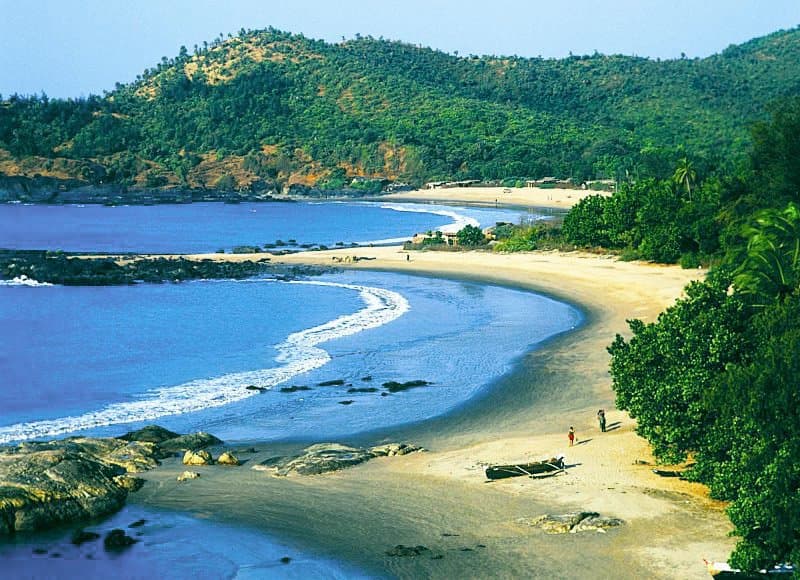
Gokarna is a historic temple town in Karnataka, India, renowned for its 4th-century Mahabaleshwar Temple dedicated to Lord Shiva. The town holds significant mythological importance, with legends linking its origin to a cow's ear and the divine Atmalinga. Beyond its religious significance, Gokarna is also a popular tourist destination, known for its beautiful beaches and trekking routes.

Taraknath Temple
The Taraknath Temple, located in Tarakeswar, West Bengal, India, is a significant Hindu pilgrimage site dedicated to Lord Shiva, worshiped here as Tarakanatha. Constructed in 1729, it features a distinct Bengal architectural style with an 'atchala' structure and an adjacent 'natmandir'. The temple is renowned for its belief that a dip in the nearby Dudhpukur tank fulfills prayers and is considered one of the 64 Jyotirlingas.