
Gokarna
Gokarna is a historic temple town in Karnataka, India, renowned for its 4th-century Mahabaleshwar Temple dedicated to Lord Shiva. The town holds significant mythological importance, with legends linking its origin to a cow's ear and the divine Atmalinga. Beyond its religious significance, Gokarna is also a popular tourist destination, known for its beautiful beaches and trekking routes.
Key Facts
- ›Gokarna is located in the Uttara Kannada district of Karnataka state, India.
- ›The town is famous for the 4th-century Mahabaleshwar Temple, dedicated to Lord Shiva.
- ›Mythological legends associate the town's name, Gokarna, with a cow's ear and the Atmalinga of Shiva.
- ›It is mentioned in the Hindu epic Mahabharata and by the Sanskrit poet Kalidasa.
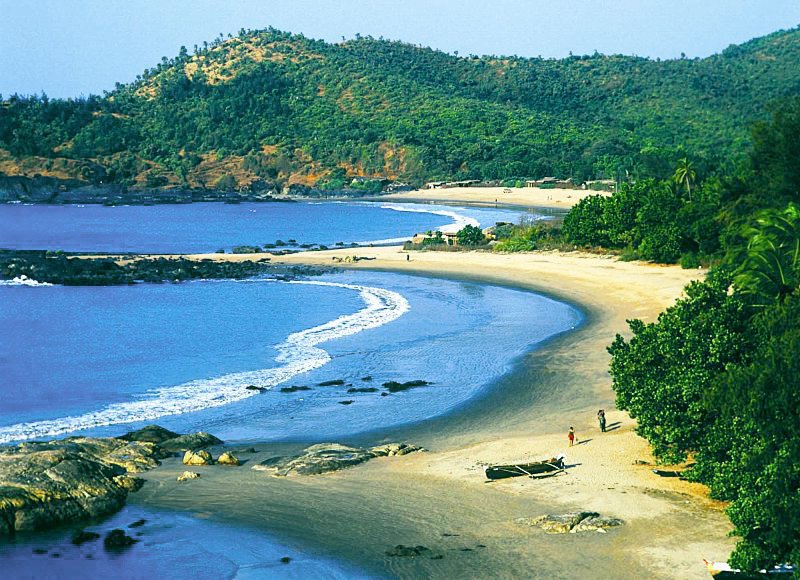
- ›Gokarna is also a popular destination for tourists, particularly for its beaches.
- ›The Kadamba dynasty played a role in the institutionalization of the Gokarna Temple complex.
Shiva, Uma, Ganesha
Religious Pilgrimage Site, Mythological Importance, Historical Sacred Center, Popular Beach Destination
Kadamba Dynasty, Vijayanagara Empire, Nayakas of Sonda
King Mayurasharma, Bukka Raya I, Harihara I
Gangavalli River, Aghanashini River, Arabian Sea
About Gokarna
Gokarna is a significant historical and temple town situated in the Uttara Kannada district of Karnataka state in southern India. It is renowned for its ancient religious sites, most notably the Mahabaleshwar Temple, a 4th-century structure dedicated to Lord Shiva. The town is steeped in mythology, with legends explaining its name, Gokarna, as originating from a cow's ear. It is also recognized as a Muktikshetra, a place of liberation, in various Puranic texts.
Historical and Mythological Context
The mythological origins of Gokarna are traditionally set in the Treta Yuga, involving the demon king Ravana and the Atmalinga of Shiva. According to the Skanda Purana, Ganesha played a crucial role in placing the sacred Atmalinga at Gokarna, where it became permanently rooted. This event is said to have shaped the Lingam into a cow's ear, giving the town its name. Historically, Gokarna is one of the oldest continuously inhabited sacred centers on India's western coast. Its antiquity is supported by mentions in the epic Mahabharata and by the classical Sanskrit poet Kalidasa in his work Raghuvamsha, dating to the 4th century CE. The Kadamba dynasty was instrumental in the formal institutionalization of the temple complex, with the earliest structural temple attributed to King Mayurasharma. Later, rulers of the Vijayanagara Empire, such as Bukka Raya I and Harihara I, made significant land grants and expanded the temple complex between the 14th and 16th centuries. Following the decline of Vijayanagara, the Nayakas of Sonda continued to patronize and protect the shrine.
Religious and Cultural Significance
Gokarna is a major center for Shaivism and a popular pilgrimage destination. The Mahabaleshwar Temple is the primary attraction, housing the Atmalinga. The town also features the Bhadrakali Temple, dedicated to Goddess Uma, and the Maha Ganpati Temple, dedicated to Lord Ganesha. Its designation as a Muktikshetra underscores its spiritual importance.
Geography and Tourism
Located along the Arabian Sea between the Gangavalli and Aghanashini rivers, Gokarna is also celebrated for its natural beauty. It is a popular tourist destination, especially for its pristine beaches such as Gokarna Main Beach, Kudle Beach, Om Beach, Half Moon Beach, and Paradise Beach. These beaches attract many tourists and beach trekkers. The town is accessible via the Konkan Railway and is situated in a region known for its dense tropical forests within the Western Ghats, supporting rich biodiversity.
Source: Wikipedia ↗
Frequently Asked Questions
What is the mythological origin of Gokarna?
According to legend, Lord Shiva emerged from the ear of a cow during Brahma's meditation, leading to the name Gokarna, meaning 'cow's ear'. Another legend tells of the demon king Ravana placing the Atmalinga in Gokarna, where it became immovably rooted.
Which deities are primarily worshipped in Gokarna?
The main deity is Lord Shiva, worshipped as Mahabaleshwar at the Mahabaleshwar Temple. The town also features the Bhadrakali Temple dedicated to Goddess Uma and the Maha Ganpati Temple dedicated to Lord Ganesha.
What is Gokarna's historical significance?
Gokarna is one of the oldest continuously inhabited sacred centers on India's western coast. It is mentioned in ancient texts like the Mahabharata and by classical poets, and was recognized as a Muktikshetra (Place of Liberation) in the Puranas.
What architectural style is prominent in Gokarna's temples?
The earliest structural temple of Mahabaleshwar is attributed to King Mayurasharma of the Kadamba dynasty, suggesting early structural temple architecture. Later patronage from the Vijayanagara Empire also contributed to the complex.
What role did the Kadamba dynasty play in Gokarna?
The Kadamba dynasty, specifically King Mayurasharma, is credited with the formal institutionalization of the Gokarna Temple complex and the construction of the earliest structural temple of Mahabaleshwar.
Besides religious sites, what else is Gokarna known for?
Gokarna is a popular tourist destination, particularly for its scenic beaches like Om Beach, Half Moon Beach, and Paradise Beach, making it a favored spot for beach trekkers.
Related Temples (Hindu)

Venkateswara Temple, Tirumala
The Venkateswara Temple, also known as Tirumala Temple, is a significant Hindu pilgrimage site located in the Tirumala hills of Andhra Pradesh, India. Dedicated to Venkateswara, a form of Vishnu, the temple is renowned for its Dravidian architecture and is considered one of the wealthiest and most visited religious sites globally. It is administered by the Tirumala Tirupati Devasthanams (TTD), an autonomous body under the Government of Andhra Pradesh.

Moteshwar Mahadev
Shree Moteshwar Mahadev, also known as Shree Bheem Shankar Mahadev, is a significant Hindu temple located in Kashipur, Uttarakhand, India. Historically known as Dakini State or Govishn, the temple enshrines a large Jyotirlingam believed to be the Bheem Shankar Jyotirlingam, one of the twelve principal Jyotirlingas of Lord Shiva. The temple complex also features other shrines and a sacred kund.

Taraknath Temple
The Taraknath Temple, located in Tarakeswar, West Bengal, India, is a significant Hindu pilgrimage site dedicated to Lord Shiva, worshiped here as Tarakanatha. Constructed in 1729, it features a distinct Bengal architectural style with an 'atchala' structure and an adjacent 'natmandir'. The temple is renowned for its belief that a dip in the nearby Dudhpukur tank fulfills prayers and is considered one of the 64 Jyotirlingas.