
Mindhal Mata Temple
The Mindhal Mata Temple, also known as the Mindhal Devi Temple or the temple of Chamunda, is an ancient pilgrimage site located in the Pangi Valley of Himachal Pradesh, India. Constructed from wood and stone, the temple features a square structure with a pent roof and a central cella, housing a black stone image believed to have risen from the ground.
Key Facts
- ›The temple is situated on the left bank of the Chenab River in the remote Pangi Valley.
- ›It is dedicated to Mindhal Mata, also identified as Chamunda.
- ›A significant mela (fair) is held here annually in Bhadon, attracting people from neighboring valleys.
- ›The current structure is made of wood and stone with a pent roof and verandahs.
- ›A legend describes the divine manifestation of the goddess and the petrification of a widow and her sons.
- ›King Prithvi Singh made donations and left an inscribed copper plate donation dated AD 1641.

Mindhal Mata, Mindhal Devi, Chamunda
- Ancient Pilgrimage Site
- Site of Annual Mela
- Connected To Local Legends of Divine Manifestation
Mela In Bhadon
Wood, Stone
King Prithvi Singh
Black Stone Image of the Devi
Chenab River
About Mindhal Mata Temple
The Mindhal Mata Temple, also referred to as the Mindhal Devi Temple and the temple of Chamunda, is a significant ancient pilgrimage destination situated in the Pangi Valley of Himachal Pradesh, India. Nestled in the remote and mountainous region of the Chamba district, the temple stands on the left bank of the Chenab River, opposite the village of Sách.
Structure and Iconography
The temple itself is characterized by its square shape and a pent roof, a common architectural feature for devi temples in the Himalayan region. Constructed from a combination of wood and stone, it comprises a central cella flanked by two verandahs, one of which is enclosed and the other open. At the heart of the sanctuary is a black stone image, sculpted in human form. Local belief holds that this image miraculously emerged from the ground and extends to a considerable depth.
Legends and History
A compelling legend is associated with the Mindhal Devi. The site where the temple now stands was once the location of a house belonging to a widow and her seven sons. According to the tale, during early autumn, a black stone unexpectedly appeared in the hearth of the upper storey, causing the widow distress. Her attempts to move it were futile, and she eventually recognized the stone as a manifestation of a Devi. Her sons, however, were skeptical. In a divine reprimand for their disbelief, the widow and her sons were transformed into stone—the mother within the house and the sons out in the field. This legend is said to explain why only one ox is used per plough in the area and why the land has been considered tax-free religious territory for centuries.
Historically, King Prithvi Singh visited the Mindhal Mata temple and made substantial donations. Evidence of his patronage exists in the form of a copper plate inscription, dated Vikrama 1698 (AD 1641), which remains in the temple's possession.
Pilgrimage and Festivals
The Mindhal Mata Temple has been a revered pilgrimage site since ancient times. A notable annual event is the mela held in the month of Bhadon, which draws large crowds from all the neighboring valleys. The festivities during this mela often involve drinking and dancing, reflecting the vibrant cultural and spiritual traditions of the region. The temple priests and chelas are Brahmans.
Source: Wikipedia ↗
Frequently Asked Questions
Where is the Mindhal Mata Temple located?
The Mindhal Mata Temple is located in the Pangi Valley, within the Chamba district of Himachal Pradesh, India. It is situated on the left bank of the Chenab River, opposite the village of Sách.
What deity is worshipped at the Mindhal Mata Temple?
The temple is dedicated to Mindhal Mata, who is also known as Mindhal Devi and is identified with the goddess Chamunda.
What is the architectural style of the Mindhal Mata Temple?
The temple has a square structure with a pent roof, typical of devi temples in the hilly regions. It is constructed from wood and stone and includes a central cella with enclosed and open verandahs.
Are there any significant legends associated with the temple?
Yes, a prominent legend tells of a goddess manifesting as a black stone in a widow's hearth. The widow and her seven sons were subsequently turned to stone for their disbelief, with the mother within the house and the sons in a nearby field.
Is the Mindhal Mata Temple an active place of worship?
Yes, the temple has been a place of pilgrimage from ancient times, and a significant mela is held here annually in the month of Bhadon, drawing many devotees.
What historical figures are associated with the temple?
King Prithvi Singh visited the Mindhal Mata Temple and made donations, leaving behind a copper plate inscription dated AD 1641, which is still in the temple's possession.
Related Temples (Hindu)

Taraknath Temple
The Taraknath Temple, located in Tarakeswar, West Bengal, India, is a significant Hindu pilgrimage site dedicated to Lord Shiva, worshiped here as Tarakanatha. Constructed in 1729, it features a distinct Bengal architectural style with an 'atchala' structure and an adjacent 'natmandir'. The temple is renowned for its belief that a dip in the nearby Dudhpukur tank fulfills prayers and is considered one of the 64 Jyotirlingas.

Tanot Mata Temple
The Tanot Mata Temple is a significant Hindu shrine located in the Jaisalmer district of Rajasthan, India, near the Pakistan border. Revered as a form of Goddess Hinglaj Mata, the temple is famously associated with the Indian victories in the Indo-Pakistani Wars of 1965 and 1971, with local folklore attributing the successful outcomes to divine intervention. The Border Security Force of India now manages the temple complex, which also includes a victory tower and a war museum.
Thriprayar Temple
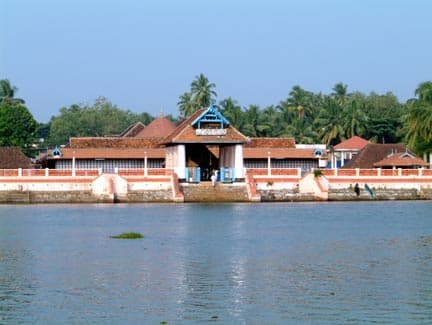
The Thriprayar Temple, also known as the Shree Ramaswami Temple, is a significant Hindu temple located in Triprayar, Thrissur district, Kerala, India. It is dedicated to Lord Rama, the seventh incarnation of Vishnu, who is depicted with four arms holding a conch, discus, bow, and garland. The temple's origin story involves the idol being worshipped by Krishna in Dwarka, later immersed in the sea, and eventually found by fishermen.