
Mehandipur Balaji Temple
Mehandipur Balaji Temple, located in Rajasthan, India, is dedicated to Hanuman in his childhood form, known as Balaji. The temple is renowned for its practices of ritualistic healing and exorcism, drawing a large number of pilgrims seeking relief from spiritual afflictions.
Key Facts
- ›Dedicated to Hanuman, referred to as Balaji in his childhood form.
- ›Known for its reputation in ritualistic healing and exorcism of evil spirits.
- ›Attracts numerous pilgrims from across Rajasthan and other regions.
- ›Situated in the town of Mehandipur, unlike many rural temples.
- ›A scientific study was initiated in 2013 to examine the temple's healing rituals.

Hanuman
Ritualistic Healing, Exorcism of Evil Spirits, Pilgrimage Destination
About Mehandipur Balaji Temple
Mehandipur Balaji Temple is a significant Hindu temple located in Mehandipur, within the Dausa district of Rajasthan, India. The temple is primarily dedicated to Hanuman, revered in his childhood form, which is locally known as Balaji. This particular form of Hanuman is worshipped in various parts of India, but Mehandipur Balaji Temple holds a distinct reputation.
Healing and Exorcism Traditions
The temple is widely known for its unique traditions of ritualistic healing and the exorcism of evil spirits. This reputation draws a substantial number of pilgrims from Rajasthan and other regions who seek relief from perceived supernatural afflictions and spiritual disturbances. Unlike many other religious sites that are situated in rural or remote areas, Mehandipur Balaji Temple is located within a town, making it more accessible to its devotees.
Research and Pilgrimage
The temple's practices have attracted scholarly interest, leading to a study initiated in 2013 by an international team of scientists, scholars, and psychiatrists. This research aimed to evaluate various aspects of the treatments and rituals performed at the site. Its continuous influx of pilgrims underscores its importance as a spiritual center for those seeking divine intervention for their ailments.
Source: Wikipedia ↗
Frequently Asked Questions
What deity is worshipped at Mehandipur Balaji Temple?
The temple is dedicated to the Hindu deity Hanuman, specifically revered in his childhood form, which is referred to as Balaji. This name signifies the divine power and presence of Hanuman during his youth.
What is Mehandipur Balaji Temple most famous for?
Mehandipur Balaji Temple is most famous for its unique reputation in performing ritualistic healing and the exorcism of evil spirits. Many pilgrims visit the temple seeking divine intervention for supernatural afflictions and mental distress.
Who visits Mehandipur Balaji Temple?
The temple attracts a large number of pilgrims, not only from the Indian state of Rajasthan but also from other parts of the country. They come seeking spiritual solace and healing for various ailments, particularly those believed to be caused by malevolent spirits.
Where is Mehandipur Balaji Temple located?
Mehandipur Balaji Temple is situated in Mehandipur, which is part of the Dausa district in the Indian state of Rajasthan. It is notable for being located within a town rather than in a more rural or secluded setting.
Related Temples (Hindu)

Taraknath Temple
The Taraknath Temple, located in Tarakeswar, West Bengal, India, is a significant Hindu pilgrimage site dedicated to Lord Shiva, worshiped here as Tarakanatha. Constructed in 1729, it features a distinct Bengal architectural style with an 'atchala' structure and an adjacent 'natmandir'. The temple is renowned for its belief that a dip in the nearby Dudhpukur tank fulfills prayers and is considered one of the 64 Jyotirlingas.

Tanot Mata Temple
The Tanot Mata Temple is a significant Hindu shrine located in the Jaisalmer district of Rajasthan, India, near the Pakistan border. Revered as a form of Goddess Hinglaj Mata, the temple is famously associated with the Indian victories in the Indo-Pakistani Wars of 1965 and 1971, with local folklore attributing the successful outcomes to divine intervention. The Border Security Force of India now manages the temple complex, which also includes a victory tower and a war museum.
Thriprayar Temple
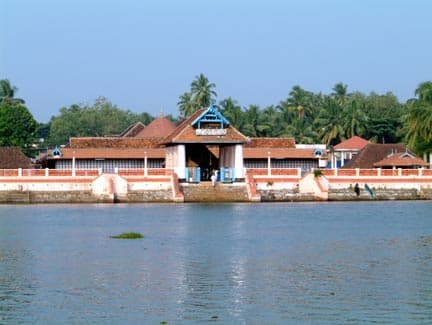
The Thriprayar Temple, also known as the Shree Ramaswami Temple, is a significant Hindu temple located in Triprayar, Thrissur district, Kerala, India. It is dedicated to Lord Rama, the seventh incarnation of Vishnu, who is depicted with four arms holding a conch, discus, bow, and garland. The temple's origin story involves the idol being worshipped by Krishna in Dwarka, later immersed in the sea, and eventually found by fishermen.