
Mata Kuan Rani Temple
The Mata Kuan Rani Temple, also known as the 'Princess of the Well Temple,' is located near the Beas River in Mandi, Himachal Pradesh, India. It commemorates the legend of Princess Mandarava, who, according to tradition, became a consort of Padmasambhava. The temple is significant for both Hindu and Tibetan Buddhist traditions.
Key Facts
- ›Dedicated to Princess Mandarava, consort of Padmasambhava.
- ›Located near the Beas River in Mandi, Himachal Pradesh, India.
- ›Commemorates a legendary event involving imprisonment and a miraculous lake.
- ›Sacred to both Tibetan Buddhists and Hindus.
- ›Historically visited by Tibetan pilgrims and traders before border closures.

Princess Mandarava
- Religious Pilgrimage Site For Hindus and Tibetan Buddhists
- Commemorates Legendary Figures In Buddhist and Hindu Traditions
- Historical Stop For Tibetan Pilgrims and Traders
Slate
King Arshadhara, Queen Mohauki
Beas River
About Mata Kuan Rani Temple
The Mata Kuan Rani Temple, which translates to 'Princess of the Well Temple,' is a significant religious site located in Mandi, Himachal Pradesh, India, near the banks of the Beas River. This temple is primarily dedicated to and celebrates the legend of Princess Mandarava, a figure revered in both Hindu and Tibetan Buddhist traditions.
Legend of Princess Mandarava
According to lore, Princess Mandarava was the daughter of King Arshadhara and Queen Mohauki of Zahor, often identified with the region of Mandi. She is described as a prodigious and beautiful individual who refused marriage proposals. The narrative recounts her refusal to marry, her alleged transgression of feeding her father the flesh of a Brahmin, and her subsequent departure from the palace to become a beggar-monk. She was ordained by the scholar Śāntarakṣita and later encountered Padmasambhava, becoming his disciple. Enraged by their union, the king condemned them to death by fire. However, after seven days, a lake named Rewalsar (Tso Pema or 'Lotus Lake') emerged, with a lotus at its center, demonstrating the spiritual power of Padmasambhava and Mandarava. This event led the king to seek teachings and grant his daughter permission to follow her spiritual path.
Religious Significance
The temple holds importance for both Hindus and Tibetan Buddhists. It was a common destination for Tibetan pilgrims and traders before the Chinese invasion of Tibet led to the closure of borders with India. The structure itself features a slate roof built over a deep well, symbolizing the legendary well associated with Princess Mandarava.
Source: Wikipedia ↗
Frequently Asked Questions
What is the significance of the Mata Kuan Rani Temple?
The temple celebrates the legend of Princess Mandarava and her spiritual connection with Padmasambhava. It is a sacred site for both Hindu and Tibetan Buddhist traditions, drawing pilgrims and historically serving as a stop for traders.
What is the legend associated with Princess Mandarava and the temple?
According to legend, Princess Mandarava was imprisoned by her father for refusing marriage and associating with Padmasambhava. After a fire intended to kill them, a lake with a lotus appeared, convincing her father of their spiritual power and allowing Mandarava to pursue her religious path.
Where is the Mata Kuan Rani Temple located?
The temple is situated in the town of Mandi, Himachal Pradesh, India, near the bank of the Beas River.
Who is Princess Mandarava?
Princess Mandarava was the daughter of King Arshadhara and Queen Mohauki from Zahor (often identified with Mandi). She is revered as a spiritual figure who became a disciple and consort of Padmasambhava.
Related Temples (Hindu)

Taraknath Temple
The Taraknath Temple, located in Tarakeswar, West Bengal, India, is a significant Hindu pilgrimage site dedicated to Lord Shiva, worshiped here as Tarakanatha. Constructed in 1729, it features a distinct Bengal architectural style with an 'atchala' structure and an adjacent 'natmandir'. The temple is renowned for its belief that a dip in the nearby Dudhpukur tank fulfills prayers and is considered one of the 64 Jyotirlingas.

Tanot Mata Temple
The Tanot Mata Temple is a significant Hindu shrine located in the Jaisalmer district of Rajasthan, India, near the Pakistan border. Revered as a form of Goddess Hinglaj Mata, the temple is famously associated with the Indian victories in the Indo-Pakistani Wars of 1965 and 1971, with local folklore attributing the successful outcomes to divine intervention. The Border Security Force of India now manages the temple complex, which also includes a victory tower and a war museum.
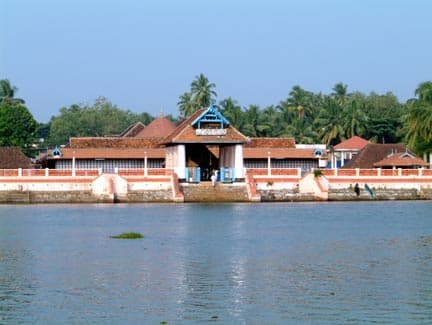
Thriprayar Temple
The Thriprayar Temple, also known as the Shree Ramaswami Temple, is a significant Hindu temple located in Triprayar, Thrissur district, Kerala, India. It is dedicated to Lord Rama, the seventh incarnation of Vishnu, who is depicted with four arms holding a conch, discus, bow, and garland. The temple's origin story involves the idol being worshipped by Krishna in Dwarka, later immersed in the sea, and eventually found by fishermen.