
Masrur Temples
The Masrur Temples, an early 8th-century Hindu temple complex in Himachal Pradesh, India, are carved from a single monolithic rock. Dedicated to Shiva, Vishnu, Devi, and the Saura tradition, they showcase a North Indian Nagara architectural style, facing the Dhauladhar mountain range.
Key Facts
- ›Carved from a single monolithic sandstone rock.
- ›Features a central shrine with subsidiary spires, designed to resemble a mountain.
- ›Dedicated to multiple Hindu traditions: Shaivism, Vaishnavism, Shaktism, and Saurism.
- ›Likely inspired by a henotheistic framework, incorporating diverse deities.
- ›Suffered significant damage from earthquakes, most notably the 1905 Kangra earthquake.
- ›The complex's design is symmetrically laid out on a square grid, reflecting mandala patterns.

Shiva, Vishnu, Devi, Surya
- Example of Rock-Cut Hindu Temple Architecture
- Represents A Temple Mountain-Style Architecture
- Showcases A Henotheistic Framework With Diverse Deities
- Architectural Style Influenced By Gupta Classicism and Central Indian Nagara Traditions
Sandstone
- Reliefs of Major Vedic and Puranic Gods and Goddesses
- Friezes Narrating Legends From Hindu Texts
- Sculptures of Ardhanarishvara, Harihara, and A Three-Faced Trinity
- Secular Images of Couples, Musicians, Dancers, and Apsaras
Beas River
About Masrur Temples
The Masrur Temples, also known as the Masroor Rock-cut Temples, are an 8th-century Hindu temple complex located in the Kangra Valley of Himachal Pradesh, India. Carved from a single monolithic sandstone rock, the temples are oriented northeast towards the Dhauladhar mountain range. They represent a significant example of North Indian Nagara architecture and are dedicated to a syncretic worship of Shiva, Vishnu, Devi, and the Saura tradition, likely reflecting a henotheistic framework.
Architectural Significance and Design
The complex is a masterful display of rock-cut architecture, with the main temple featuring a central shrine surrounded by subsidiary spires, designed to emulate a mountain. The entire layout is symmetrically arranged on a square grid, reminiscent of a mandala pattern. The temples were planned with a sacred pool, as recommended by Hindu architectural texts, and possess multiple entrances, though some remain incomplete. Art historian Michael Meister notes that the Masrur temples embody a temple mountain-style architecture, integrating the earth and surrounding mountains into their design.
Historical Context and Preservation
Archaeological studies suggest that the original plan for the Masrur Temples was more ambitious and that the complex remained unfinished. Much of the temple's sculpture and reliefs have been lost or damaged, primarily due to earthquakes, most notably the devastating Kangra earthquake of 1905. Despite this, the monolithic construction allowed the main structure to survive. Early 20th-century colonial era archaeologists, such as Henry Shuttleworth and Harold Hargreaves, documented the site, although some early reports led to misidentifications.
Iconography and Dedication
The Masrur Temples feature intricate reliefs and sculptures depicting various Hindu deities from Vedic and Puranic texts, including Shiva, Vishnu, Ganesha, Kartikeya, Durga, Surya, Indra, and Saraswati. The complex also showcases syncretic forms like Ardhanarishvara and Harihara, alongside secular depictions of daily life, music, dance, and courtly scenes. The diverse iconography suggests a patronage that embraced ecumenism or henotheism, drawing from Pancharatra literature.
Location and Accessibility
The Masrur Temples are situated in the Beas River valley, approximately 45 kilometers southwest of Dharamshala and 35 kilometers west of Kangra town. The site commands a scenic view of the Dhauladhar range. The nearest railway station is Nagrota Surian, and the closest airport is Dharamshala (DHM), with major airports offering daily services at Amritsar and Jammu.
Source: Wikipedia ↗
Frequently Asked Questions
When were the Masrur Temples constructed?
The Masrur Temples are believed to have been constructed in the first half of the 8th century CE. Art historian Michael Meister places their construction during this period based on regional political and art history.
What architectural style do the Masrur Temples represent?
The temples are a version of North Indian Nagara architecture, specifically the latina sub-style. This style is characterized by curvilinear spires composed of superimposed, shrinking horizontal square slabs.
What deities are worshipped at the Masrur Temples?
The Masrur Temples are dedicated to multiple Hindu traditions, including Shiva, Vishnu, Devi, and the Saura tradition (sun god). The main sanctum features Shiva, and surrounding shrines enshrine deities like Vishnu, Ganesha, Kartikeya, Durga, Surya, Indra, and Saraswati.
What materials were used to build the Masrur Temples?
The entire temple complex was carved out of natural sandstone rock. In some areas, softer stone was used, and in others, harder rock was carved or substituted with better stone blocks where necessary.
What is the significance of the sacred pool at the Masrur Temples?
A sacred pool, dating to the early 8th century, is located in front of the temple complex on the east side. Such pools are recommended by Hindu texts on temple architecture and are an integral part of the temple's design.
How were the Masrur Temples discovered and documented by archaeologists?
The temples were first brought to the attention of archaeologists by Henry Shuttleworth in 1913. They were subsequently surveyed by Harold Hargreaves of the Archaeological Survey of India in 1915, who published his observations and photographs.
What impact did the 1905 Kangra earthquake have on the Masrur Temples?
The 1905 Kangra earthquake devastated the Himachal valley region and destroyed numerous ancient monuments. While parts of the Masrur temple cracked and tumbled, its monolithic, in-situ construction allowed it to remain standing.
Related Temples (Hindu)
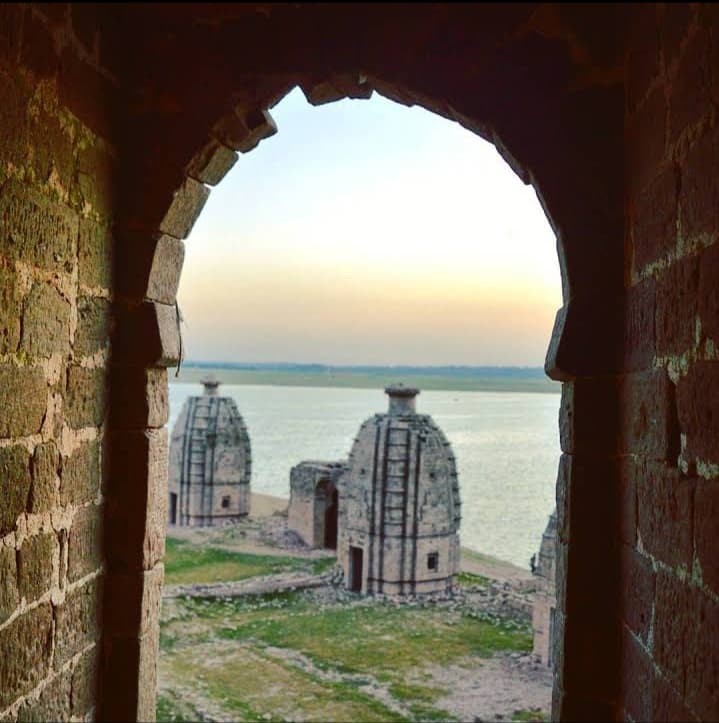
Bathu Temples
The Bathu Temples, also known as Bathu ki Ladi, are a cluster of ancient Hindu temples located in the Kangra district of Himachal Pradesh, India. Originally submerged by the Pong Dam reservoir in the 1970s, these temples are now only accessible for a few months each year when water levels recede. The main temple is primarily dedicated to Goddess Parvati and Lord Shiva, with some traditions also associating it with Lord Vishnu.

Parsurameswar Temple
The Parsurameswar Temple in Bhubaneswar, Odisha, is a well-preserved early Hindu temple dating back to the Shailodbhava period, between the 7th and 8th centuries CE. Dedicated to Lord Shiva, it is recognized as one of the oldest temples in the region and is noted for its Nagara style architecture and intricate sculptures, including early depictions of Saptamatrikas.
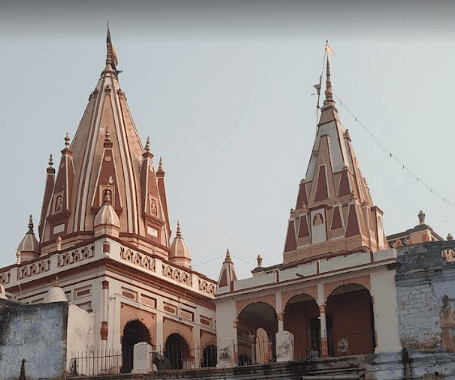
Budhanath Temple, Bhagalpur
The Budhanath Temple, also known as Vriddheshwarnath or Baba Bal Vridheshwarnath Temple, is a significant Hindu temple dedicated to Lord Shiva, located on the banks of the Uttarvahini Ganga in Bhagalpur, India. It is believed to be one of the 108 Nath temples mentioned in the Shiva Purana and is celebrated for its spiritual ambiance and as a focal point for regional cultural identity.