
Mansa Devi Temple, Haridwar
The Mansa Devi Temple in Haridwar, India, is a prominent Hindu shrine dedicated to goddess Mansa Devi, a form of Shakti believed to fulfill devotees' wishes. Perched atop the Bilwa Parvat in the Sivalik Hills, it is considered one of the Panch Tirth (Five Pilgrimages) in Haridwar and is a significant Siddh Peeth, known for granting desires.
Key Facts
- ›Dedicated to Goddess Mansa Devi, a form of Shakti.
- ›Located atop the Bilwa Parvat on the Sivalik Hills in Haridwar, Uttarakhand, India.
- ›Considered one of the Panch Tirth (five Pilgrimages) within Haridwar.
- ›Known as a Siddh Peeth, believed to fulfill the desires of worshippers.
- ›Features an inner shrine with two deities: one with eight arms and another with three heads and five arms.
- ›Pilgrims can reach the shrine on foot or via a rope-way service known as 'Mansa Devi Udankhatola'.

Mansa Devi
Religious Pilgrimage, Siddh Peeth, Part of Panch Tirth of Haridwar
Deity With Eight Arms, Deity With Three Heads and Five Arms
About Mansa Devi Temple, Haridwar
The Mansa Devi Temple, situated in the revered city of Haridwar in Uttarakhand, India, is a significant Hindu shrine dedicated to Goddess Mansa Devi. This goddess is revered as a potent form of Shakti and is popularly believed to possess the power to fulfill the wishes of her sincere devotees. The temple's strategic location atop the Bilwa Parvat, part of the Sivalik Hills, makes it a prominent landmark and a sacred destination.
Religious Significance and Beliefs
Mansa Devi is understood to have emerged from the mind of Lord Shiva and is mythologically recognized as the sister of the serpent Vasuki. Her name, derived from 'Mansa' meaning 'wish,' underpins the core belief associated with the temple: that she grants the prayers of those who approach her with devotion. The temple is classified as a Siddh Peeth, a designation for sacred sites renowned for their ability to manifest the desires of worshippers. It stands as one of three such Peeths in Haridwar, alongside the Chandi Devi Temple and Maya Devi Temple.
A unique tradition observed by devotees involves tying threads to the branches of a tree within the temple complex to signify their prayers and wishes. Upon the fulfillment of these wishes, devotees return to the temple to untie the threads, a symbolic act of gratitude. Offerings to Goddess Mansa Devi traditionally include coconuts, fruits, garlands, and incense sticks.
Accessibility and Temple Features
To reach the sacred shrine, pilgrims have the option of undertaking a trek on foot or utilizing a modern rope-way service known as the "Mansa Devi Udankhatola." This rope-way not only facilitates access to the Mansa Devi Temple but also serves pilgrims traveling to the nearby Chandi Devi Temple. The inner sanctum of the temple houses two distinct idols of the goddess: one adorned with eight arms and another characterized by three heads and five arms, representing different facets of her divine form.
Source: Wikipedia ↗
Frequently Asked Questions
Who is Goddess Mansa Devi?
Goddess Mansa Devi is a form of Shakti, believed to have emerged from the mind of Lord Shiva. She is regarded as the sister of the serpent Vasuki and is also considered a daughter of Lord Shiva. The name 'Mansa' signifies wish, and she is revered for fulfilling the desires of her sincere devotees.
What is the significance of Mansa Devi Temple being a Siddh Peeth?
Mansa Devi Temple is designated as a Siddh Peeth, which are sacred sites known for their power to fulfill the wishes of worshippers. It is one of three such Peeths located in Haridwar, the other two being Chandi Devi Temple and Maya Devi Temple.
How do devotees express their wishes at the temple?
Devotees who pray to Mansa Devi for their wishes to be fulfilled often tie threads to the branches of a tree located within the temple premises. Once their wishes are granted, they return to the temple to untie the threads.
What are the offerings made to Goddess Mansa Devi?
Goddess Mansa Devi is traditionally offered coconuts, fruits, garlands, and incense sticks as part of the worship and prayer.
How can one reach the Mansa Devi Temple?
Pilgrims have two main options to reach the shrine: they can undertake the journey on foot, or they can utilize the 'Mansa Devi Udankhatola' rope-way service. This rope-way transports pilgrims directly to the temple from a lower station.
Related Temples (Hindu)

Taraknath Temple
The Taraknath Temple, located in Tarakeswar, West Bengal, India, is a significant Hindu pilgrimage site dedicated to Lord Shiva, worshiped here as Tarakanatha. Constructed in 1729, it features a distinct Bengal architectural style with an 'atchala' structure and an adjacent 'natmandir'. The temple is renowned for its belief that a dip in the nearby Dudhpukur tank fulfills prayers and is considered one of the 64 Jyotirlingas.

Tanot Mata Temple
The Tanot Mata Temple is a significant Hindu shrine located in the Jaisalmer district of Rajasthan, India, near the Pakistan border. Revered as a form of Goddess Hinglaj Mata, the temple is famously associated with the Indian victories in the Indo-Pakistani Wars of 1965 and 1971, with local folklore attributing the successful outcomes to divine intervention. The Border Security Force of India now manages the temple complex, which also includes a victory tower and a war museum.
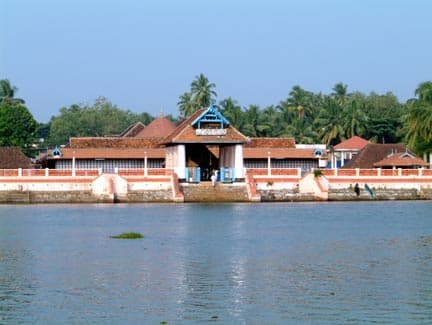
Thriprayar Temple
The Thriprayar Temple, also known as the Shree Ramaswami Temple, is a significant Hindu temple located in Triprayar, Thrissur district, Kerala, India. It is dedicated to Lord Rama, the seventh incarnation of Vishnu, who is depicted with four arms holding a conch, discus, bow, and garland. The temple's origin story involves the idol being worshipped by Krishna in Dwarka, later immersed in the sea, and eventually found by fishermen.