
Manibhadresvara Temple – II
Manibhadresvara Temple – II is an abandoned Hindu temple situated on private land in Bhubaneswar, India. Its architectural style points to an 8th-century origin, with its structure built from grey sandstone using dry masonry. The temple is currently in a state of disrepair, with significant structural issues including cracks and collapsed sections.
Key Facts
- ›Located in Bhubaneswar, Orissa, India.
- ›Architectural features suggest it was formed in the 8th century.
- ›Built in the Kalingan style, specifically a Rekha deul typology.
- ›Constructed using grey sandstone with dry masonry techniques.
- ›The temple is currently abandoned and in a state of disrepair.
- ›It is privately owned by Rabindra Kumar Paramaguru.
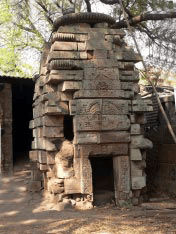
Grey Sandstone
About Manibhadresvara Temple – II
Manibhadresvara Temple – II is an abandoned Hindu temple located in Bhubaneswar, Orissa, India. Its architectural characteristics suggest it dates back to the 8th century. The temple is situated on private land along Rath Road, branching from the Mausima (Ramesvara) temple towards Badheibanka Chowk.
History and Architecture
The temple's typology is described as a Rekha deul in the Kalingan style. It faces east and features a square vimana measuring 2.20 square meters on plan and 4.20 meters in height on elevation. The temple is constructed using grey sandstone with dry masonry techniques. Decorative elements include door jambs and a plain lintel. The temple is surrounded by other structures, including the Paramaguru temple, shops, a well, and residential buildings.
Current Condition
Currently, Manibhadresvara Temple – II is in a state of disrepair. Cracks are visible on all sides, and parts of the structure, such as the Pabhaga and kanika paga, have collapsed. The temple is privately owned by Rabindra Kumar Paramaguru.
Source: Wikipedia ↗
Frequently Asked Questions
Where is the Manibhadresvara Temple – II located?
The Manibhadresvara Temple – II is located in Bhubaneswar, Orissa, India. It is situated on private land on the left side of Rath Road, branching from the Mausima (Ramesvara) temple towards Badheibanka Chowk.
When was the Manibhadresvara Temple – II likely constructed?
Based on its architectural features, the Manibhadresvara Temple – II is believed to have been formed in the 8th century.
What is the architectural style of the temple?
The temple is characterized by the Kalingan style, specifically a Rekha deul typology. It features a square vimana and is a triratha on elevation. The construction utilizes grey sandstone and dry masonry.
What is the current condition of the Manibhadresvara Temple – II?
The temple is currently abandoned and in a state of disrepair. Cracks have developed on all sides, the Pabhaga is buried, and the kanika paga has collapsed, indicating that the temple is crumbling.
Who owns the Manibhadresvara Temple – II?
The Manibhadresvara Temple – II is privately owned by Rabindra Kumar Paramaguru.
Related Temples (Hindu)

Konark Sun Temple
The Konark Sun Temple, a 13th-century Hindu temple in Odisha, India, is dedicated to the Sun god Surya. Designed as a colossal chariot with immense stone wheels and horses, it represents the zenith of Kalingan architecture and artistic achievement. Though much of the temple now lies in ruins, its surviving structures are celebrated for their intricate carvings, depicting religious themes, daily life, and erotic scenes.
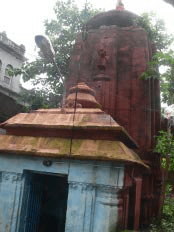
Tirthesvara Siva temple
The Tirthesvara Siva temple is a Hindu temple located in Bhubaneswar, Odisha, India, notable for its architectural style and religious significance. Constructed in the 14th century, it features elements of the Kalingan style and is dedicated to Lord Shiva.

Varaha Lakshmi Narasimha temple, Simhachalam
The Varaha Lakshmi Narasimha temple in Simhachalam, Andhra Pradesh, is a significant Hindu temple dedicated to Lord Vishnu, worshipped as Varaha Narasimha. Renowned for its unique Kalingan architecture and the sandalwood-covered idol that resembles a lingam, the temple has a history spanning nearly a thousand years and has been patronized by various dynasties.