
Mangalesvara Siva Temple
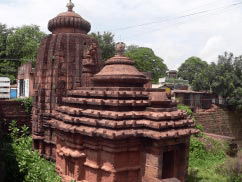
The Mangalesvara Siva Temple is a Hindu temple located in Bhubaneswar, Odisha, India, situated on the southern embankment of the Papanasini River. Architectural features suggest it was constructed in the 14th century AD. The temple, built using laterite in the Kalingan style, is currently an active place of worship, though the enshrined deity is a circular yonipitha with the Lingam absent.
Key Facts
- ›Located in Bhubaneswar, Odisha, India.
- ›Architectural style suggests a 14th-century construction date.
- ›Built using laterite with dry masonry construction techniques.
- ›Faces east and is situated on the southern embankment of the Papanasini River.
- ›The enshrined deity is a circular yonipitha; the Lingam is absent.
- ›It is a living temple, meaning it is an active place of worship.
Shiva
Architectural Features, Active Place of Worship
Sankranti, Sivaratri, Jalabhiseka
Laterite
Navagraha Panel, Laxmi In Padmasana At Lalatabimba, Dvarapalas
Papanasini River
About Mangalesvara Siva Temple
The Mangalesvara Siva Temple is a Hindu temple located in the city of Bhubaneswar, Odisha, India. Situated at precise coordinates and at an elevation of 45 feet, it lies within the precinct of the Papanasini River, specifically on its southern embankment. The temple faces east, and while it is an active place of worship, the central enshrined deity is a circular yonipitha, with the Lingam notably absent.
History and Construction
Architectural analysis indicates that the Mangalesvara Siva Temple was constructed in the 14th century AD. The temple is designated as public property. Its construction utilized laterite as the primary building material, employing dry masonry techniques, and is stylistically aligned with the Kalingan architectural tradition. Cultural functions such as Sankranti, Sivaratri, and Jalabhiseka are celebrated at the temple.
Architectural Features
The temple complex includes a square vimana measuring 3.30 square meters and a square jagamohana measuring 4.50 square meters. The vimana itself is of the rekha order, reaching a height of 8.14 meters from the pabhaga to the mastak, featuring a curvilinear spire. The jagamohana, with a pyramidal gandi, has two potalas separated by a recess. Decorative elements include three plain vertical bands on the doorjambs, dvarapala niches at their base, and a carved navagraha panel on the architrave above the doorjambs. The parsvadevata niches on the three sides of the vimana are present but empty.
Source: Wikipedia ↗
Frequently Asked Questions
Where is the Mangalesvara Siva Temple located?
The Mangalesvara Siva Temple is located in Bhubaneswar, Odisha, India. It is situated on the southern embankment of the Papanasini River.
When was the Mangalesvara Siva Temple built?
Architectural features of the Mangalesvara Siva Temple suggest that it was built in the 14th century AD. It is a public property.
What is the architectural style of the Mangalesvara Siva Temple?
The temple is built in the Kalingan style. Its typology is described as rekha and pidha, with the vimana featuring a curvilinear spire and the jagamohana having a pyramidal gandi.
What deity is worshipped at the Mangalesvara Siva Temple?
The enshrined deity at the Mangalesvara Siva Temple is a circular yonipitha. The Lingam, typically associated with Shiva worship, is absent.
Is the Mangalesvara Siva Temple still in use?
Yes, the Mangalesvara Siva Temple is still an active place of worship. It is described as a living temple.
What are the main construction materials and techniques used?
The primary building material for the Mangalesvara Siva Temple is laterite. The construction technique employed is dry masonry.
Related Temples (Hindu)

Konark Sun Temple
The Konark Sun Temple, a 13th-century Hindu temple in Odisha, India, is dedicated to the Sun god Surya. Designed as a colossal chariot with immense stone wheels and horses, it represents the zenith of Kalingan architecture and artistic achievement. Though much of the temple now lies in ruins, its surviving structures are celebrated for their intricate carvings, depicting religious themes, daily life, and erotic scenes.
Tirthesvara Siva temple
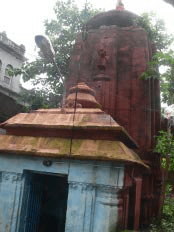
The Tirthesvara Siva temple is a Hindu temple located in Bhubaneswar, Odisha, India, notable for its architectural style and religious significance. Constructed in the 14th century, it features elements of the Kalingan style and is dedicated to Lord Shiva.

Varaha Lakshmi Narasimha temple, Simhachalam
The Varaha Lakshmi Narasimha temple in Simhachalam, Andhra Pradesh, is a significant Hindu temple dedicated to Lord Vishnu, worshipped as Varaha Narasimha. Renowned for its unique Kalingan architecture and the sandalwood-covered idol that resembles a lingam, the temple has a history spanning nearly a thousand years and has been patronized by various dynasties.