
Malinithan
Malinithan is an ancient archaeological site in Arunachal Pradesh, India, featuring the ruins of a temple complex generally attributed to the Chutia kings of the 13th-14th century. Excavations have revealed a well-designed stone plinth with sculptures of deities and animals, suggesting a prosperous polity and possibly tantric practices. While not mentioned in early texts, the site may have originated as a local shrine before its formal development.
Key Facts
- ›Malinithan is an archaeological site with temple ruins in Arunachal Pradesh, India.
- ›The temple complex is generally attributed to the Chutia kings and dated to the 13th-14th centuries.
- ›Art-historical assessments suggest a broader cultural period from the 10th to the 14th century.
- ›Excavations uncovered a stone temple plinth with sculptures of deities like Indra, Kartikeya, Surya, Ganesha, and Nandi.
- ›Erotic sculptures suggest the prevalence of tantricism as a fertility rite.
- ›The site is located on a hill overlooking the Brahmaputra River.
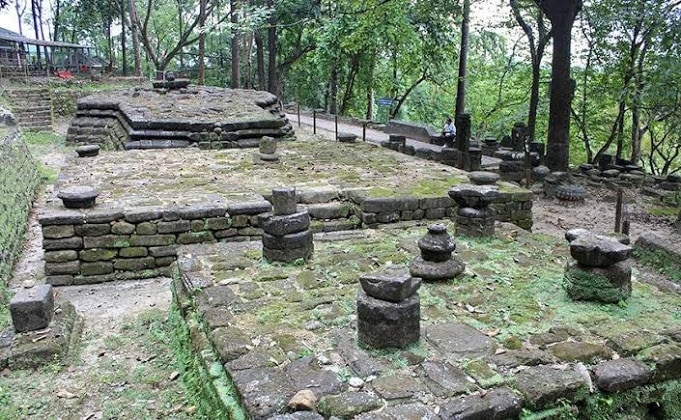
Dikkaravasini, Devi
- Archaeological Site With Early Medieval Temple Ruins
- Evidence of A Prosperous Polity Before the Ahoms
- Possible Center For Tantric Practices
Chutia Kingdom
Stone, Granite
Chutia Kings
Indra Riding Airavata, Kartikeya Riding A Peacock, Surya Riding A Chariot, Ganesha Mounted Over A Mouse, Nandi Bull, Erotic Maithuna Sculptures, Lions On Elephants
Brahmaputra River
About Malinithan
Malinithan is a significant archaeological site located on the northern bank of the Brahmaputra River in Arunachal Pradesh, India. The site contains the ruins of an early medieval period temple complex, generally attributed to the Chutia kings and dated to the 13th–14th centuries. Art-historical studies suggest that the cultural period represented by the remains spans from approximately the 10th to the 14th century, indicating construction under a prosperous polity prior to the Ahom rule.
Location and Setting
The archaeological site is situated in the town of Likabali, at the base of the Siang mountains. It rests on a hill that rises about 21 meters (69 ft), offering commanding views of the surrounding plains and the Brahmaputra River. The presence of the narrow Akashiganga stream nearby has led scholars to suggest that rituals involving sacrifices may have been performed at the temple, similar to other sites like the Tamreswari Temple.
History and Development
While the present temple complex is not mentioned in the 10th–11th-century Kalika Purana, indicating its construction after this period, the site may have originally existed as a local or indigenous shrine. The scale of its stone architecture points to construction by a well-established kingdom. Stonemason marks found at Malinithan bear resemblance to those found at other Chutia-associated sites, such as the Tamreswari temple in Sadiya.
Architectural Features and Sculptures
Excavations at Malinithan have revealed a meticulously designed and carved stone plinth, standing 8 feet (2.4 m) high. This plinth is adorned with sculptures of deities and animals, floral motifs, and damaged columns and panels. Notably, four sculptures of lions on elephants were discovered at the corners of the temple ruins. Among the significant granite sculptures unearthed are depictions of Indra riding his mount Airavata, Kartikeya on a peacock, Surya in his chariot, Ganesha on a mouse, and a large Nandi bull. The discovery of erotic Maithuna sculptures in various postures has led to the belief that tantricism was prevalent at the site, possibly as a form of fertility rite embraced by the indigenous tribal people who revered the 'mother principal'.
Legends and Associations
In the 16th century, Srimanta Sankardev introduced a legend that connected the site to the mythological king Bhishmaka of Vidarbha from the epics. This legend recounts the journey of Krishna and Rukmini, who supposedly stopped at Malinithan and were hosted by Shiva and Durga, with Parvati offering them garlands from her orchard. Scholars also identify the chief deity worshipped at Malinithan with Dikkaravasini, a deity described in the Kalika Purana as the principal deity of north-eastern Assam. She is also associated with the Kechai-Khaiti or Tamreswari form of Devi worship, a tribal goddess revered by various Bodo-Kachari groups.
Source: Wikipedia ↗
Frequently Asked Questions
When was Malinithan temple constructed?
Archaeologists generally date the principal temple complex to the 13th–14th centuries. However, art-historical assessments place the cultural period represented by the remains within a broader span from about the 10th to the 14th century.
Who is the main deity worshipped at Malinithan?
Scholars identify the chief deity of Malinithan with Dikkaravasini, who is also associated with the Kechai-Khaiti or Tamreswari form of Devi worship. Kechai-Khaiti is a tribal goddess found among various Bodo-Kachari groups.
What is the architectural style of Malinithan?
The temple is described as being carved entirely out of stone, a type of temple known as Asmamayai. The ruins feature a well-designed and carved plinth with sculptures and damaged columns and panels.
What notable sculptures have been found at Malinithan?
Among the notable sculptures found, carved out of granite stone, are depictions of Indra riding Airavata, Kartikeya riding a peacock, Surya riding a chariot, Ganesha mounted over a mouse, and a large Nandi bull.
What is the legend associated with Malinithan?
A legend, implanted by Srimanta Sankardev in the 16th century, connects the place to the mythological king Bhishmaka. According to the mythology, Krishna and Rukmini stopped at Malinithan on their way to Dwarka and were guests of Shiva and Durga, who presented them with flower garlands.
What historical kingdom is Malinithan associated with?
The scale and expense of the stone construction suggest it was built under a prosperous polity before the Ahoms, with its latest phase assignable to the period of the Chutia kingdom. Stonemason marks found at Malinithan are also present at other sites associated with the Chutias, like the Tamreswari temple.
Related Temples (Hindu)
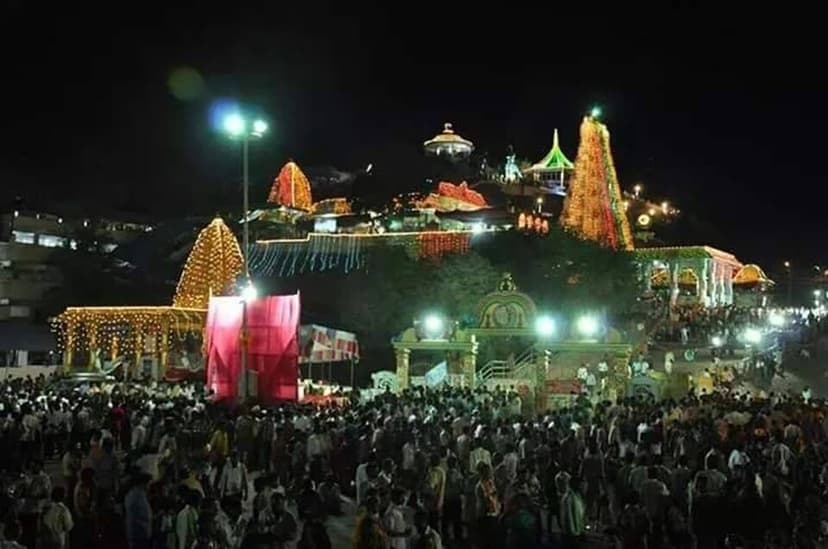
Kotappakonda
Kotappakonda is a significant Hindu pilgrimage site in Andhra Pradesh, India, centered around the ancient Sri Trikoteswara Swamy Temple, dedicated to Lord Shiva. Renowned for its three distinct peaks, the site is a major Shaivite center, drawing large crowds, especially during the annual Maha Shivaratri festival.

Kapilesvara Siva Temple
The Kapilesvara Siva Temple is a Hindu temple dedicated to Shiva, located in Bhubaneswar, Odisha, India. Situated in a precinct with 33 other monuments, it is considered a sacred site, with local legend identifying it as the birthplace of Lord Shiva. The temple complex, which includes various shrines and mandapas, has a rich architectural history, with some structures dating back to the 10th or 11th century and others renovated or built later.
Tirthesvara Siva temple
The Tirthesvara Siva temple is a Hindu temple located in Bhubaneswar, Odisha, India, notable for its architectural style and religious significance. Constructed in the 14th century, it features elements of the Kalingan style and is dedicated to Lord Shiva.