
Mahabhairav Temple
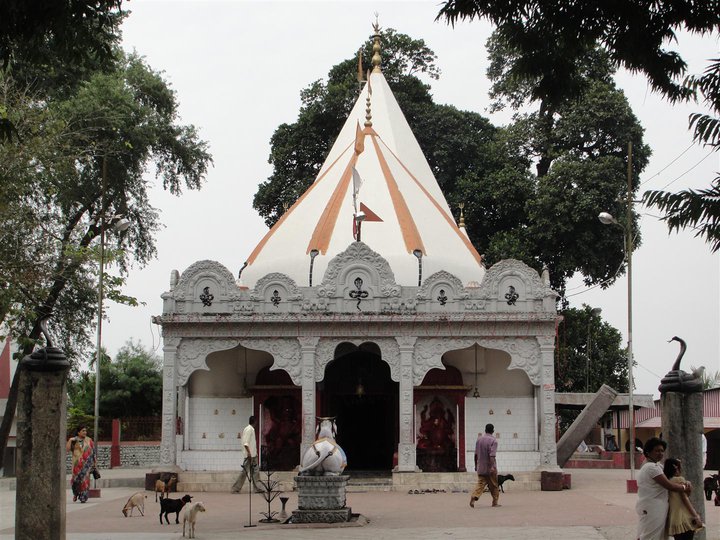
The Mahabhairav Temple, located on a hillock in Tezpur, Assam, India, is a significant Hindu temple dedicated to Lord Shiva. According to legend, it was originally built by King Bana, with the present structure being a renovation using concrete. The temple is renowned for its Shiva linga, believed to be made of 'Living Stone,' and is an important site for Maha Shivaratri celebrations.
Key Facts
- ›Dedicated to Lord Shiva.
- ›Legend attributes its construction to King Bana.
- ›Features a Shiva linga said to be made of 'Living Stone'.
- ›Renovated with concrete, originally built of stone.
- ›Celebrates Maha Shivaratri with devotees from afar.
- ›Offers Laddu laced with Bhang as prasad.
Shiva
Religious Pilgrimage Site, Legendary Construction By King Bana, Unique 'Living Stone' Shiva Linga
Tungkhungia Dynasty
Maha Shivaratri
Stone, Concrete
King Bana
About Mahabhairav Temple
The Mahabhairav Temple is a significant Hindu place of worship located on a hillock in the northern part of Tezpur town, Assam, India. It is primarily dedicated to Lord Shiva.
Legend and Construction
According to local legend, the temple was originally built by King Bana. Historical accounts suggest that the initial construction was of stone. However, the present structure has been renovated and rebuilt using concrete. Some beliefs hold that King Bana achieved prosperity through his worship of Lord Shiva at this temple, and the Shiva linga itself is reputed to be made of 'Living Stone,' which is said to grow slowly over the years.
Administration and Worship
During the Ahom rule, kings, particularly from the Tungkhungia dynasty, provided significant support to the temple, donating land and appointing priests and caretakers. Presently, the Mahabhairav Temple is managed by the Government of Assam, with a managing committee headed by the Deputy Commissioner of Sonitpur overseeing its affairs.
Festivals and Rituals
The temple is a popular destination for pilgrims, especially during Maha Shivaratri, an important annual festival for the Shaivite tradition of Hinduism. Devotees from far and wide congregate here to celebrate. A notable ritual involves offering Laddu laced with Bhang, an edible preparation of cannabis mixed with milk and spices, as prasad to Lord Shiva. The temple also conducts various pujas, and the freeing of pigeons is practiced, symbolizing the liberation of ancestral spirits.
Source: Wikipedia ↗
Frequently Asked Questions
Who built the Mahabhairav Temple?
Legend states that the Mahabhairav Temple was built by King Bana. He is believed to have attained prosperity by worshipping Lord Shiva at this site.
What is unique about the Shiva linga at Mahabhairav Temple?
The Shiva linga at the Mahabhairav Temple is said to be made of 'Living Stone.' It is believed to grow slowly over the years.
What is the significance of Maha Shivaratri at this temple?
Maha Shivaratri, a major festival for the Shaivite branch of Hinduism, is celebrated annually at the Mahabhairav Temple. Devotees travel from various places to participate in the festivities.
What is offered as prasad at the Mahabhairav Temple?
As per the rituals, Laddu laced with Bhang, an edible preparation of cannabis mixed with milk and spices, is offered as prasad to Lord Shiva at the temple.
How is the Mahabhairav Temple managed?
Currently, the Mahabhairav Temple is managed by the Government of Assam through a committee. This managing committee is headed by the Deputy Commissioner of Sonitpur.
Related Temples (Hindu)

Taraknath Temple
The Taraknath Temple, located in Tarakeswar, West Bengal, India, is a significant Hindu pilgrimage site dedicated to Lord Shiva, worshiped here as Tarakanatha. Constructed in 1729, it features a distinct Bengal architectural style with an 'atchala' structure and an adjacent 'natmandir'. The temple is renowned for its belief that a dip in the nearby Dudhpukur tank fulfills prayers and is considered one of the 64 Jyotirlingas.

Tanot Mata Temple
The Tanot Mata Temple is a significant Hindu shrine located in the Jaisalmer district of Rajasthan, India, near the Pakistan border. Revered as a form of Goddess Hinglaj Mata, the temple is famously associated with the Indian victories in the Indo-Pakistani Wars of 1965 and 1971, with local folklore attributing the successful outcomes to divine intervention. The Border Security Force of India now manages the temple complex, which also includes a victory tower and a war museum.
Thriprayar Temple
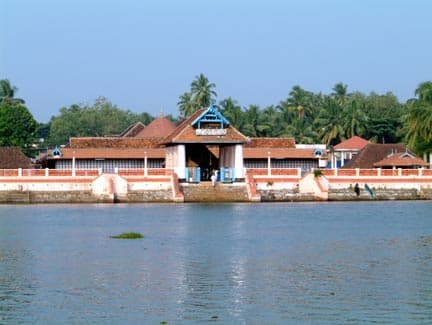
The Thriprayar Temple, also known as the Shree Ramaswami Temple, is a significant Hindu temple located in Triprayar, Thrissur district, Kerala, India. It is dedicated to Lord Rama, the seventh incarnation of Vishnu, who is depicted with four arms holding a conch, discus, bow, and garland. The temple's origin story involves the idol being worshipped by Krishna in Dwarka, later immersed in the sea, and eventually found by fishermen.