
Madneswar Siva Temple
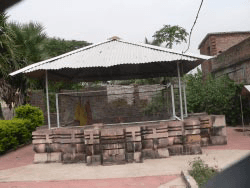
The Madneswar Siva Temple, located in Bhubaneswar, Odisha, India, is a Hindu temple dedicated to Lord Shiva, believed to have been constructed around the 12th century CE. The temple is a broken shrine, with currently only the Pabhaga portion of its structure still standing. The presiding deity is a Siva lingam housed within a circular yonipitha.
Key Facts
- ›Dedicated to Lord Shiva, housing a Siva lingam.
- ›Construction is estimated to be around the 12th century CE.
- ›Located on the left side of Mahavir Lane in Bhubaneswar, Odisha, India.
- ›The temple is a broken shrine, with only the Pabhaga portion intact.
- ›The Pabhaga features five mouldings: khura, kumbha, pata, kani, and basanta.
Shiva
Historical Temple Construction, Architectural Remnants of the 12th Century
About Madneswar Siva Temple
The Madneswar Siva Temple is a Hindu temple located in Bhubaneswar, Odisha, India, dedicated to Lord Shiva. Construction of the temple is estimated to have taken place around the 12th century CE. It is situated on the left side of Mahavir Lane, a road that branches off from Garage Chowk in Santarapur and leads towards Sisupalgarh.
Architecture and Condition
Currently, the Madneswar Siva Temple is considered a broken shrine, with only specific portions of its original structure remaining. The extant part is the Pabhaga, which is the basement or plinth of the temple. This Pabhaga has been renovated and displays five distinct mouldings: khura, kumbha, pata, kani, and basanta. The temple faces east and originally had a square sanctum. The superstructure of the temple collapsed a long time ago, leaving only the lower architectural elements visible.
The temple is surrounded by residential buildings on its north, west, and east sides, with the road bordering it to the south. The primary deity enshrined within is a Siva lingam, placed on a circular yonipitha, which serves as its basement or pedestal.
Source: Wikipedia ↗
Frequently Asked Questions
Where is the Madneswar Siva Temple located?
The Madneswar Siva Temple is situated on the left side of Mahavir Lane, branching from Garage Chowk in Santarapur to Sisupalgarh, in Bhubaneswar, Odisha, India.
When was the Madneswar Siva Temple built?
The temple is believed to have been built around the 12th century CE. Historical records indicate its construction during this period.
What deity is worshipped at the Madneswar Siva Temple?
The primary deity worshipped at the Madneswar Siva Temple is Lord Shiva. The enshrined deity is a Siva lingam.
What is the current state of the Madneswar Siva Temple?
The Madneswar Siva Temple is described as a broken shrine. Currently, only the Pabhaga portion of the temple's structure is available.
What are the architectural features of the remaining structure?
The existing Pabhaga of the Madneswar Siva Temple is renovated and features five distinct mouldings. These mouldings are identified as khura, kumbha, pata, kani, and basanta.
Related Temples (Hindu)

Neminath Jain Temple, Girnar
The Neminath Jain Temple, originally known as Karnavihara, is a significant Jain temple dedicated to the 24th Tirthankara, Neminatha, situated on Girnar hill in Gujarat, India. It is recognized as the foremost among the Girnar Jain temples, with its oldest existing structure dating back to the 12th century and built in the Māru-Gurjara architectural style.

Yogmaya Temple
The Yogmaya Temple, also known as Jogmaya Temple, is a Hindu temple in Mehrauli, New Delhi, dedicated to the goddess Yogmaya, an aspect of Maya and the sister of Krishna. It is considered one of the few surviving temples from the pre-Sultanate period in India and has undergone numerous reconstructions.
Triloknath Temple
The Triloknath Temple, located in Himachal Pradesh, India, is a significant religious site revered by both Tibetan Buddhists and Hindus. Originally believed to be a Buddhist vihara, it now houses a marble statue of Avalokiteshvara, worshipped as Shiva by Hindus and as Avalokiteshvara by Buddhists. The temple's architecture and history suggest a blend of influences, with its columns dating to the 9th century CE.