
Lodheshwar Mahadev Mandir
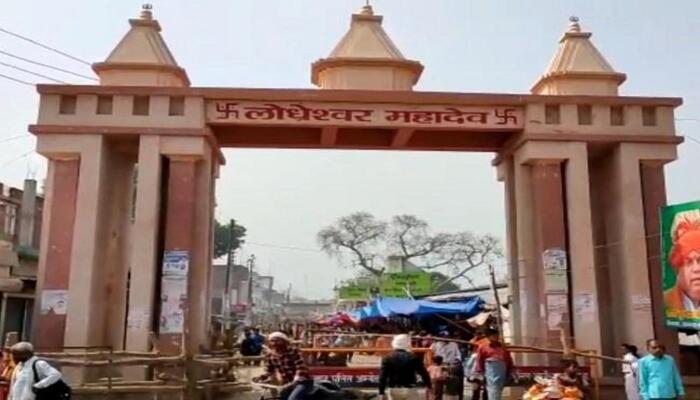
Lodheshwar Mahadev Mandir is an ancient Hindu temple dedicated to Lord Shiva, located in the village of Mahadeva, Uttar Pradesh, India. It is renowned for housing one of the rarest Shivlings among the 52 found on Shakti Peethas across India and holds significant mentions in the Mahabharata, positioning it as a sacred site and the Kuldevta of the Lodhi Rajputs.
Key Facts
- ›The temple houses a rare Shivling, one of only 52 found on Shakti Peethas nationwide.
- ›It is mentioned multiple times in the ancient Indian epic, the Mahabharata.
- ›The temple is considered the Kuldevta (family deity) of the Lodhi Rajputs.
- ›A well named Pandav-Kup, believed to have spiritual and healing properties, exists at the site.
- ›Two significant fairs are held annually, one during Mahashivratri attracting millions of devotees, and another local fair in November-December.
Shiva
Religious Pilgrimage, Historical Importance, Spiritual Significance of Shivling, Kuldevta For Lodhi Rajputs
Mahashivratri
Ghaghra River
About Lodheshwar Mahadev Mandir
Lodheshwar Mahadev Mandir is a significant Hindu temple dedicated to Lord Shiva, located in the village of Mahadeva, within the Barabanki district of Uttar Pradesh, India. The temple is particularly noted for housing one of the rarest Shivlings among the 52 found across India on Shakti Peethas, underscoring its profound religious importance.
Historical and Religious Significance
The ancient temple holds deep historical roots, with multiple references found in the epic Mahabharata. Tradition states that the Pandavas performed a significant Mahayagya at this very site after the Mahabharata war, and a well known as Pandav-Kup, believed to possess spiritual and healing properties, still exists today. Lodheshwar Mahadev is also revered as the Kuldevta, or family deity, of the Lodhi Rajputs, a community whose lineage is intertwined with the temple's history and legends.
Location and Associated Waters
The temple is situated on the banks of the Ghaghra River, a location that adds to its natural and spiritual ambiance. Its placement in village Mahadeva, Ram Nagar tehsil, makes it a focal point for devotees in the region.
Festivals and Pilgrimage
Lodheshwar Mahadev Mandir is a site of active worship and a prominent pilgrimage destination. Two major fairs are held annually, drawing large numbers of devotees. The most significant is the fair held during Mahashivratri in March-April, which attracts millions of pilgrims. A local fair also takes place in November-December, which historically involved the trading of cattle. Pilgrims, including those carrying Kanwar from districts like Kanpur, Banda, Jalaun, and Hamirpur, often worship with Ganges water at the temple, signifying the deep devotional practices associated with the site.
Source: Wikipedia ↗
Frequently Asked Questions
Where is Lodheshwar Mahadev Mandir located?
Lodheshwar Mahadev Mandir is situated in the village of Mahadeva, within the Ram Nagar tehsil of Barabanki district in Uttar Pradesh, India. It is located on the banks of the Ghaghra river.
What is the historical significance of Lodheshwar Mahadev Mandir?
The temple has historical importance as it is mentioned several times in the Mahabharata. The Pandavas are said to have performed a Mahayagya at this location after the epic war, and a well associated with them, Pandav-Kup, still exists here.
Why is the Shivling at Lodheshwar Mahadev Mandir considered rare?
The Shivling worshipped at this temple is considered one of the rarest among the 52 Shivlings found across India on Shakti Peethas. Its rarity contributes to the temple's sacred status.
What is the connection between Lodheshwar Mahadev and the Lodhi Rajputs?
Lodheshwar Mahadev is revered as the Kuldevta, or family deity, of the Lodhi Rajputs. Historical accounts suggest that when the surviving Lodhis sought help from their deity during a period of cleansing of Kshatriyas, he advised them to abandon their weapons and adopt agriculture, influencing their lineage.
Are there any special fairs or festivals celebrated at Lodheshwar Mahadev Mandir?
Yes, two fairs are held annually. One is a major fair during Mahashivratri in March-April, which draws millions of devotees. A smaller local fair takes place in November-December, often involving the trade of cattle.
What is the significance of the Pandav-Kup well?
The Pandav-Kup is a well located at the temple site, believed to be established by the Pandavas. According to the Vedas, the water from this well possesses spiritual qualities and is said to cure numerous ailments.
Related Temples (Hindu)

Taraknath Temple
The Taraknath Temple, located in Tarakeswar, West Bengal, India, is a significant Hindu pilgrimage site dedicated to Lord Shiva, worshiped here as Tarakanatha. Constructed in 1729, it features a distinct Bengal architectural style with an 'atchala' structure and an adjacent 'natmandir'. The temple is renowned for its belief that a dip in the nearby Dudhpukur tank fulfills prayers and is considered one of the 64 Jyotirlingas.

Tanot Mata Temple
The Tanot Mata Temple is a significant Hindu shrine located in the Jaisalmer district of Rajasthan, India, near the Pakistan border. Revered as a form of Goddess Hinglaj Mata, the temple is famously associated with the Indian victories in the Indo-Pakistani Wars of 1965 and 1971, with local folklore attributing the successful outcomes to divine intervention. The Border Security Force of India now manages the temple complex, which also includes a victory tower and a war museum.
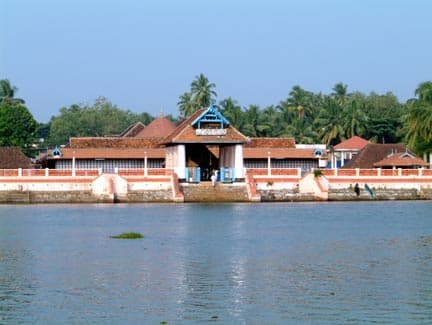
Thriprayar Temple
The Thriprayar Temple, also known as the Shree Ramaswami Temple, is a significant Hindu temple located in Triprayar, Thrissur district, Kerala, India. It is dedicated to Lord Rama, the seventh incarnation of Vishnu, who is depicted with four arms holding a conch, discus, bow, and garland. The temple's origin story involves the idol being worshipped by Krishna in Dwarka, later immersed in the sea, and eventually found by fishermen.