
Kurmanathaswamy temple, Srikurmam
Fusion of Kalinga Architecture and Dravidian Architecture·Before 11th-century CE·India
The Kurmanathaswamy temple, located in Srikurmam village, Andhra Pradesh, is a significant Hindu temple dedicated to Kurma, the second avatar of Vishnu. Originally a Shiva temple, it was converted to a Vaishnavite center before the 11th century CE and is renowned as the only pre-14th-century Indian temple exclusively dedicated to the Kurma avatar. The temple is notable for its unique architecture, ancient mural paintings, and its role as a center for Vaishnavism, attracting devotees for worship and ancestor rituals.
Key Facts
- ›The temple is dedicated to Kurma, the tortoise avatar of Vishnu, and his consort Lakshmi.
- ›It is the only known pre-14th-century Indian temple solely dedicated to the Kurma avatar.
- ›The temple features a fusion of Kalinga and Dravidian architectural styles.
- ›It is a significant center for Vaishnavism and also follows Shaivite traditions.
- ›The temple is known for its 108 unique single-stone pillars and ancient Orissan Pattachitra style mural paintings.
- ›A tortoise park is maintained within the temple premises for the conservation of star tortoises.

Vishnu, Lakshmi
- Unique Dedication To Kurma Avatar
- Important Center of Vaishnavism
- Architectural Fusion of Kalinga and Dravidian Styles
- Site For Ancestor Worship
Eastern Ganga Dynasty, Ganga Kings of Utkala
Dolotsavam, Kalyanotsavam, Kurma Jayanthi, Mukkoti Ekadasi, Kamadahanam, Padiya
Stone, Granite
Anantavarman Chodaganga Deva, Anangabhima Deva Iii, Madhvacharya, Naraharitirtha, Ramanuja's Disciples, King Swetha Chakravarthi, Tribal King
Orissan Pattachitra Style Mural Paintings, Mural Paintings of Krishna
Swetha Pushkarani
About Kurmanathaswamy temple, Srikurmam
The Kurmanathaswamy temple, also known as the Kurmanatha temple or Srikurmam temple, is a significant Hindu temple located in Srikurmam village, Srikakulam district, Andhra Pradesh, India. Dedicated to Kurma, the second avatar of Vishnu, and his consort Lakshmi (as Kurmanayaki), it holds a unique place in religious history as the only known pre-14th-century Indian temple exclusively dedicated to the Kurma avatar.
History and Religious Significance
Historical inscriptions suggest the temple was converted from a Shiva temple to a Vaishnava khetra before the 11th century CE. It was built in a fusion of Kalinga and Dravidian architectural styles. The temple became an important center of Vaishnavism in the medieval period, with figures like Naraharitirtha, a disciple of Madhvacharya, playing a crucial role in establishing it as a prominent seat of Vishnavite religious activities. The temple is also revered as a 'pitrukshetra,' a sacred place for ancestor worship, believed to grant salvation to departed souls.
Architecture and Features
The Kurmanathaswamy temple is distinguished by its unique architecture, including a distinct gopuram design and two dhvajasthambas. The sanctum sanctorum's upper portion is shaped like an eight-petaled lotus, and devotees can enter it directly. The temple complex houses 108 ekasila (single-stone) pillars, each uniquely carved, and features century-old Orissan Pattachitra style mural paintings on the walls of the pradakshina mandapa. A notable addition is the tortoise park, established for the conservation of star tortoises, making Srikurmam a conservation center for this species.
Worship and Festivals
Srikurmam temple follows both Shaivite and Vaishnavite traditions, allowing devotees direct participation in daily rituals like abhishekam. Four daily rituals and four annual festivals are celebrated, with the three-day Dolotsavam being the most significant. Other notable festivals include Kamadahanam, Padiya, Kalyanotsavam, Kurma Jayanthi, and Mukkoti Ekadasi. The temple's tank, Swetha Pushkarani, is also considered sacred.
Source: Wikipedia ↗
Frequently Asked Questions
Where is the Kurmanathaswamy temple located?
The Kurmanathaswamy temple is located in Srikurmam village, within the Srikakulam district of Andhra Pradesh, India. It is situated about 130 kilometers from Visakhapatnam and 15 kilometers from Srikakulam town.
To which deity is the Kurmanathaswamy temple dedicated?
The temple is primarily dedicated to Kurma, the second avatar of Lord Vishnu, who is worshipped here as Kurmanathaswamy. His consort, Lakshmi, is also worshipped as Kurmanayaki.
What is the historical significance of the Kurmanathaswamy temple?
The temple is historically significant as it is the only known pre-14th-century Indian temple dedicated to the Kurma avatar of Vishnu. It was an important center of Vaishnavism in the medieval period and served as the seat of Vishnavite religious activities, influenced by figures like Naraharitirtha.
What is unique about the architecture of the Kurmanathaswamy temple?
The temple showcases a distinctive architectural style, a fusion of Kalinga and Dravidian influences, with a unique gopuram design. It also features two dhvajasthambas (flagstaffs) and 108 single-stone pillars, none of which are identical.
Are there any special practices or traditions followed at the Kurmanathaswamy temple?
Srikurmam temple is unique in following both Shaivite and Vaishnavite traditions, allowing devotees to participate in daily abhishekam, a practice more common in Shaivite temples. It is also revered as a 'pitrukshetra' (ancestor temple) where prayers are believed to grant salvation to ancestors.
What is the significance of the tortoise park at the temple?
A tortoise park has been established within the temple premises to honor and conserve star tortoises found in the region. Srikurmam serves as a conservation center for this species, with devotees sometimes offering tortoises from nearby fields.
Related Temples (Hindu)

Taraknath Temple
The Taraknath Temple, located in Tarakeswar, West Bengal, India, is a significant Hindu pilgrimage site dedicated to Lord Shiva, worshiped here as Tarakanatha. Constructed in 1729, it features a distinct Bengal architectural style with an 'atchala' structure and an adjacent 'natmandir'. The temple is renowned for its belief that a dip in the nearby Dudhpukur tank fulfills prayers and is considered one of the 64 Jyotirlingas.

Tanot Mata Temple
The Tanot Mata Temple is a significant Hindu shrine located in the Jaisalmer district of Rajasthan, India, near the Pakistan border. Revered as a form of Goddess Hinglaj Mata, the temple is famously associated with the Indian victories in the Indo-Pakistani Wars of 1965 and 1971, with local folklore attributing the successful outcomes to divine intervention. The Border Security Force of India now manages the temple complex, which also includes a victory tower and a war museum.
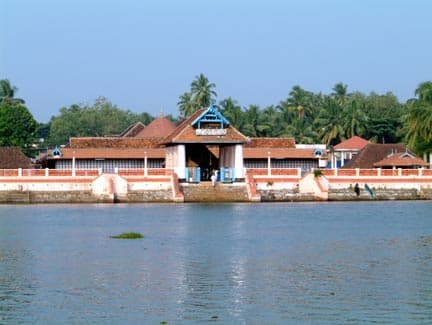
Thriprayar Temple
The Thriprayar Temple, also known as the Shree Ramaswami Temple, is a significant Hindu temple located in Triprayar, Thrissur district, Kerala, India. It is dedicated to Lord Rama, the seventh incarnation of Vishnu, who is depicted with four arms holding a conch, discus, bow, and garland. The temple's origin story involves the idol being worshipped by Krishna in Dwarka, later immersed in the sea, and eventually found by fishermen.