
Kottiyoor Temple
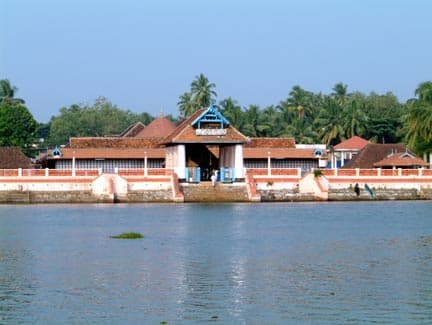
Kottiyoor Temple, also known as Vadakkeshwaram, Thruchherumana Kshetram, and Ikkare Kottiyoor, is a significant Shiva temple located in Kottiyoor, Kannur, Kerala, India. The temple is renowned for its unique dual shrines, with the main permanent temple on the west bank of the Vavali River and a temporary hermitage on the east bank, which is only opened during the annual Vysakha Mahotsavam festival.
Key Facts
- ›The temple is situated in a sacred grove covering approximately 80 acres in a densely forested area.
- ›It is believed to be the site of Daksha Yaga, where Sati Devi immolated herself, making it a significant Shakti Peetha.
- ›Kottiyoor Temple was once the second-wealthiest temple in Kerala in terms of gold and precious stones, after the Padmanabhaswamy Temple.
- ›The temple is associated with the divine presence of the Trimurthy (Brahma, Vishnu, Shiva) and the Mother Goddess.
- ›The annual Vaisakha Mahotsavam is a major festival lasting 28 days, featuring unique rituals like 'Elaneer Vayppu' and 'Rohini Aaradhana'.

Shiva, Sati Devi, Shakti
- Site of Daksha Yaga and Sati's Immolation
- Considered A Primary Shakti Peetha
- Believed To Have the Divine Presence of the Trimurthy and Mother Goddess
- Symbol of Shaiva-Vaishnava-Shakteya Communal Harmony
- Unique Rituals Like Rohini Aaradhana
Kottayam Royal Family
Kottiyoor Vysakha Mahotsavam
Parashurama, Sankaracharya
Vavali River
About Kottiyoor Temple
Kottiyoor Temple, also known by its ancient name Vadakkeshwaram Temple, and also as Thruchherumana Kshetram and Ikkare Kottiyoor, is a significant Hindu temple dedicated to Lord Shiva, located in the village of Kottiyoor within the Kannur district of Kerala, India. The temple is unique for its dual shrine complex situated on opposite banks of the Vavali River. The primary permanent temple, Vadakkeshwaram (Ikkare Kottiyoor), remains open throughout the year, except for a 27-day period during the annual festival. In contrast, the shrine on the eastern bank, Kizhakkeshwaram (Akkare Kottiyoor), serves as a temporary hermitage and a Yaga shrine, accessible only during the Kottiyoor Vysakha Mahotsavam.
Mythology and Religious Significance
According to legend, the eastern bank shrine is the hallowed site of Daksha Yaga, a pivotal event where Goddess Sati Devi immolated herself. This makes Kottiyoor one of the most sacred sites for Shakti worship and is considered a primal Shakti Peetha. The temple is believed to be blessed with the divine presence of the Holy Trinity—Brahma, Vishnu, and Shiva—along with the primordial Mother Goddess. This confluence of divine energies is so potent that Kali, the personification of Kali Yuga, is said to have promised Parashurama not to enter the premises. The temple's adherence to ancient customs means it features temporary, simple structures, resembling hermits' dwellings, rather than permanent edifices.
Historical Context and Renown
Historically, Kottiyoor Temple was renowned for its immense wealth, holding the distinction of being the second-wealthiest temple in the entire Kerala region in terms of gold and precious stones. This wealth was stored in the 'Karimbana Gopuram' of the Ikkare Kottiyoor Temple, which also owned vast tracts of forest land. The exact date of the temple's construction is not precisely known, but the pilgrimage tradition has endured for many centuries. The temple's old structure has been preserved without renovation to maintain its ancient customs and traditions.
Festivals and Rituals
The annual Kottiyoor Vysakha Mahotsavam is a major 28-day festival held between May and June. The festival commences with the 'Neyyattam' ritual and concludes with the Thrikkalashaattu. Key rituals include 'Elaneer Vayppu', where devotees offer thousands of tender coconuts, followed by 'Elaneeraattam' where the collected coconut water is poured over the Swayambhoo linga. A particularly significant and unique ritual is the 'Rohini Aaradhana', symbolizing Vishnu pacifying Shiva after the loss of Sati. The festival also involves processions and communal participation, highlighting the temple's role in social and religious harmony.
Access and Administration
The temple is situated within a serene, dense forest, now declared a Wildlife Sanctuary by the Government of Kerala. Access to the temple is facilitated via the national highway passing through Kannur. The nearest railway station is Kannur, and major airports are located in Kannur, Thiruvananthapuram, Mangalore, Calicut, and Cochin. The temple is administered as a special category temple under the Malabar Devaswom Board.
Source: Wikipedia ↗
Frequently Asked Questions
What are the different names for Kottiyoor Temple?
Kottiyoor Temple is commonly known as Vadakkeshwaram Temple. It is also referred to as Ikkare Kottiyoor by locals to distinguish it from the shrine on the other side of the river, and by the name Thruchherumana Kshetram.
What is the significance of the two shrines at Kottiyoor?
There are two shrines: Vadakkeshwaram (Ikkare Kottiyoor) on the west bank is a permanent temple open year-round except for a 27-day period. Kizhakkeshwaram (Akkare Kottiyoor) on the east bank is a temporary hermitage, a Yaga shrine, opened only during the Kottiyoor Vysakha Mahotsavam.
Why is Kottiyoor Temple considered a Shakti Peetha?
Mythology states that this is where Sati Devi immolated herself after the Daksha Yaga. As it is forbidden to build permanent structures, Sati is worshipped as Shakti on 'Ammarakkalu Thara', a raised platform, making it a temple of origin for Shakti Peethas.
What is the historical wealth of Kottiyoor Temple?
In its prime, the Kottiyoor Perumal Temple was the second-wealthiest temple in Kerala, surpassed only by the Padmanabhaswamy Temple. Its vast collection of gold and precious stones was stored in the 'Karimbana Gopuram' of the Ikkare Kottiyoor Temple.
What is the significance of the Rohini Aaradhana ritual?
Rohini Aaradhana is a unique ritual during the Vysakha Mahotsavam where the head of the Vaishnavite family, 'Kurumathoor', performs 'Aalingana pushpanjali' to the Swayambhoo linga. This commemorates Vishnu embracing Shiva to pacify him after the sorrow of losing Sati.
When does the Kottiyoor Vysakha Mahotsavam festival take place?
The Vaisakha Mahotsavam festival is held annually during the months of May and June. This twenty-eight-day festival begins with the 'Neyyattam' ritual and concludes with the Thrikkalashaattu.
Related Temples (Hindu)

Taraknath Temple
The Taraknath Temple, located in Tarakeswar, West Bengal, India, is a significant Hindu pilgrimage site dedicated to Lord Shiva, worshiped here as Tarakanatha. Constructed in 1729, it features a distinct Bengal architectural style with an 'atchala' structure and an adjacent 'natmandir'. The temple is renowned for its belief that a dip in the nearby Dudhpukur tank fulfills prayers and is considered one of the 64 Jyotirlingas.

Tanot Mata Temple
The Tanot Mata Temple is a significant Hindu shrine located in the Jaisalmer district of Rajasthan, India, near the Pakistan border. Revered as a form of Goddess Hinglaj Mata, the temple is famously associated with the Indian victories in the Indo-Pakistani Wars of 1965 and 1971, with local folklore attributing the successful outcomes to divine intervention. The Border Security Force of India now manages the temple complex, which also includes a victory tower and a war museum.
Thriprayar Temple
The Thriprayar Temple, also known as the Shree Ramaswami Temple, is a significant Hindu temple located in Triprayar, Thrissur district, Kerala, India. It is dedicated to Lord Rama, the seventh incarnation of Vishnu, who is depicted with four arms holding a conch, discus, bow, and garland. The temple's origin story involves the idol being worshipped by Krishna in Dwarka, later immersed in the sea, and eventually found by fishermen.