
Komuravelli Mallikharjuna Temple
The Komuravelli Mallanna Swamy Temple is a significant Hindu temple situated on a hill in Komuravelli village, Telangana, India, dedicated to Mallanna, a form of Lord Shiva. It is a popular pilgrimage site, particularly during the festive season from Sankranti to Ugadi, drawing large crowds for events like Maha Shivaratri and Agni Gundaalu.
Key Facts
- ›The temple is dedicated to Mallanna, a form of Lord Shiva, also known as Mallikarjuna Swamy or Khandoba.
- ›It is located on a hill in Komuravelli village, Siddipet district, Telangana, India.
- ›The temple is a major pilgrimage destination, especially during the festive season from Sankranti to Ugadi.
- ›Key festivals celebrated include Maha Shivaratri with the Pedda Patnam and Agni Gundaalu before Ugadi.
- ›Devotees offer prayers with the help of Oggu Pujaris who create a rangoli called Patnam.
- ›The story of Mallanna is traditionally sung by Oggu Katha performers.

Shiva, Mallanna, Mallikarjuna Swamy, Khandoba
- Major Pilgrimage Site
- Celebration of Hindu Festivals Like Maha Shivaratri and Ugadi
- Associated With Oggu Katha Tradition
Maha Shivaratri, Ugadi, Sankranti, Agni Gundaalu, Mallanna Jatara
About Komuravelli Mallikharjuna Temple
Komuravelli Mallanna Swamy Temple
The Komuravelli Mallanna Swamy Temple is a prominent Hindu place of worship located on a hill in the village of Komuravelli, within the Siddipet district of Telangana, India. Situated near Siddipet on SH–1 Rajiv Rahadari, the temple is approximately 85 kilometers from Hyderabad. It is dedicated to Mallanna, a manifestation of Lord Shiva, who is also revered as Mallikarjuna Swamy and known as Khandoba among Maharashtrian communities.
Religious Significance and Worship
The main sanctum houses Mallanna along with his consorts, Golla Kethamma and Medalamma. The temple is a significant pilgrimage site, drawing large numbers of devotees, particularly during its festive periods. The Oggu Katha tradition, a form of folk storytelling, is deeply intertwined with the temple, with singers narrating the tales of Mallanna. Devotees engage in worship with the assistance of Oggu Pujaris, who create intricate rangoli patterns known as Patnam as offerings.
Festivals and Access
The temple's festive season, referred to as Mallanna Jatara, commences with Sankranti and continues until Ugadi. During this period, especially on Sundays falling between Sankranti and Ugadi, the temple receives a considerable influx of visitors. Major festivals observed include Maha Shivaratri, marked by the Pedda Patnam, and Agni Gundaalu, celebrated on the Sunday preceding Ugadi. Efforts are underway to enhance accessibility, with infrastructure developments like the Komuravelli railway station planned as part of the Kothapalli–Manoharabad line to facilitate easier travel for pilgrims.
Source: Wikipedia ↗
Frequently Asked Questions
Who is the primary deity worshipped at the Komuravelli Mallanna Swamy Temple?
The primary deity is Mallanna, also known as Mallikarjuna Swamy, who is considered a form of Lord Shiva. He is also referred to as Khandoba by Maharashtrian people.
When is the best time to visit the Komuravelli Mallanna Swamy Temple?
The temple attracts large numbers of devotees during its festive season, which runs from Sankranti until Ugadi. Sundays falling within this period are particularly popular for worship.
What are the main festivals celebrated at the temple?
The temple celebrates Maha Shivaratri with an event called Pedda Patnam. Another significant celebration is Agni Gundaalu, observed on the Sunday preceding Ugadi.
How do devotees offer prayers at the temple?
Devotees typically offer prayers with the assistance of Oggu Pujaris. These priests create a decorative rangoli pattern known as Patnam in front of the deity inside the temple and in its verandah as a form of worship.
What is the significance of Oggu Katha in relation to the temple?
The story of Lord Mallanna is traditionally narrated through Oggu Katha, a form of folk singing. This tradition plays a role in the devotional practices associated with the temple.
Related Temples (Hindu)

Taraknath Temple
The Taraknath Temple, located in Tarakeswar, West Bengal, India, is a significant Hindu pilgrimage site dedicated to Lord Shiva, worshiped here as Tarakanatha. Constructed in 1729, it features a distinct Bengal architectural style with an 'atchala' structure and an adjacent 'natmandir'. The temple is renowned for its belief that a dip in the nearby Dudhpukur tank fulfills prayers and is considered one of the 64 Jyotirlingas.

Tanot Mata Temple
The Tanot Mata Temple is a significant Hindu shrine located in the Jaisalmer district of Rajasthan, India, near the Pakistan border. Revered as a form of Goddess Hinglaj Mata, the temple is famously associated with the Indian victories in the Indo-Pakistani Wars of 1965 and 1971, with local folklore attributing the successful outcomes to divine intervention. The Border Security Force of India now manages the temple complex, which also includes a victory tower and a war museum.
Thriprayar Temple
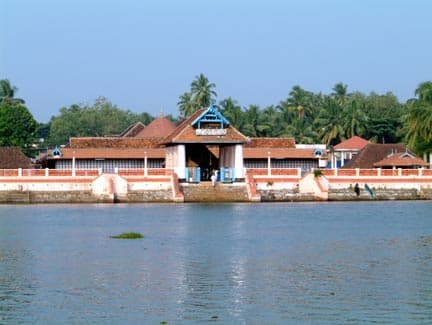
The Thriprayar Temple, also known as the Shree Ramaswami Temple, is a significant Hindu temple located in Triprayar, Thrissur district, Kerala, India. It is dedicated to Lord Rama, the seventh incarnation of Vishnu, who is depicted with four arms holding a conch, discus, bow, and garland. The temple's origin story involves the idol being worshipped by Krishna in Dwarka, later immersed in the sea, and eventually found by fishermen.