
Kirateshwar Mahadev Temple
The Kirateshwar Mahadev Temple, also known as Kirateshwar Mahadev Thaan or Shiv Mandir, is a significant Hindu pilgrimage site located in Legship, India, on the banks of the River Rangeet. It is deeply connected to episodes from the Mahabharata, particularly the story of Arjuna's penance and Lord Shiva's appearance as the hunter Kirateshwar.
Key Facts
- ›Located in Legship, Gyalshing district, India, along the River Rangeet.
- ›Believed to be the site where Lord Shiva appeared as Kirateshwar before Arjuna.
- ›Features a main effigy of worship in the form of a miraculously existing stone Shiva Ling.
- ›Attracts devotees for the festivals of Bala Chaturdashi and Shiv Ratri (Maha Shivaratri).
- ›Considered a pilgrimage destination, with other temples dedicated to Lord Rama and Durga present.
- ›Believed to fulfill wishes for children, peace, harmony, and good health when visited with devotion.

Shiva
Hindu Pilgrimage Site, Mahabharata Connection, Fulfillment of Wishes
Bala Chaturdashi, Shiv Ratri, Maha Shivaratri
Stone
River Rangeet
About Kirateshwar Mahadev Temple
The Kirateshwar Mahadev Temple is a significant Hindu pilgrimage site situated in Legship, India, within the Gyalshing district. Nestled along the banks of the River Rangeet, the temple holds deep mythological connections, particularly with episodes from the epic Mahabharata. It is also recognized by the Kirati people as Kirateshwar Mahadev Thaan and is commonly referred to as Shiv Mandir.
Main Attractions and Beliefs
The temple's primary attractions include the annual festivals of Bala Chaturdashi, observed in November–December, and Shiv Ratri, also known as Maha Shivaratri, which falls in February or March. The presence of other temples dedicated to Lord Rama and Durga further enhances its status as an important destination for Hindu pilgrims. According to local belief, the temple marks the very spot where Lord Shiva, pleased with Arjuna's devotion, appeared as the hunter Kirateshwar. It is said that Shiva blessed Arjuna with success in the Mahabharat War.
A central feature of the temple is a stone Shiva Ling, which is believed to have manifested miraculously. Many devotees hold the belief that a sincere visit to this temple can fulfill wishes, including the desire for children, as well as bring about peace, harmony, and good health.
Source: Wikipedia ↗
Frequently Asked Questions
What is the significance of the Kirateshwar Mahadev Temple?
The temple is significant as a Hindu pilgrimage site and is believed to be the location where Lord Shiva appeared before Arjuna as the hunter Kirateshwar. It is associated with episodes from the Mahabharata and is thought to fulfill devotees' wishes.
What are the main festivals celebrated at Kirateshwar Mahadev Temple?
The primary festivals observed at the temple are Bala Chaturdashi, which takes place in November–December, and Shiv Ratri (Maha Shivaratri), celebrated in February or March. These events draw many devotees.
What is worshipped at the Kirateshwar Mahadev Temple?
The main object of worship at the temple is a stone Shiva Ling, which is believed to have miraculously existed. The temple is dedicated to Lord Shiva, appearing here as Kirateshwar, the Lord of the Kiratas.
What are the believed benefits of visiting the Kirateshwar Mahadev Temple?
According to popular belief, a visit to the temple with true devotion can fulfill one's wishes, particularly for children. It is also believed to bring peace, harmony, and good health to visitors.
Related Temples (Hindu)

Taraknath Temple
The Taraknath Temple, located in Tarakeswar, West Bengal, India, is a significant Hindu pilgrimage site dedicated to Lord Shiva, worshiped here as Tarakanatha. Constructed in 1729, it features a distinct Bengal architectural style with an 'atchala' structure and an adjacent 'natmandir'. The temple is renowned for its belief that a dip in the nearby Dudhpukur tank fulfills prayers and is considered one of the 64 Jyotirlingas.

Tanot Mata Temple
The Tanot Mata Temple is a significant Hindu shrine located in the Jaisalmer district of Rajasthan, India, near the Pakistan border. Revered as a form of Goddess Hinglaj Mata, the temple is famously associated with the Indian victories in the Indo-Pakistani Wars of 1965 and 1971, with local folklore attributing the successful outcomes to divine intervention. The Border Security Force of India now manages the temple complex, which also includes a victory tower and a war museum.
Thriprayar Temple
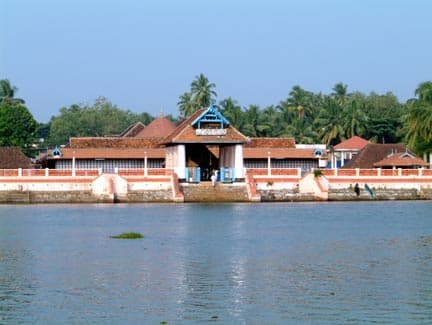
The Thriprayar Temple, also known as the Shree Ramaswami Temple, is a significant Hindu temple located in Triprayar, Thrissur district, Kerala, India. It is dedicated to Lord Rama, the seventh incarnation of Vishnu, who is depicted with four arms holding a conch, discus, bow, and garland. The temple's origin story involves the idol being worshipped by Krishna in Dwarka, later immersed in the sea, and eventually found by fishermen.