
Kheer Bhawani Temple
The Kheer Bhawani Temple, also known as Ragnya Devi Temple, is a significant Hindu shrine located in Tulmulla, Jammu and Kashmir, India. Dedicated to the goddess Kheer Bhavani, it is constructed over a sacred spring whose waters are believed to change color. The temple is a vital pilgrimage site for Kashmiri Hindus, who consider the goddess their protective patron deity.
Key Facts
- ›Dedicated to the Hindu goddess Kheer Bhavani, also known as Ragnya Devi.
- ›Built over a sacred spring that is believed to change its water color.
- ›The Kheer Bhawani mela, held annually during Jyeshtha Ashtami, is a major gathering for Kashmiri Hindus.
- ›Maharajas Pratap Singh and Hari Singh contributed significantly to the temple's construction and renovation.
- ›Mentioned in historical texts such as Kalhana's Rajtarangini and Abu'L-Fazl ibn Mubarak's Aini-Akbari.
- ›Serves as the Kuladevi (protective patron deity) for many Kashmiri Hindus and the Chandraseniya Kayastha Prabhu community.

Kheer Bhavani, Ragnya Devi
- Major Pilgrimage Site For Kashmiri Hindus
- Considered the Protective Patron Deity For Kashmiri Hindus and Ckp Community
- Unique Natural Phenomenon of the Sacred Spring Changing Color
- Historical Mention In Kalhana's Rajtarangini and Aini-Akbari
Dogra Dynasty
Jyeshtha Ashtami
Maharaja Pratap Singh, Maharaja Hari Singh, Maharaja Ranbir Singh
Sacred Spring
About Kheer Bhawani Temple
The Kheer Bhawani Temple, also known by the names Ksheer Bhawani or Ragnya Devi Temple, is a prominent Hindu shrine situated in the village of Tulmulla, approximately 25 kilometers northeast of Srinagar in Jammu and Kashmir, India. It is dedicated to the Hindu goddess Kheer Bhavani, who is also referred to by various names including Ragnya, Rajna, Devi, Mata, or Bhagavati. The temple is constructed over a sacred spring, and the offering of 'kheer,' a milk and rice pudding, is a customary practice to propitiate the goddess, leading to its translation as 'Milk Goddess.'
The worship of Kheer Bhavani holds universal significance among Kashmiri Hindus, with many revering her as their protective patron deity, their Kuladevi. The temple shares this status as a Kuladevi for the Chandraseniya Kayastha Prabhu community as well. A significant annual event is the Kheer Bhawani mela, which takes place during Jyeshtha Ashtami. This festival attracts one of the largest congregations of Hindus in the region, second only to the Amarnath pilgrimage.
Temple Description and History
The temple is considered one of the most important Hindu temples in Kashmir. The resident deity, Kheer Bhavani, is deeply revered in the region. A unique feature of the temple complex is a heptagonal spring surrounding the deity's shrine. The waters of this holy spring are famously known to change color, exhibiting various hues such as red, pink, orange, green, blue, and white. While most color changes do not hold specific meaning, a black shade of the spring water is considered inauspicious and was reportedly observed during the time of the Kashmiri Pandit Exodus and prior to the COVID-19 pandemic.
Historical records indicate the temple's antiquity. Kalhana's Rajtarangini mentions the sacred spring of Tula Mula, and historical accounts suggest that floods once inundated the spring and temple. Abu'l-Fazl ibn Mubarak, in his work Aini-Akbari, described the area of Tula Mula. The current structure of the spring, temple pond, and temple was developed under the patronage of Maharaja Pratap Singh of Jammu and Kashmir in the 1910s, with further renovations undertaken by Maharaja Hari Singh. The temple area is also known for its old-growth chinar trees, providing shade and resting spots for pilgrims.
The Kheer Bhawani Mela
The Kheer Bhawani mela is a vital annual event that draws Kashmiri Hindus and other pilgrims. The festival, celebrated during Jyeshtha Ashtami, faced threats during periods of Islamic terrorism and the Hindu exodus in the 1990s. However, dedicated efforts by the Indian Army contingent stationed in Ganderbal helped restore the mela. Currently, a contingent of the CRPF is deployed at the temple complex, ensuring its security. Notably, Hindu priests have continued to serve at the mandir throughout these challenging times, despite serious terrorist threats.
Source: Wikipedia ↗
Frequently Asked Questions
What is the significance of the spring at the Kheer Bhawani Temple?
The temple is constructed over a sacred spring dedicated to the goddess Kheer Bhavani. The spring is known for its unique characteristic of changing its water color to various hues such as red, pink, orange, green, blue, and white. A black shade of the spring water is considered inauspicious.
What is the Kheer Bhawani mela?
The Kheer Bhawani mela, also known as the Kheer Bhawani festival, is an annual congregation of Kashmiri Hindus and other pilgrims. It takes place during Jyeshtha Ashtami and is one of the largest gatherings of Hindus in the region, second only to the Amarnath pilgrimage.
Who is the deity worshipped at Kheer Bhawani Temple?
The temple is dedicated to the Hindu goddess Kheer Bhavani, who is also known by names such as Ragnya or Rajna Devi. She is revered by Kashmiri Hindus as their protective patron deity, their Kuladevi.
What historical texts mention the Kheer Bhawani Temple?
The mention of Kheer Bhavani is found in Kalhana's Rajtarangini, which describes the sacred spring at Tula Mula. The temple's location and the area were also noted by Abu'l-Fazl ibn Mubarak in his book Aini-Akbari.
What role did the Maharajas play in the temple's history?
Maharaja Pratap Singh of Jammu and Kashmir was instrumental in building the current form of the spring, temple pond, and temple in the 1910s. Maharaja Hari Singh further contributed by renovating the temple, while Maharaja Ranbir Singh was the first to construct a dharmashala there.
Related Temples (Hindu)

Taraknath Temple
The Taraknath Temple, located in Tarakeswar, West Bengal, India, is a significant Hindu pilgrimage site dedicated to Lord Shiva, worshiped here as Tarakanatha. Constructed in 1729, it features a distinct Bengal architectural style with an 'atchala' structure and an adjacent 'natmandir'. The temple is renowned for its belief that a dip in the nearby Dudhpukur tank fulfills prayers and is considered one of the 64 Jyotirlingas.

Tanot Mata Temple
The Tanot Mata Temple is a significant Hindu shrine located in the Jaisalmer district of Rajasthan, India, near the Pakistan border. Revered as a form of Goddess Hinglaj Mata, the temple is famously associated with the Indian victories in the Indo-Pakistani Wars of 1965 and 1971, with local folklore attributing the successful outcomes to divine intervention. The Border Security Force of India now manages the temple complex, which also includes a victory tower and a war museum.
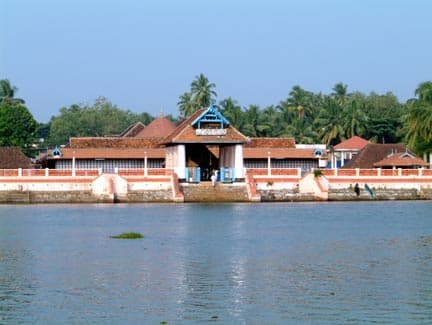
Thriprayar Temple
The Thriprayar Temple, also known as the Shree Ramaswami Temple, is a significant Hindu temple located in Triprayar, Thrissur district, Kerala, India. It is dedicated to Lord Rama, the seventh incarnation of Vishnu, who is depicted with four arms holding a conch, discus, bow, and garland. The temple's origin story involves the idol being worshipped by Krishna in Dwarka, later immersed in the sea, and eventually found by fishermen.