
Kedareswar Temple
The Kedareswar Temple in Bhubaneswar, Odisha, is one of the eight Astasambhu Temples dedicated to Lord Shiva, locally known as 'Kedareshwar'. It is situated in the precinct of Kedara-Gouri and is noted for its architectural features, including a vimana and jagamohana, and its association with a legendary local tale of love and sacrifice.
Key Facts
- ›The temple is dedicated to Lord Shiva, referred to locally as 'Kedareshwar'.
- ›It is part of the Kedara-Gouri precinct and is located south of the Mukteswar Temple.
- ›The temple enshrines a circular yonipitha made of sandstone, though the central linga is missing.
- ›Architecturally, it features a pancharatha vimana in the rekha order and a pidha order jagamohana.
- ›A local legend connects the temple's origin to a couple named Kedar and Gouri, with lovers still praying for a happy wedlock.
- ›The sanctum is situated 0.8 meters below the present ground level.

Shiva
- Religious Pilgrimage Site For Lovers Seeking A Happy Wedlock
- Architectural Example of Rekha and Pidha Orders
Utkal Kingdom
Sandstone
Lalatendu Keshari
Kedara Kunda
About Kedareswar Temple
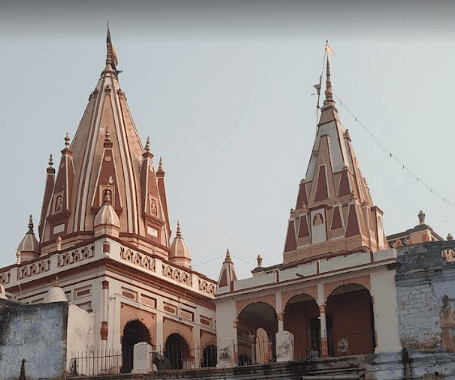
The Kedareswar Temple, located in Bhubaneswar, Odisha, is a significant Hindu temple recognized as one of the eight Astasambhu Temples. It is dedicated to Lord Shiva, known locally as 'Kedareshwar'. The temple is situated within the Kedara-Gouri precinct, to the south of the Mukteswar Temple, and stands as the main shrine of its complex.
Legend and Religious Significance
The temple's origin is intertwined with a poignant local legend of a couple named Kedar and Gouri. Their forbidden love led them to flee, but tragedy struck when Kedar was killed by a tiger. Gouri, upon learning of his death at this very spot, took her own life by jumping into a nearby pond. The king of Utkal, Lalatendu Keshari, is credited with constructing the Kedareswar or Kedargouri Temple in their memory. Today, the temple is a place of worship for lovers seeking blessings for a happy and obstacle-free marriage.
Architectural Features
The Kedareswar Temple exhibits notable architectural characteristics. The plan includes a vimana and a jagamohana. The vimana is constructed in the rekha order, a common style in North Indian temple architecture, and stands approximately 13.50 meters high. The jagamohana is in the pidha order. The temple's bada (vertical wall section) is adorned with sculptural embellishments, and the sanctum, measuring 2.5 square meters, is located 0.8 meters below the current ground level.
Surrounding Environment
The temple is part of a larger complex and is surrounded by other significant structures. To its west lies Dutiya Kedaresvara, to its east is the Kedara kunda, and to its south is the Gouri Temple. The presence of these interconnected sites and the sacred pond adds to the spiritual ambiance of the location.
Source: Wikipedia ↗
Frequently Asked Questions
What is the legend behind the Kedareswar Temple?
The temple is named after a legendary couple, Kedar and Gouri, who fled society due to their forbidden love. When Kedar was killed by a tiger while seeking food, Gouri, upon hearing the news at this location, jumped into a pond. The king of Utkal, Lalatendu Keshari, later built the temple in their memory.
What deity is worshipped at the Kedareswar Temple?
The presiding deity at the Kedareswar Temple is Lord Shiva, who is locally referred to by the name 'Kedareshwar'.
What are the main architectural components of the Kedareswar Temple?
The temple comprises a vimana, which is the main sanctuary, and a jagamohana, a hall for congregational worship. The vimana is in the rekha order, characteristic of North Indian temple architecture, while the jagamohana is in the pidha order.
What is the current state of the enshrined deity?
The temple enshrines a circular yonipitha made of sandstone. However, the linga, which would typically be at the center of the yonipitha, is missing.
What is the significance of the pond near the Kedareswar Temple?
The pond located near the Kedareswar Temple, known as Kedara kunda, is steeped in local lore. According to legend, Gouri jumped into this pond after learning of Kedar's death. The water of the pond is also said to possess medicinal properties.
Related Temples (Hindu)
Budhanath Temple, Bhagalpur
The Budhanath Temple, also known as Vriddheshwarnath or Baba Bal Vridheshwarnath Temple, is a significant Hindu temple dedicated to Lord Shiva, located on the banks of the Uttarvahini Ganga in Bhagalpur, India. It is believed to be one of the 108 Nath temples mentioned in the Shiva Purana and is celebrated for its spiritual ambiance and as a focal point for regional cultural identity.

Mundeshwari Temple
The Mundeshwari Devi Temple, located on the Mundeshwari Hills in Bihar, India, is an ancient Hindu temple dedicated to Goddess Durga and Lord Shiva. It is recognized by the Archaeological Survey of India as a protected monument and is claimed by some scholars to be the oldest functional Hindu temple in the world, with evidence suggesting continuous worship since at least the 6th-7th century CE.

Mahamaya Temple
The Mahamaya Temple, located in Ratanpur, Chhattisgarh, India, is a significant Hindu temple dedicated to Goddess Durga and Mahalaksmi. It is recognized as one of the 52 Shakti Peethas and holds historical importance, with parts of the complex dating back to the 12th-13th centuries and a later structure built in 1492 CE.