
Kashi Vishwanath Temple
The Kashi Vishwanath Temple, located in Varanasi, Uttar Pradesh, India, is a significant Hindu temple dedicated to Lord Shiva. It is one of the twelve Jyotirlinga shrines and a major pilgrimage site, revered for its spiritual importance and historical cycles of destruction and reconstruction.
Key Facts
- ›Dedicated to Lord Shiva, with the presiding deity known as Vishwanath or Vishweshwara, meaning 'Lord of the Universe'.
- ›It is one of the twelve Jyotirlinga shrines, considered highly sacred in Hinduism.
- ›The temple has a long history of destruction and rebuilding, with the current structure dating to 1780, built by Ahilyabai Holkar.
- ›The temple complex includes smaller shrines, a well known as Jnana Vapi, and a sanctum sanctorum housing the Jyotirlinga.
- ›A major redevelopment project, the Kashi Vishwanath Dham Corridor, was completed in 2021, significantly increasing visitor numbers.
- ›It is considered one of the most visited Hindu temples in India.
Shiva
Major Hindu Pilgrimage Site, One of the Twelve Jyotirlinga Shrines, Spiritual Importance For Achieving Moksha
Holkar Dynasty
Maha Shivaratri, Rangbhari Ekadashi, Vasant Panchami, Mangala Aarti, Bhog Aarti, Saptarishi Aarti, Shringar Aarti
Gold
Ahilyabai Holkar, Raja Man Singh I, Raja Todar Mal, Maharaja Ranjit Singh
Ganges River
About Kashi Vishwanath Temple
The Kashi Vishwanath Temple, situated in Varanasi, Uttar Pradesh, India, is a preeminent Hindu temple dedicated to Lord Shiva. It holds the distinction of being one of the twelve Jyotirlinga shrines, which are considered the most sacred abodes of Shiva. The temple is a paramount pilgrimage destination, drawing devotees from across the globe who seek spiritual merit and liberation (moksha).
History and Reconstruction
The history of the Kashi Vishwanath Temple is marked by cycles of destruction and reconstruction. The original temple, known as the Adi Vishveshwar Temple, faced demolition by various rulers, including the Ghurids in 1194 and the Mughal Emperor Aurangzeb in 1669, who subsequently built the Gyanvapi Mosque on its site. Despite these destructions, Hindu pilgrims continued to venerate the remnants. The current structure was erected in 1780 by the Maratha ruler Ahilyabai Holkar of Indore on an adjacent site. Significant patronage also came from rulers such as Raja Man Singh I and Raja Todar Mal, who contributed to its rebuilding during the Mughal era. Maharaja Ranjit Singh of the Sikh Empire in 1835 donated gold for plating the temple's dome.
Religious and Spiritual Significance
The temple is central to the spiritual landscape of Varanasi, regarded as one of the holiest cities in Hinduism. The presiding deity is known as Vishwanath or Vishweshwara, signifying 'Lord of the Universe.' The presence of the Jyotirlinga of Shiva Vishveshwara is believed to offer a direct path to spiritual liberation. Pilgrims often undertake a sacred bath in the nearby Ganges River as part of their spiritual journey to the temple.
Temple Complex and Features
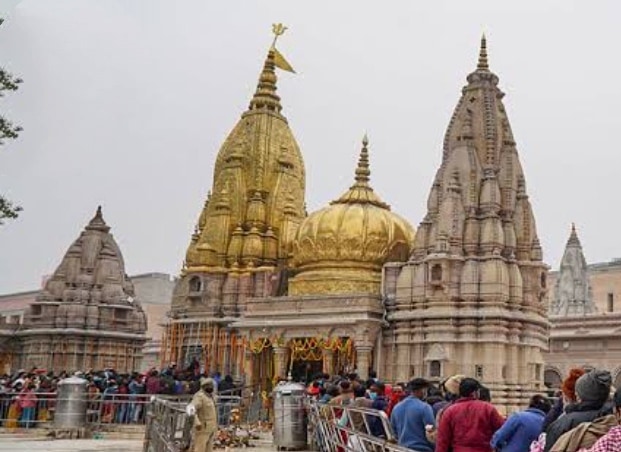
The temple complex is located in a narrow lane known as Vishwanath Gali, close to the Ganges River. It comprises a main shrine housing the Jyotirlinga, which is placed on a silver platform. Surrounding the main temple are smaller shrines dedicated to other deities like Kala Bhairava, Ganesha, and Parvati. A notable feature is the Jnana Vapi well, into which the Jyotirlinga is said to have been hidden for protection during invasions. The temple is popularly known as the Golden Temple due to the gold plating on its spire and domes.
Modern Developments and Visitation
In recent years, a major redevelopment project, the Kashi Vishwanath Dham Corridor, was completed and inaugurated in December 2021. This initiative aimed to improve connectivity between the temple and the Ganges River and enhance visitor facilities. The project has led to a substantial increase in the number of pilgrims, with the temple becoming one of the most visited Hindu temples in India.
Source: Wikipedia ↗
Frequently Asked Questions
What is the religious significance of the Kashi Vishwanath Temple?
The temple is dedicated to Lord Shiva, specifically the Jyotirlinga of Vishveshwara, and is considered one of the most important places of worship in Hinduism. A visit to the temple and a bath in the Ganges River is believed to be a path to moksha (liberation).
What is the history of the Kashi Vishwanath Temple's construction and destruction?
The original temple, the Adi Vishveshwar Temple, was demolished multiple times, including by Mohammad of Ghori and Aurangzeb. It was subsequently rebuilt by rulers like Man Singh I, Todar Mal, and Ahilyabai Holkar, with the current structure erected in 1780.
What is the significance of the Gyan Vapi or Jnana Vapi well?
The Jnana Vapi, meaning 'wisdom well', is a well located in the temple complex. According to legend, the Jyotirlinga was hidden in this well to protect it from invaders during Mughal rule.
What is the Kashi Vishwanath Dham Corridor?
The Kashi Vishwanath Dham Corridor is a redevelopment project inaugurated in 2021, aimed at improving access between the temple and the Ganges River and managing crowds. This project has led to a significant increase in the number of pilgrims visiting the temple.
What architectural features make the Kashi Vishwanath Temple distinctive?
The temple features a spire that is 15.5 meters high, a gold dome, and a gold spire within the sanctuary. Due to the extensive gold plating, it is popularly known as the Golden Temple.
Related Temples (Hindu)

Taraknath Temple
The Taraknath Temple, located in Tarakeswar, West Bengal, India, is a significant Hindu pilgrimage site dedicated to Lord Shiva, worshiped here as Tarakanatha. Constructed in 1729, it features a distinct Bengal architectural style with an 'atchala' structure and an adjacent 'natmandir'. The temple is renowned for its belief that a dip in the nearby Dudhpukur tank fulfills prayers and is considered one of the 64 Jyotirlingas.

Ugratara Devalaya
Ugratara Devalaya is a significant Shakti shrine located in Guwahati, Assam, India, dedicated to the goddess Ugratara. Legend connects the temple to the navel of Sati, and it is noted for its unique representation of the deity as a water-filled pit rather than an idol.

Tara Devi Temple
Tara Devi Temple is a prominent Hindu religious site located at an altitude of 7200 feet above sea level near Shimla, India. The temple is dedicated to Goddess Tara Devi and is believed to grant blessings and fulfill the wishes of devotees who visit with unwavering faith. It is a popular destination, drawing thousands of visitors, especially on weekends.