
Kanaka Durga Temple
The Kanaka Durga Temple, officially Sri Durga Malleswara Swamyvarla Devasthanam, is a prominent Hindu temple dedicated to the goddess Kanaka Durga. Located in Vijayawada, Andhra Pradesh, on the Indrakeeladri hill overlooking the Krishna River, it is renowned for its self-manifested deity and its association with the legend of Durga slaying the demon Mahishasura.
Key Facts
- ›The temple is dedicated to the Hindu goddess Kanaka Durga.
- ›It is situated on the Indrakeeladri hill in Vijayawada, Andhra Pradesh, on the banks of the Krishna River.
- ›The deity is considered Swayambhu (self-manifested) according to Vedic literature.
- ›A popular legend describes the goddess slaying the demon King Mahishasura to protect the people.
- ›The main icon of the deity is an eight-armed standing figure piercing Mahishasura with her trident.
- ›The temple complex also houses shrines for Malleswara Swamy, Nataraja, Kartikeya, and others.

Kanaka Durga, Malleswara Swamy, Nataraja, Kartikeya, Valli, Devasena, Hanuman, Aparajitha Devi, Abhaya Anjaneya, Kamadhenu Devi
Religious Pilgrimage Site, Site of Legend of Durga Slaying Mahishasura, Mentioned In Vedic Literature, Swayambhu Deity
Telugu Pallava
Dasara, Sakambhari Festival, Varalakshmi Vratam, Pournami Maha Pooja, Saraswati Yagam, Laksha Kumkumarchana
Sage Indrakila, Podukayuri Siddayadeva, Sivamagi Maraya, Siddaraju
- Eight-Armed Icon of Kanaka Durga Standing Over Mahishasura
Krishna River
About Kanaka Durga Temple
The Kanaka Durga Temple, officially known as Sri Durga Malleswara Swamyvarla Devasthanam, is a significant Hindu temple located in Vijayawada, Andhra Pradesh, India. It is dedicated to the goddess Kanaka Durga, who is also popularly referred to by the same name. The temple is situated atop the Indrakeeladri hill, offering a commanding view of the Krishna River.
Goddess Legend and Significance
A popular legend associated with the temple narrates the triumph of Goddess Kanaka Durga over the demon king Mahishasura. According to the tale, the sage Indrakila performed severe penance, and upon the goddess's appearance, he pleaded with her to reside on his head to keep a vigil against wicked demons. Fulfilling his wish to vanquish the demons, Durga made Indrakila her permanent abode and subsequently slayed Mahishasura, liberating the people of Vijayawada from his tyranny. Vedic literature, including the Kaalika Purana and Durgaa Sapthashati, mentions Kanaka Durga on Indrakeeladri and describes the deity as Swayambhu, meaning self-manifested, making the site highly revered.
Iconography and Worship
The enchanting icon of the deity at Kanaka Durga Temple is approximately 4 feet high and depicts her in an eight-armed form. Each arm holds a powerful weapon, and the goddess is shown in a standing posture over the vanquished demon Mahishasura, piercing him with her trident. The deity is adorned with glittering ornaments and bright flowers, epitomizing beauty. Daily rituals commence early in the morning with Suprabhata Seva, followed by Abhishekam, Khadgamala Pooja, and Vastram Seva, where the deity is decorated. Naivedyam (offerings of food) are made multiple times a day. Periodical sevas include the Pournami Maha Pooja on full moon days and the Saraswati Yagam dedicated to education and career advancement. The Laksha Kumkumarchana involves chanting the goddess's names 100,000 times while offering Kumkuma.
Historical Context and Sub-Shrines
Historical evidence suggests the temple's antiquity, with a Telugu inscription from the Chola era dated 1229 CE recording a donation to the deity at Indrakiladri, referred to as Dakshina Varanasi. Beyond the main shrine of Kanaka Durga, the temple complex houses several other sub-shrines dedicated to deities such as Malleswara Swamy (a form of Lord Shiva), Nataraja, Kartikeya, Valli, and Devasena. Hanuman serves as the kshetrapalaka (guardian) of the temple, with shrines for Aparajitha Devi, Abhaya Anjaneya, and Kamadhenu Devi also present within the complex.
Festivals and Accessibility
Major festivals celebrated at the temple include Dasara (Navaratri), a ten-day celebration where ten forms of the goddess are worshipped, culminating in Dussehra. The annual Sakambhari festival in the Ashadha month is also a significant event, where prayers are offered for the abundance of vegetables and food. During the month of Sraavanam, Varalakshmi Vratam is observed with special devotion on all Fridays. Located in the heart of Vijayawada, the temple is easily accessible, being a short drive from the railway station and bus stand, and is well-connected by road, rail, and air.
Source: Wikipedia ↗
Frequently Asked Questions
What is the significance of the Kanaka Durga Temple?
The Kanaka Durga Temple is of immense religious significance, being a place where the goddess is considered self-manifested and is believed to have slayed the demon Mahishasura, freeing the region from evil. It is mentioned in ancient Vedic literature and is a focal point of worship in Vijayawada.
What is the legend behind the Kanaka Durga Temple?
According to legend, the sage Indrakila performed penance and requested the goddess to reside on his head to keep vigil against demons. The goddess agreed, making Indrakila her abode and subsequently slaying the demon king Mahishasura. This act freed the people of Vijayawada from his menace.
What is the main deity worshipped at Kanaka Durga Temple?
The primary deity worshipped at the Kanaka Durga Temple is Goddess Kanaka Durga. She is also popularly referred to as Kanaka Durga. The temple complex also includes shrines for Lord Shiva (Malleswara Swamy) and other deities.
What are some of the important festivals celebrated at Kanaka Durga Temple?
Key festivals celebrated at the temple include Dasara (Navaratri), during which ten forms of the goddess are worshipped, and the annual Sakambhari festival in the Ashadha month. Varalakshmi Vratam is also performed with special reverence on Fridays during the month of Sraavanam.
What architectural features are notable at Kanaka Durga Temple?
The temple houses an enchanting 4-foot-high icon of the deity in her eight-armed form, adorned with weapons and standing over the slain Mahishasura. While specific architectural styles are not detailed, the temple is situated on a hill and has various sub-shrines within its complex.
Related Temples (Hindu)

Taraknath Temple
The Taraknath Temple, located in Tarakeswar, West Bengal, India, is a significant Hindu pilgrimage site dedicated to Lord Shiva, worshiped here as Tarakanatha. Constructed in 1729, it features a distinct Bengal architectural style with an 'atchala' structure and an adjacent 'natmandir'. The temple is renowned for its belief that a dip in the nearby Dudhpukur tank fulfills prayers and is considered one of the 64 Jyotirlingas.

Tanot Mata Temple
The Tanot Mata Temple is a significant Hindu shrine located in the Jaisalmer district of Rajasthan, India, near the Pakistan border. Revered as a form of Goddess Hinglaj Mata, the temple is famously associated with the Indian victories in the Indo-Pakistani Wars of 1965 and 1971, with local folklore attributing the successful outcomes to divine intervention. The Border Security Force of India now manages the temple complex, which also includes a victory tower and a war museum.
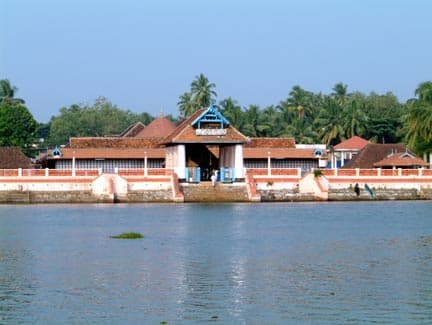
Thriprayar Temple
The Thriprayar Temple, also known as the Shree Ramaswami Temple, is a significant Hindu temple located in Triprayar, Thrissur district, Kerala, India. It is dedicated to Lord Rama, the seventh incarnation of Vishnu, who is depicted with four arms holding a conch, discus, bow, and garland. The temple's origin story involves the idol being worshipped by Krishna in Dwarka, later immersed in the sea, and eventually found by fishermen.