
Kanadikavu Shree Vishnumaya Kuttichathan Swamy temple
The Kanadikavu Shree Vishnumaya Kuttichathan Swamy temple, located southwest of Thrissur in Kerala, India, is a significant Hindu temple dedicated to Shree Vishnumaya Kuttichathan. It is renowned for its ancient origins and the unique ritual known as Roopakkalam, a colorful drawing on the ground used in worship.
Key Facts
- ›The temple's primary deity is Shree Vishnumaya Kuttichathan, with sub-deities including Bhadrakali and Bhuvanaeswari.
- ›It is considered the oldest Vishnumaya temple.
- ›The temple is situated in Peringottukara, approximately 20 km southwest of Thrissur, Kerala.
- ›A key ritual performed is Roopakkalam, which involves drawing intricate figures of the deity using organic powders.
- ›The temple celebrates major festivals such as Thiravellattu Mahotsavam and Thottampattu Festival.
- ›Brahmasree Vishnubharatheeya Swami serves as the chief priest and Madathipathi.

Shree Vishnumaya Kuttichathan, Bhadrakali, Bhuvanaeswari, Kukshikalpam, Kuttichathans, Nagaraja, Nagayakshi, Brahmarakshas
Oldest Vishnumaya Temple, Site of the Roopakkalam Ritual
Thiravellattu Mahotsavam, Thottampattu Festival
Koonamuthappan
Roopakkalam
About Kanadikavu Shree Vishnumaya Kuttichathan Swamy temple
The Kanadikavu Shree Vishnumaya Kuttichathan Swamy temple is recognized as the oldest temple dedicated to Vishnumaya, situated approximately 20 kilometers southwest of Thrissur in Peringottukara, Kerala, India. The principal deities enshrined within the temple are Shree Vishnumaya and 390 Kuttichathans, with additional sub-deities including Bhadrakali, Bhuvanaeswari, Kukshikalpam, Nagaraja, Nagayakshi, and Brahmarakshas.
Origins and Consecration
According to tradition, the sage Koonamuthappan sought to bring the blessings of a powerful and easily pleased deity for the well-being of humanity. Through severe penance, he pleased a Goddess who revealed the mantra to invoke Chathan Swamy, the son of Shree Parameswara. Following advice from the Nga Sages, Koonamuthappan undertook further penance in the Himalayas, where Vishnumaya Kuttichathan Swami appeared before him. He then returned to Peringottukara and consecrated the deity at the site of the present-day Kanadi family.
Rituals and Festivals
A distinctive ritual performed at the temple is Roopakkalam, which is an artistic representation of Vishnulokam. This practice involves drawing intricate and colorful figures of the deity and his ally Karimkutty on the ground using various herbal and organic powders. The ritual is often conducted in connection with the annual Thiruvellattu festival, celebrated in the Malayalam month of Makaram. During Roopakkalam, a priest invokes the lord into the drawing, performs puja, and engages in a ritualistic dance before erasing the kalam with palm leaves, after which the colored powders are distributed to devotees.
The temple observes several significant festivals. The Thiravellattu Mahotsavam marks the day of Vishnumaya's oracle in Makaram. In the month of Midhunam, a three-day festival celebrates the Consecration Day, beginning with the star Uthram. The Thottampattu festival is dedicated to Bhuvaneswary, the family deity of the Kanady family and considered the mother of Lord Vishnumaya. During this festival, the Devi is honored with hymns and a ritualistic drawing of her image.
Source: Wikipedia ↗
Frequently Asked Questions
Who is the main deity worshipped at Kanadikavu Shree Vishnumaya Kuttichathan Swamy temple?
The main deity worshipped at the Kanadikavu Shree Vishnumaya Kuttichathan Swamy temple is Shree Vishnumaya Kuttichathan. The temple also houses sub-deities such as Bhadrakali, Bhuvanaeswari, Kukshikalpam, and 390 Kuttichathans.
What is Roopakkalam and its significance?
Roopakkalam is a ritualistic practice at Vishnumaya temples where colorful figures of the lord and his ally Karimkutty are drawn on the ground using herbal powders. This ritual is performed as an offering to Lord Vishnumaya, often in conjunction with the annual Thiruvellattu festival.
When is the Thiravellattu Mahotsavam celebrated?
The Thiravellattu Mahotsavam is celebrated on the day of the oracle of Vishnumaya, which falls in the Malayalam month of Makaram. Additionally, a festival in connection with the Consecration Day takes place for three days starting with the star Uthram in the month of Midhunam.
What is the history behind the establishment of the temple?
According to tradition, the sage Koonamuthappan performed severe penance to obtain the blessings of a powerful deity for humanity's well-being. He was granted the mantra to invoke Chathan Swamy, the son of Shree Parameswara, and after further penance in the Himalayas, Vishnumaya Kuttichathan Swami appeared before him. The deity was then brought back and consecrated in Peringottukara.
What are some of the main offerings made at the temple?
Devotees offer various items at the temple, including Roopakkalam, Chuttuvilakku, Niramala, Brahmavellattu Karmam, Veethu, Guruthi, Divasapooja, and Pushpanjali.
What is the significance of the Thottampattu festival?
The Thottampattu festival is dedicated to Bhuvaneswary, who is considered the mother-form of Lord Vishnumaya and the family deity of the Kanady family. During this festival, the Devi is brought out from the Sreekovil, and hymns are chanted about her glory.
Related Temples (Hindu)

Taraknath Temple
The Taraknath Temple, located in Tarakeswar, West Bengal, India, is a significant Hindu pilgrimage site dedicated to Lord Shiva, worshiped here as Tarakanatha. Constructed in 1729, it features a distinct Bengal architectural style with an 'atchala' structure and an adjacent 'natmandir'. The temple is renowned for its belief that a dip in the nearby Dudhpukur tank fulfills prayers and is considered one of the 64 Jyotirlingas.

Tanot Mata Temple
The Tanot Mata Temple is a significant Hindu shrine located in the Jaisalmer district of Rajasthan, India, near the Pakistan border. Revered as a form of Goddess Hinglaj Mata, the temple is famously associated with the Indian victories in the Indo-Pakistani Wars of 1965 and 1971, with local folklore attributing the successful outcomes to divine intervention. The Border Security Force of India now manages the temple complex, which also includes a victory tower and a war museum.
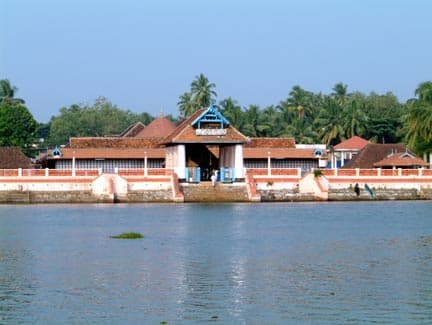
Thriprayar Temple
The Thriprayar Temple, also known as the Shree Ramaswami Temple, is a significant Hindu temple located in Triprayar, Thrissur district, Kerala, India. It is dedicated to Lord Rama, the seventh incarnation of Vishnu, who is depicted with four arms holding a conch, discus, bow, and garland. The temple's origin story involves the idol being worshipped by Krishna in Dwarka, later immersed in the sea, and eventually found by fishermen.