
Kamaksha Temple
The Kamaksha Temple, also known as Jaidevi, is a historic Hindu temple situated in a natural mountainous setting. It is venerated as the Kul Devi (family deity) of the Suket royal family and the Adhisthatri Devi (presiding deity) of the Suket principality. The temple's origin is attributed to Goddess Kamaksha, whose name signifies "the goddess who fulfills all desires."
Key Facts
- ›The temple is located in a natural mountainous setting.
- ›It is considered the Kul Devi (family deity) of the Suket royal family.
- ›The temple is also known as the Adhisthatri Devi of the Suket principality.
- ›Kamaksha translates to 'the goddess who fulfills all desires'.
- ›The origin of the place is attributed to Goddess Kamaksha.
- ›The temple has been restored several times by the temple committee and local people.
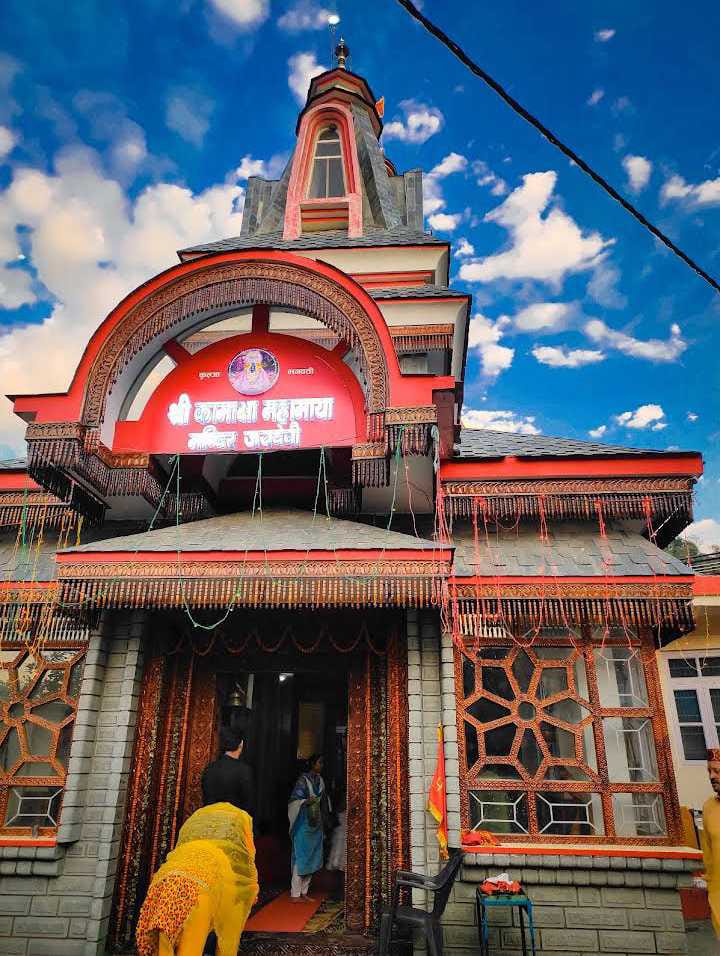
Kamaksha, Shri Mahunag Ji Jaidevi, Shri Bala Tika Ji Kafla Ji
Kul Devi of the Suket Royal Family, Adhisthatri Devi of the Suket Principality, Associated With the Suket Fair and Jatar
Suket Royal Family
Suket Fair, Jatar
King Shri Shyam Sen of Suket
About Kamaksha Temple
Shri Kamaksha Temple, Jaidevi
The Shri Kamaksha Temple, also recognized as Jaidevi, is a significant historical Hindu temple nestled amidst mountains in a natural setting. It holds the esteemed position of Kul Devi (family deity) for the Suket royal family and serves as the Raj-Rajeshwari and Adhisthatri Devi (presiding deity) for the Suket principality.
Origins and Naming
The name "Kamaksha" itself signifies "the goddess who fulfills all desires." The temple's origin is closely linked to Goddess Kamaksha, with local reverence also extending to Shri Mahunag Ji Jaidevi and Shri Bala Tika Ji Kafla Ji. The place gained its name, Jaidevi, during the era when the ancient king Shri Shyam Sen of Suket relocated the capital of his principality. It is recounted that as the idol of Goddess Kamaksha was moved from the old palace to the new, the earth resonated with the chants of "Jaidevi-Jaidevi," thus bestowing the name upon the location.
Historical Context and Patronage
Historically, the Suket rulers' origins are traced back to Bengal. As they expanded northward to establish their capital and dominion, they brought the magnificent idol of Goddess Kamaksha from Assam to this region. The temple houses both the Devi Kula and Kali forms of the goddess. The original construction of the Bhagwati Kamaksha Jaidevi Temple was undertaken by the king of Suket, and it has since undergone several restorations by the temple committee and local populace.
Role in Royal Tradition and Festivals
A long-standing tradition of the Suket royal family involved seeking the blessings of their Kul Devi before embarking on any auspicious undertaking. This practice, known locally as "Jatra" (invitation), saw the king personally inviting the goddess to his palace. In ancient times, the king and officials would escort Maa Kamaksha to the fair, where she would reside in the palace with priests for a few days, accompanied by a grand fair organized in her honor. Initially held in Lohara, then Karatarpur, the fair eventually found its place in Baned. Post-1900, the last king, Lakshman Sen, brought Devi to the Suket fair alongside Raja Mahunag Ji. After 1921, Devi began to be brought to the fair with Mahamaya, the revered deity of Panga and the Adhisthatri Devi of the Suket royal family, a tradition that continues to this day.
Source: Wikipedia ↗
Frequently Asked Questions
What is the meaning of Kamaksha?
Kamaksha translates to 'the goddess who fulfills all desires.' This name reflects the belief in the goddess's power to grant wishes and fulfill aspirations.
Who is Kamaksha Temple considered the family deity of?
Kamaksha Temple is revered as the Kul Devi (family deity) of the Suket royal family. This signifies a deep and traditional connection between the royal lineage and the goddess.
Where is the original temple of Goddess Kamakhya located?
The original temple of Goddess Kamakhya, a Shakta pitha, is located in Assam. In different regions of India, she is known by various names, including Kamakshi in the south and Kamaksha in the north.
What is the historical connection between Kamaksha Temple and the Suket principality?
The temple is the Adhisthatri Devi (presiding deity) of the Suket principality. This role highlights its importance in the religious and administrative life of the region, with the royal family seeking her blessings for auspicious tasks.
How did the place come to be known as Jaidevi?
The place became known as Jaidevi during the time King Shri Shyam Sen shifted the capital of the Suket principality. As the idol of Goddess Kamaksha was moved to the new palace, the earth reportedly resonated with chants of 'Jaidevi-Jaidevi,' leading to the place's name.
What is the historical origin of the idol of Goddess Kamaksha at this temple?
According to historical accounts, the magnificent idol of Goddess Kamaksha was brought to this place from Assam by the Suket rulers when they ventured northwards to establish their capital and rule.
Related Temples (Hindu)

Taraknath Temple
The Taraknath Temple, located in Tarakeswar, West Bengal, India, is a significant Hindu pilgrimage site dedicated to Lord Shiva, worshiped here as Tarakanatha. Constructed in 1729, it features a distinct Bengal architectural style with an 'atchala' structure and an adjacent 'natmandir'. The temple is renowned for its belief that a dip in the nearby Dudhpukur tank fulfills prayers and is considered one of the 64 Jyotirlingas.

Tanot Mata Temple
The Tanot Mata Temple is a significant Hindu shrine located in the Jaisalmer district of Rajasthan, India, near the Pakistan border. Revered as a form of Goddess Hinglaj Mata, the temple is famously associated with the Indian victories in the Indo-Pakistani Wars of 1965 and 1971, with local folklore attributing the successful outcomes to divine intervention. The Border Security Force of India now manages the temple complex, which also includes a victory tower and a war museum.
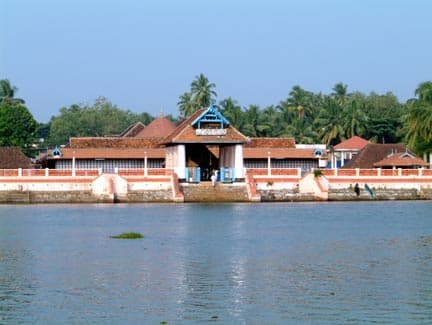
Thriprayar Temple
The Thriprayar Temple, also known as the Shree Ramaswami Temple, is a significant Hindu temple located in Triprayar, Thrissur district, Kerala, India. It is dedicated to Lord Rama, the seventh incarnation of Vishnu, who is depicted with four arms holding a conch, discus, bow, and garland. The temple's origin story involves the idol being worshipped by Krishna in Dwarka, later immersed in the sea, and eventually found by fishermen.