
Kalyana Venkateswara Temple, Srinivasamangapuram
The Kalyana Venkateswara Temple, located in Srinivasamangapuram, Andhra Pradesh, India, is an ancient Hindu temple dedicated to Venkateswara, a form of Vishnu. It is considered a centrally protected monument of national importance and is currently maintained by the Tirumala Tirupati Devasthanams. The temple holds particular significance for newlyweds, as it is believed to be the place where Venkateswara and his consort Padmavathi spent the first six months of their marriage.
Key Facts
- ›Dedicated to Venkateswara, a form of Vishnu, also known as Kalyana Venkateswara.
- ›Located in Srinivasamangapuram, Tirupati District, Andhra Pradesh, India.
- ›Recognized as an Ancient Monument of National Importance by the Archaeological Survey of India.
- ›Maintained by the Tirumala Tirupati Devasthanams (TTD) since 1981.
- ›Considered sacred for newlywed couples, who often offer prayers there first.
- ›The presiding deity faces East in a standing posture with four hands.

Venkateswara, Vishnu, Lakshmi Narayana, Ranganatha
- Centrally Protected Monument of National Importance
- Sacred For Newlyweds
- Considered Sacred Next To Tirumala Temple
About Kalyana Venkateswara Temple, Srinivasamangapuram
The Kalyana Venkateswara Temple is an ancient Hindu place of worship located in Srinivasamangapuram, within the Tirupati District of Andhra Pradesh, India. Dedicated to Lord Venkateswara, a manifestation of the god Vishnu, the temple is also referred to as Kalyana Venkateswara. It holds the distinction of being a centrally protected monument of national importance.
Administration and Maintenance
Historically, the temple was under the control of the Archaeological Survey of India (ASI) from 1967. In 1981, administration was transferred to the Tirumala Tirupati Devasthanams (TTD), which has since been responsible for maintaining the temple and performing its daily rituals and festivals. Today, the TTD continues to manage the temple.
Religious Significance
The Kalyana Venkateswara Temple is considered highly sacred by Hindus, often visited by those who are unable to travel to the main Venkateswara Temple in Tirumala. It is particularly revered by newlywed couples, as tradition holds that Lord Venkateswara and his consort Padmavathi resided in this location for the initial six months of their marriage. The presiding deity, Venkateswara, is depicted in a standing posture facing East, characterized by four hands, with one right hand in varada mudra and holding a Chakra, and one left hand in kati mudra and holding a Shankha. The temple complex also includes shrines for Lakshmi Narayana and Ranganatha, other forms of Vishnu.
Source: Wikipedia ↗
Frequently Asked Questions
What is the main deity worshipped at the Kalyana Venkateswara Temple?
The presiding deity is Venkateswara, a form of the god Vishnu. He is specifically referred to as Kalyana Venkateswara at this temple. The temple also houses deities of Lakshmi Narayana and Ranganatha, both also forms of Vishnu.
Where is the Kalyana Venkateswara Temple located?
The temple is situated in Srinivasamangapuram, within the Tirupati District of Andhra Pradesh, India. It is considered an ancient Hindu temple in the region.
What is the significance of the Kalyana Venkateswara Temple for newlyweds?
The temple holds special significance for newlywed couples. It is believed to be the place where Lord Venkateswara and his consort Padmavathi stayed for the first six months of their marriage. Because of this, newlyweds often offer prayers at this temple first.
Who administers the Kalyana Venkateswara Temple?
The temple was under the control of the Archaeological Survey of India (ASI) from 1967 to 1981. Since 1981, it has been administered and maintained by the Tirumala Tirupati Devasthanams (TTD), which continues to perform the temple's utsavams and rituals.
Is the Kalyana Venkateswara Temple considered a monument of national importance?
Yes, the Kalyana Venkateswara Temple is recognized as an Ancient Monument of National Importance by the Archaeological Survey of India. This designation highlights its historical and cultural value.
Related Temples (Hindu)

Taraknath Temple
The Taraknath Temple, located in Tarakeswar, West Bengal, India, is a significant Hindu pilgrimage site dedicated to Lord Shiva, worshiped here as Tarakanatha. Constructed in 1729, it features a distinct Bengal architectural style with an 'atchala' structure and an adjacent 'natmandir'. The temple is renowned for its belief that a dip in the nearby Dudhpukur tank fulfills prayers and is considered one of the 64 Jyotirlingas.

Tanot Mata Temple
The Tanot Mata Temple is a significant Hindu shrine located in the Jaisalmer district of Rajasthan, India, near the Pakistan border. Revered as a form of Goddess Hinglaj Mata, the temple is famously associated with the Indian victories in the Indo-Pakistani Wars of 1965 and 1971, with local folklore attributing the successful outcomes to divine intervention. The Border Security Force of India now manages the temple complex, which also includes a victory tower and a war museum.
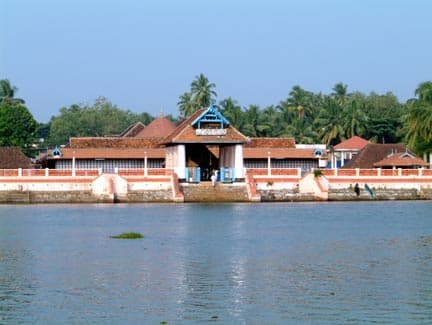
Thriprayar Temple
The Thriprayar Temple, also known as the Shree Ramaswami Temple, is a significant Hindu temple located in Triprayar, Thrissur district, Kerala, India. It is dedicated to Lord Rama, the seventh incarnation of Vishnu, who is depicted with four arms holding a conch, discus, bow, and garland. The temple's origin story involves the idol being worshipped by Krishna in Dwarka, later immersed in the sea, and eventually found by fishermen.