
Kali Bari
Kali Bari Mandir is a Hindu temple located on Bantony Hill in Shimla, India, dedicated to Shyamala, a fierce manifestation of Goddess Kali. The temple, originally built in 1823, is noted for its unique Hindu-style architecture and a blue wooden idol of the goddess.
Key Facts
- ›Dedicated to Goddess Shyamala, a reincarnation of Kali.
- ›Originally constructed in 1823 by Ram Charan Brahamchari.
- ›Resembles the Dakshineswar Kali Temple in Kolkata.
- ›Features a unique Hindu-style architecture.
- ›Has a blue-colored wooden idol of Goddess Kali.
- ›The temple was later relocated to Bantony Hill by the British.

Kali, Shyamala
- Religious Pilgrimage Site
- Architectural Interest
- Historical Significance As An Ancient Temple In Shimla
Wood
Ram Charan Brahamchari
Blue Coloured Wooden Idol of Goddess Kali
About Kali Bari
Kali Bari Mandir
Kali Bari Mandir is a significant Hindu temple located on Bantony Hill in Shimla, India. Dedicated to Goddess Shyamala, a fierce manifestation of Goddess Kali, the temple is believed to be the origin of Shimla's name. The temple's history dates back to 1823 when it was first established by Ram Charan Brahamchari, a Bengali Brahmin, in the vicinity of Jakhoo Hill. Its architectural style is distinctly Hindu and it houses a striking blue wooden idol of the goddess.
History and Relocation
The original structure of Kali Bari Mandir was built in 1823 and bore resemblance to the Dakshineswar Kali Temple in Kolkata, reflecting its Bengali heritage. At a later point, the British authorities relocated the temple to its present site on Bantony Hill. A temple trust was formed in 1902, primarily composed of Bengali members, to manage its affairs.
Location and Significance
Situated in the heart of Shimla, Kali Bari Mandir offers panoramic views of the city, including landmarks like Shimla's Old Bus Stand and the Shimla Railway Station. The temple is a popular destination for both tourists and devotees, drawing visitors with its religious importance and unique architecture. It stands as one of the ancient temples in Shimla.
Source: Wikipedia ↗
Frequently Asked Questions
Where is Kali Bari Mandir located?
Kali Bari Mandir is situated on Bantony Hill in Shimla, India. It is located in the city center and offers views of various landmarks, including Shimla's Old Bus Stand and the Railway Station.
Who is Kali Bari Mandir dedicated to?
The temple is dedicated to Goddess Shyamala, a fearsome reincarnation of Goddess Kali. It is believed that the city of Shimla may have been named after her.
When was Kali Bari Mandir built?
The temple was originally built in 1823 by a Bengali Brahmin named Ram Charan Brahamchari. It was later relocated to its current site on Bantony Hill by the British.
What is notable about the architecture of Kali Bari Mandir?
Kali Bari Mandir features a unique Hindu-style architecture. It bears a resemblance to the Dakshineswar Kali Temple in Kolkata, reflecting its Bengali origins.
Is Kali Bari Mandir a popular tourist destination?
Yes, the temple attracts a significant number of tourists and devotees. Its location in the city center and its religious significance contribute to its popularity.
Related Temples (Hindu)
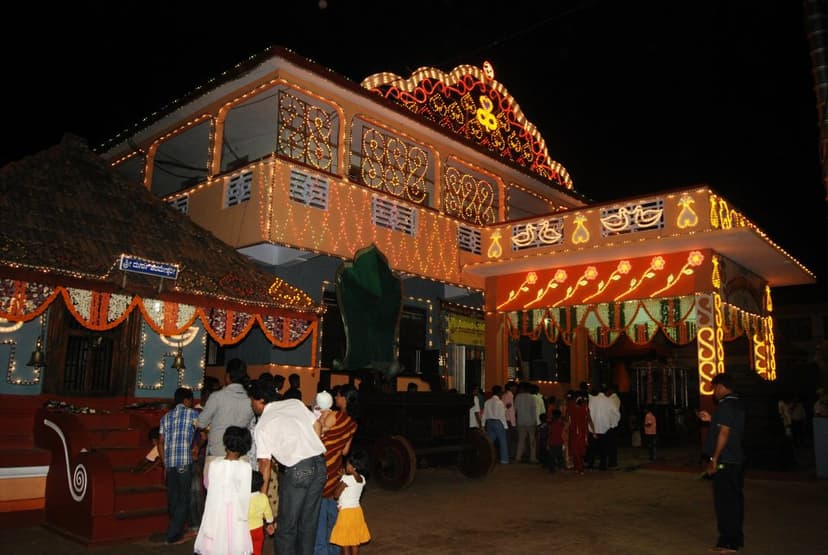
Polali Rajarajeshwari Temple
The Polali Rajarajeshwari Temple, located in Dakshina Kannada, Karnataka, is an ancient Hindu temple primarily dedicated to Goddess Shri Rajarajeshwari. Constructed in the 8th century AD, the temple is renowned for its unique idol of the deity, which is molded entirely from clay with special medicinal properties. The temple complex showcases distinctive Hindu architecture with wooden carvings and copper plates, and it remains an active center of worship and a site for significant annual festivals.

Satyanarayana Temple, Annavaram
The Satyanarayana Temple in Annavaram, Andhra Pradesh, is a prominent Hindu pilgrimage site dedicated to Lord Satyanarayana Swamy, an incarnation of Lord Vishnu. Situated atop Ratnagiri Hill, the temple is renowned for attracting thousands of devotees daily, particularly for the Satyanarayana Vratham, and is considered one of the wealthiest and most visited religious sites in the state.

Jhandewalan Temple
The Jhandewalan Temple in Delhi, dedicated to Vaishno Devi, was founded in the 19th century by Badri Bhagat. Originally located near a spring where Bhagat discovered an idol, the temple gained its name from a large flag (jhanda) hoisted to mark the site. It remains a significant religious center, particularly during the Navratri festival, and is known for its extensive charitable work.