
Satyanarayana Temple, Annavaram
The Satyanarayana Temple in Annavaram, Andhra Pradesh, is a prominent Hindu pilgrimage site dedicated to Lord Satyanarayana Swamy, an incarnation of Lord Vishnu. Situated atop Ratnagiri Hill, the temple is renowned for attracting thousands of devotees daily, particularly for the Satyanarayana Vratham, and is considered one of the wealthiest and most visited religious sites in the state.
Key Facts
- ›Dedicated to Lord Satyanarayana Swamy, an incarnation of Lord Vishnu.
- ›Located on Ratnagiri Hill in Annavaram, Kakinada district, Andhra Pradesh, India.
- ›Attracts thousands of devotees daily for the Satyanarayana Vratham ritual.
- ›Considered one of the wealthiest and most visited religious sites in Andhra Pradesh.
- ›Regarded as the second most prominent temple in Andhra Pradesh after Tirumala Venkateswara Temple.
- ›The current temple structure was reconstructed in stone during 1933–34.
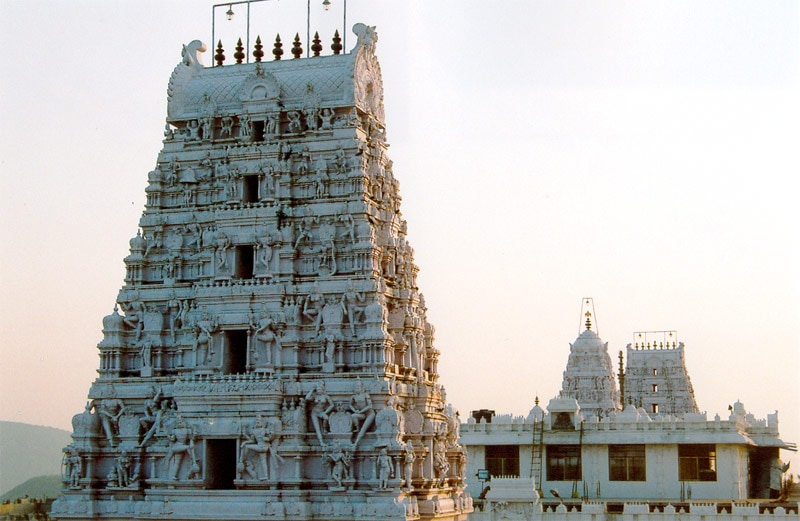
Satyanarayana Swamy, Vishnu
- Major Pilgrimage Centre
- Second Most Prominent Temple In Andhra Pradesh After Tirumala Venkateswara Temple
- Site For Satyanarayana Vratham Ritual
- Wealthy Temple
Telugu New Year's Day, Sita Rama Kalyanam, Sri Krishna Jayanti, Lord's Jayanti, Ganapathi Navarathrulu, Sarannavarathrulu, Kanaka Durga Jatara, Giripradakshinam, Deejwalatoranam
Stone
Eeranki Prakasa Rao, Raja Inuganti Venkata Ramarayanim Bahadur
Pampa River
About Satyanarayana Temple, Annavaram
The Satyanarayana Temple in Annavaram, located in the Kakinada district of Andhra Pradesh, India, is a significant Hindu pilgrimage destination dedicated to Lord Satyanarayana Swamy, an avatar of Lord Vishnu. Situated atop the scenic Ratnagiri Hill, the temple is recognized as one of the most visited religious sites in Andhra Pradesh and is considered one of the state's wealthiest temples. Its importance as a pilgrimage center is substantial, often ranked as the second most prominent in the state, following the renowned Tirumala Venkateswara Temple.
History and Legend
The origins of the temple are rooted in a shared vision experienced by a local Brahmin, Eeranki Prakasa Rao, and the reigning ruler, Raja Inuganti Venkata Ramarayanim Bahadur. Both reportedly received divine instructions from Lord Vishnu to install His idol on Ratnagiri Hill on a specific auspicious day. Following this revelation, the idol was discovered illuminated by sunlight beneath a Krishna Kutaja tree on the hill. The consecration of the idol took place on August 6, 1891, and the original modest structure was later expanded and significantly reconstructed in stone during 1933–34. The temple's legend is connected to the mythological Meru mountain, whose son Ratnakara performed penance to Vishnu and was blessed with his manifestation on Ratnagiri Hill.
Architecture and Significance
The temple's architecture is designed to resemble a chariot, complete with four wheels, symbolizing eternal movement through time. The main entrance is adorned with gold plating. The structure adheres to principles outlined in the Agni Purana, with the central sanctum representing the Supreme Spirit. A unique yantra, the Srimathripathvibhuti Vykuntha Maha Narayana Yantra, is located on the ground floor, surrounded by deities in a panchayatana arrangement. The primary idol is cylindrical, symbolizing the Trimurti. The temple is a major draw for devotees performing the Satyanarayana Vratham, a ritual sought for wealth, health, and prosperity, attracting thousands daily. The temple is administered by the Endowments department of Andhra Pradesh through a Trust board.
Festivals and Surrounding Shrines
Several significant festivals are celebrated at the temple throughout the year, including Telugu New Year's Day, Sita Rama Kalyanam, Sri Krishna Jayanti, and Ganapathi Navarathrulu, among others. Ratnagiri Hill is also home to other important shrines, such as the Sri Rama Temple, Vana Durga Temple, and Kanaka Durga Temple, further enhancing the spiritual significance of the location.
Source: Wikipedia ↗
Frequently Asked Questions
When was the Satyanarayana Temple, Annavaram consecrated?
The Satyanarayana Temple, Annavaram was consecrated on August 6, 1891, following the traditional Vishnu Panchayatana system. The temple has since undergone expansions and significant reconstruction in the 1930s.
What is the significance of Ratnagiri Hill?
Ratnagiri Hill is considered sacred in Hindu mythology, with legends attributing its origin to the penance of Meru mountain's son, Ratnakara. Lord Vishnu is believed to have manifested as Sri Veera Venkata Satyanarayana Swamy on this hill.
What is the architectural style of the Satyanarayana Temple, Annavaram?
The temple is architecturally designed to resemble a chariot, complete with four wheels at each corner, symbolizing eternal movement. The main sanctum houses a cylindrical idol symbolizing the Trimurti, with the ground floor featuring a powerful yantra.
What is the Satyanarayana Vratham and why is it performed?
The Satyanarayana Vratham is a ritual performed by devotees at the temple seeking wealth, health, and prosperity. Although Ekadasi is considered auspicious, the ritual is observed by many on other days as well.
What other shrines are located on Ratnagiri Hill?
Besides the main Satyanarayana Temple, Ratnagiri Hill hosts several other shrines, including the Sri Rama Temple (believed to be the discovery site of the idol), Vana Durga Temple, and Kanaka Durga Temple.
Related Temples (Hindu)

Jhandewalan Temple
The Jhandewalan Temple in Delhi, dedicated to Vaishno Devi, was founded in the 19th century by Badri Bhagat. Originally located near a spring where Bhagat discovered an idol, the temple gained its name from a large flag (jhanda) hoisted to mark the site. It remains a significant religious center, particularly during the Navratri festival, and is known for its extensive charitable work.

Mata Mansa Devi Mandir
Mata Mansa Devi Mandir is a significant Hindu temple dedicated to Goddess Mansa Devi, a form of Shakti, located in the Panchkula district of Haryana, India. The temple complex, spread across 100 acres in the Shivalik foothills, was established in its current form between 1811 and 1815 by Maharaja Gopal Das Singh of Mani Majra and has been managed by the Shri Mata Mansa Devi Shrine Board since 1991.

Dagadusheth Halwai Ganapati Temple
The Dagadusheth Halwai Ganapati Temple is a prominent Hindu temple in Pune, India, dedicated to Lord Ganesha. Established in the late 1800s by Dagadusheth Halwai in memory of his son, the temple is renowned for its large Ganesha idol, adorned with gold, and attracts over a hundred thousand devotees annually, especially during the Ganeshotsav festival.