
Jamalapuram Temple
The Sri Venkateshwara Swamy Temple in Jamalapuram, Telangana, is dedicated to Lord Balaji, believed to be a self-manifested deity. The temple's history is linked to the sage Jabali Maharshi, and it was renovated by Emperor Krishnadevaraya of the Vijayanagara Empire, earning it the moniker 'Telangana Chinna Tirupathi'. Alongside the main deity, it houses shrines for several other Hindu gods and goddesses.
Key Facts
- ›The presiding deity is Lord Balaji, considered a swayambhu (self-manifested).
- ›The temple is located in Jamalapuram, Khammam district, Telangana, India.
- ›Legend states that Sage Jabali Maharshi performed penance here and was blessed by Lord Venkateshwara.
- ›Emperor Krishnadevaraya of the Vijayanagara Empire undertook renovations of the temple.
- ›It is also known as 'Telangana Chinna Tirupathi'.
- ›The complex includes sub-shrines for Padmavathi Ammavaru, Sri Alamelu Ammavaru, Lord Shiva, Lord Ganesh, Lord Ayyappa, and Lord Hanuman.
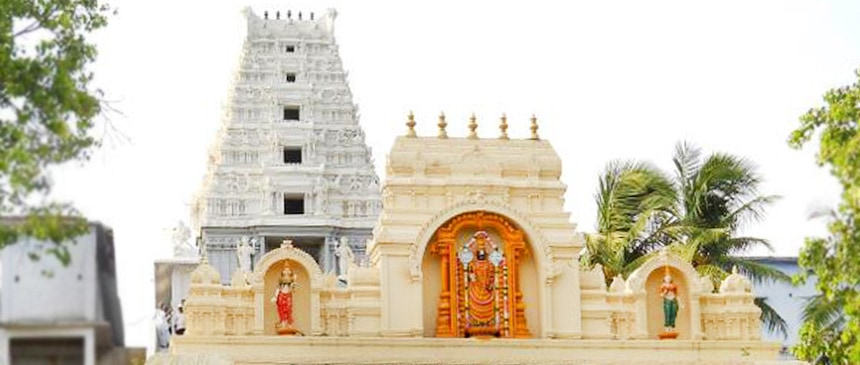
Lord Balaji, Lord Venkateshwara
- Historical Importance Due To Renovation By Vijayanagara Empire
- Religious Pilgrimage Site
- Association With Sage Jabali Maharshi
Vijayanagara Empire
Jabali Maharshi, Krishnadevaraya
About Jamalapuram Temple
Sri Venkateshwara Swamy Temple, Jamalapuram
The Sri Venkateshwara Swamy Temple, located in Jamalapuram near Errupalem in the Khammam district of Telangana, India, is a significant Hindu pilgrimage site. The temple's presiding deity is Lord Balaji, who is venerated as a swayambhu, meaning self-manifested. This sacred site is deeply connected to ancient spiritual traditions, with legends linking it to the sage Jabali Maharshi, who is said to have performed penance and received blessings from Lord Venkateshwara here.
Historical Context and Renovation
The temple's existence is traced back to considerable antiquity. Its historical importance was further cemented by renovations undertaken by Sri Krishnadevaraya, the renowned emperor of the Vijayanagara Empire. This patronage underscores the temple's prominence during the Vijayanagara period. Consequently, the temple is also popularly known as 'Telangana Chinna Tirupathi,' drawing a comparison to the highly revered Venkateshwara temple in Tirumala.
Temple Complex and Worship
The main shrine is dedicated to Lord Balaji. The temple complex also accommodates sub-shrines for a variety of other important deities, including Padmavathi Ammavaru, Sri Alamelu Ammavaru, Lord Shiva, Lord Ganesh, Lord Ayyappa, and Lord Hanuman. This arrangement allows devotees to offer worship to multiple forms of the divine within a single complex, enhancing its appeal as a spiritual destination.
Source: Wikipedia ↗
Frequently Asked Questions
Who is the main deity worshipped at Jamalapuram Temple?
The main deity worshipped at the Sri Venkateshwara Swamy Temple in Jamalapuram is Lord Balaji. He is believed to be a swayambhu, meaning he self-manifested at this location.
What is the historical significance of the Jamalapuram Temple?
The temple has a long history, believed to have existed since ancient times. It was notably renovated by Emperor Krishnadevaraya of the Vijayanagara Empire, highlighting its importance during that era.
What is the legend associated with the Jamalapuram Temple?
According to legend, the ancient sage Jabali Maharshi worshipped and performed penance at a place called Suchi Gutta near the temple. He is said to have received blessings from Lord Venkateshwara at this site.
Are there other deities worshipped at Jamalapuram Temple?
Yes, in addition to Lord Balaji, the temple complex features sub-shrines dedicated to Padmavathi Ammavaru, Sri Alamelu Ammavaru, Lord Shiva, Lord Ganesh, Lord Ayyappa, and Lord Hanuman.
Why is Jamalapuram Temple sometimes called 'Telangana Chinna Tirupathi'?
The temple is also known as 'Telangana Chinna Tirupathi' likely due to its significance and association with Lord Venkateshwara, drawing parallels to the famous Tirumala Tirupati Venkateswara Temple.
Related Temples (Hindu)

Taraknath Temple
The Taraknath Temple, located in Tarakeswar, West Bengal, India, is a significant Hindu pilgrimage site dedicated to Lord Shiva, worshiped here as Tarakanatha. Constructed in 1729, it features a distinct Bengal architectural style with an 'atchala' structure and an adjacent 'natmandir'. The temple is renowned for its belief that a dip in the nearby Dudhpukur tank fulfills prayers and is considered one of the 64 Jyotirlingas.

Tanot Mata Temple
The Tanot Mata Temple is a significant Hindu shrine located in the Jaisalmer district of Rajasthan, India, near the Pakistan border. Revered as a form of Goddess Hinglaj Mata, the temple is famously associated with the Indian victories in the Indo-Pakistani Wars of 1965 and 1971, with local folklore attributing the successful outcomes to divine intervention. The Border Security Force of India now manages the temple complex, which also includes a victory tower and a war museum.
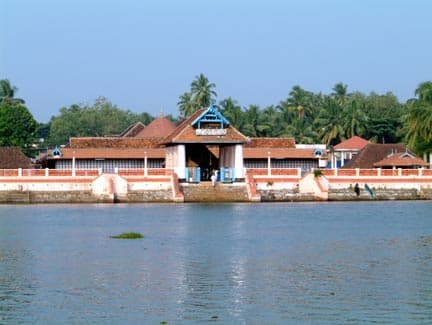
Thriprayar Temple
The Thriprayar Temple, also known as the Shree Ramaswami Temple, is a significant Hindu temple located in Triprayar, Thrissur district, Kerala, India. It is dedicated to Lord Rama, the seventh incarnation of Vishnu, who is depicted with four arms holding a conch, discus, bow, and garland. The temple's origin story involves the idol being worshipped by Krishna in Dwarka, later immersed in the sea, and eventually found by fishermen.