
Jagannatha Perumal temple
The Jagannatha Perumal Temple, also known as Tirumazhisai Temple, is a Hindu temple dedicated to Lord Vishnu, located in Tirumazhisai, Tamil Nadu. Constructed in the Dravidian architectural style, it is revered as one of the 108 Abhimana Kshethram sites in the Vaishnavate tradition. The temple preserves inscriptions dating back to the Chola and Vijayanagara periods, highlighting its historical significance.
Key Facts
- ›Dedicated to Lord Vishnu, worshipped as Jagannatha Perumal.
- ›Features the consort Lakshmi, worshipped as Thirumangaivalli.
- ›Constructed in the Dravidian architectural style.
- ›Houses inscriptions from the Chola (11th-12th centuries) and Vijayanagara (14th-15th centuries) periods.
- ›Considered one of the 108 Abhimana Kshethram of Vaishnavate tradition.
- ›Occupies an area of approximately 1.5 acres.

Vishnu, Jagannatha Perumal, Lakshmi, Thirumangaivalli
- One of the 108 Abhimana Kshethram of Vaishnavate Tradition
- Historical Inscriptions From Chola and Vijayanagara Periods
- Believed Birthplace of Thirumalisai Alvar
Chola, Vijayanagara
Aani Brahmotsavam, Aipasi Manavala Maamuni, Maasi Float Festival
Granite, Stucco
Thirumalisai Alvar, Vijaya Gandagopala, Kopperunjinga, Harihara Raya Ii, Virupaksha Raya Ii
- Sculptured Pillars Depicting Vaishnava Mythology
- Stucco Images of Hayagriva, Lakshmi Narasimha and Garuda On the Vimana
About Jagannatha Perumal temple
The Jagannatha Perumal Temple, also known as the Tirumazhisai Temple, is a significant Hindu place of worship located in Tirumazhisai, Chennai City, within the Tiruvallur district of Tamil Nadu, India. Dedicated to Lord Vishnu, who is revered here as Jagannatha Perumal, and his consort Lakshmi, known as Thirumangaivalli, the temple is a notable example of Dravidian architecture.
Legend and Historical Context
According to Hindu legend, the temple gained prominence when Vishnu is believed to have appeared as Madhya Jagannatha (Jagannatha in the middle) to fulfill the request of the Saptarishis, the seven celestial sages. This site is also historically significant as the believed birthplace of Thirumalisai Alvar, one of the revered twelve Alvar saints whose devotional poetry forms a part of the early medieval Tamil canon. The temple's historical roots are further evidenced by inscriptions found on its walls, dating back to the Chola regime (11th-12th centuries) and the Vijayanagara period (14th-15th centuries). These inscriptions record various endowments, including gifts of land, lamps, and houses, made to the temple by rulers and chieftains of those eras.
Architecture and Administration
The temple complex, spanning approximately 1.5 acres, is designed in the traditional Dravidian style. It features two precincts, surrounded by high walls, and is entered through a five-tier gopuram (gateway tower). The sanctum houses the presiding deity, an image carved from granite in a seated posture. The temple's Mahamandapa, or worship hall, is notable for its twenty-eight pillared hall adorned with sculptured pillars depicting scenes from Vaishnava mythology. The vimana, the spire over the sanctum, is decorated with stucco images. The temple follows the Tenkalai tradition of worship and is currently maintained and administered by the Hindu Religious and Endowment Board of the Government of Tamil Nadu.
Festivals and Significance
Several important festivals are celebrated annually at the Jagannatha Perumal Temple. These include the Aani Brahmotsavam in June-July, Aipasi Manavala Maamuni in October-November, and the Maasi float festival in February-March, which involves drawing the presiding deities in a float on the temple tank. The temple is classified as one of the 108 Abhimana Kshethram, a group of sacred sites revered by the Vaishnavate tradition, making it an important pilgrimage destination.
Source: Wikipedia ↗
Frequently Asked Questions
What is the legend behind the Jagannatha Perumal Temple?
According to legend, Vishnu appeared as Madhya Jagannatha (Jagannatha in the middle) at this site to grant the wish of the Saptarishis (seven sages) to behold him. The temple is also believed to be the birthplace of Thirumalisai Alvar, a prominent Alvar saint.
What historical periods are represented by inscriptions in the temple?
Inscriptions found on the temple walls date from the Chola regime during the 11th-12th centuries and the Vijayanagara period during the 14th-15th centuries. These inscriptions detail endowments such as land, lamps, and houses gifted to the temple.
Who were some of the notable rulers or chieftains associated with the temple?
Chieftains like Vijaya Gandagopala from the 12th century, Kopperunjinga from the 13th century, and Vijayanagara rulers Harihara Raya II and Virupaksha Raya II from the 14th-15th centuries are mentioned in inscriptions as having made endowments to the temple.
What are the main architectural features of the Jagannatha Perumal Temple?
The temple is built in Dravidian style with two precincts and is surrounded by high walls. It features a five-tier gopuram, a sanctum housing the presiding deity made of granite, a Mahamandapa with sculptured pillars, and a vimana adorned with stucco images.
What are the significant festivals celebrated at the temple?
Key festivals include Aani Brahmotsavam in June-July, Aipasi Manavala Maamuni in October-November, and the Maasi float festival in February-March, where the deities are taken out in a float on the temple tank.
How is the temple administered?
The temple is administered by the Hindu Religious and Endowment Board of the Government of Tamil Nadu, which also oversees its maintenance.
Related Temples (Hindu)
Kotappakonda
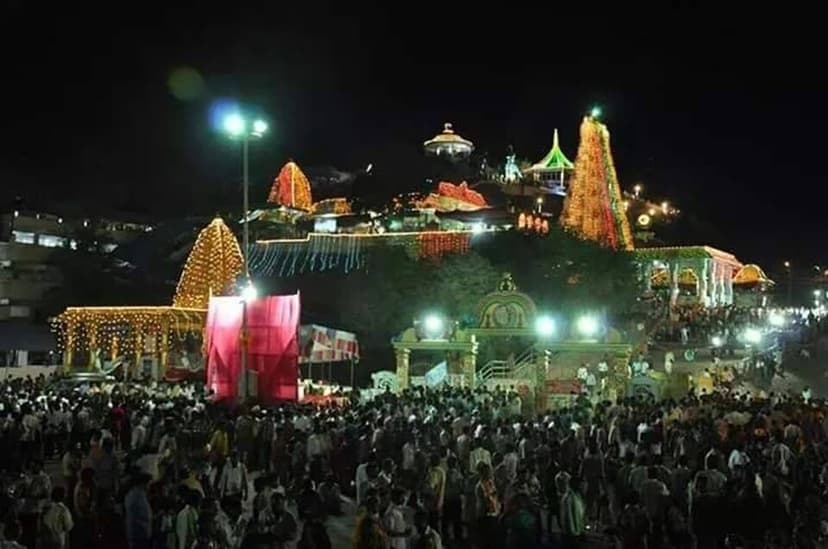
Kotappakonda is a significant Hindu pilgrimage site in Andhra Pradesh, India, centered around the ancient Sri Trikoteswara Swamy Temple, dedicated to Lord Shiva. Renowned for its three distinct peaks, the site is a major Shaivite center, drawing large crowds, especially during the annual Maha Shivaratri festival.

Kumararama
The Kumararama Temple, also known as Bhimarama or Chalukya Kumararama Bhimeswara Temple, is a significant Hindu temple dedicated to Lord Shiva, located in Samalkota, Andhra Pradesh. It is one of the five Pancharama Kshetras and is renowned for its unique limestone Shiva Lingam, which is 16 feet tall and pierces through the roof to the second floor.

Venkateswara Temple, Tirumala
The Venkateswara Temple, also known as Tirumala Temple, is a significant Hindu pilgrimage site located in the Tirumala hills of Andhra Pradesh, India. Dedicated to Venkateswara, a form of Vishnu, the temple is renowned for its Dravidian architecture and is considered one of the wealthiest and most visited religious sites globally. It is administered by the Tirumala Tirupati Devasthanams (TTD), an autonomous body under the Government of Andhra Pradesh.