
Harihar Dham
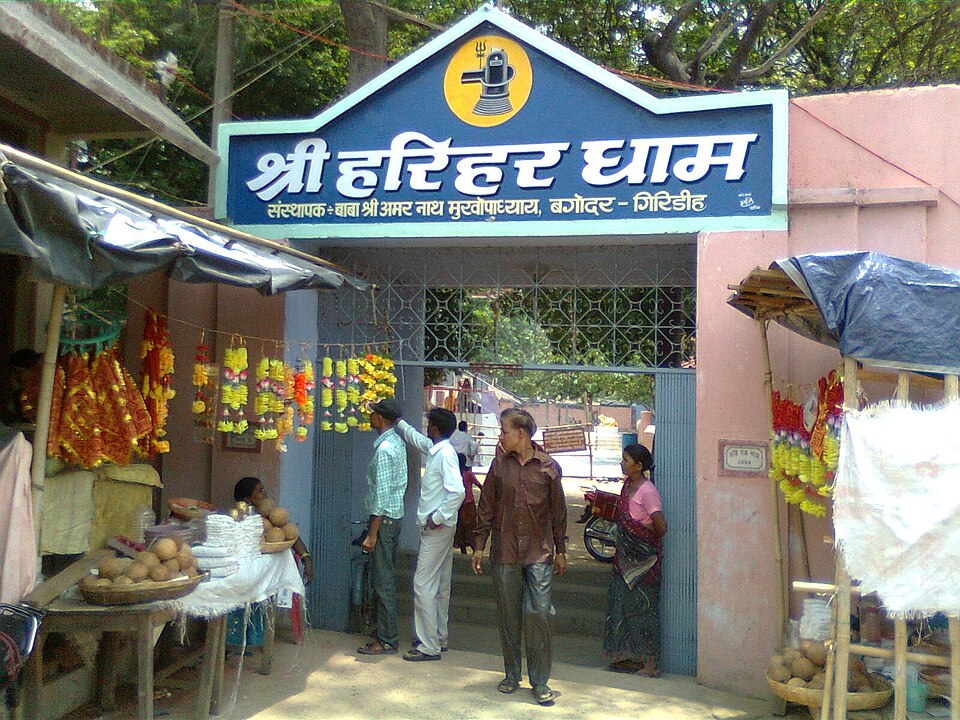
Harihar Dham, located in Bagodar, Giridih, Jharkhand, India, is renowned for housing the world's tallest Shivalinga, standing at 65 feet. This expansive temple complex, spread over 25 acres and surrounded by a river, is a significant pilgrimage site dedicated to Lord Shiva. Construction of the colossal Shivalinga took approximately 30 years.
Key Facts
- ›Features the world's tallest Shivalinga, measuring 65 feet (20 meters) in height.
- ›The temple complex spans an area of 25 acres (10 hectares).
- ›Construction of the massive Shivalinga took about 30 years to complete.
- ›It is a major tourist destination and a pilgrimage site for devotees of Lord Shiva.
- ›Visitors annually gather on Shravan Poornima to worship Lord Shiva.
- ›The temple is also a popular venue for Hindu weddings.
Shiva
Religious Pilgrimage, Housing the World's Tallest Shivalinga, Popular Site For Hindu Weddings
Shravan Poornima, Nag Panchami
World's Tallest Shivalinga
River
About Harihar Dham
Harihar Dham, situated in Bagodar, Giridih, within the Indian state of Jharkhand, is a prominent Hindu temple distinguished by its colossal Shivalinga. This sacred site is recognized globally for housing the world's tallest Shivalinga, an impressive structure that stands at 65 feet (20 meters) tall. The construction of this monumental Shivalinga was a significant endeavor, taking approximately 30 years to complete.
Location and Scale
The temple is strategically located about 1 km from the Grand Trunk Road, roughly 60 km southwest of the Giridih district headquarters. The complex itself is expansive, spreading over an area of 25 acres (10 hectares) and is enveloped by a river, enhancing its serene spiritual ambiance. Historically, Giridih was part of the Hazaribagh district in the undivided state of Bihar before becoming a separate district and part of Jharkhand.
Religious and Cultural Significance
Harihar Dham serves as a major tourist spot and a vital pilgrimage destination for devotees of Lord Shiva from across India. A significant annual gathering occurs on Shravan Poornima, the full moon night in the auspicious month of Shraavana, a period dedicated to festivals and pious rituals. The temple's religious importance also extends to its role as a popular venue for Hindu weddings, reflecting its deep cultural integration.
Notable Features
The most striking feature of Harihar Dham is undoubtedly the towering Shivalinga. While the article mentions the festival of Nag Panchami, which falls on the fifth day of the bright half of Shraavana and involves the worship of cobras, its direct association with specific rituals or timings at Harihar Dham beyond the general month of Shraavana is not detailed.
Source: Wikipedia ↗
Frequently Asked Questions
What is so special about the Shivalinga at Harihar Dham?
The Shivalinga at Harihar Dham is distinguished by its immense height, standing as the tallest in the world at 65 feet (20 meters). Its construction was a monumental undertaking, requiring around 30 years to complete.
Where is Harihar Dham located?
Harihar Dham is situated in Bagodar, within the Giridih district of the Indian state of Jharkhand. It is located approximately 1 km from the Grand Trunk Road and about 60 km southwest of the Giridih district headquarters.
When is the best time to visit Harihar Dham?
The temple is visited by devotees from all over India annually on Shravan Poornima, which is the full moon night in the holy month of Shraavana. This period is significant for the worship of Lord Shiva.
What is the significance of Shravan Poornima mentioned in relation to Harihar Dham?
Shravan Poornima is the full moon night during the holy month of Shraavana, a time of festivals and rituals. Devotees visit Harihar Dham on this auspicious day to worship Lord Shiva.
Is Harihar Dham a place for weddings?
Yes, due to its religious importance, Harihar Dham is also recognized as a popular location for Hindu weddings.
Related Temples (Hindu)

Taraknath Temple
The Taraknath Temple, located in Tarakeswar, West Bengal, India, is a significant Hindu pilgrimage site dedicated to Lord Shiva, worshiped here as Tarakanatha. Constructed in 1729, it features a distinct Bengal architectural style with an 'atchala' structure and an adjacent 'natmandir'. The temple is renowned for its belief that a dip in the nearby Dudhpukur tank fulfills prayers and is considered one of the 64 Jyotirlingas.

Tanot Mata Temple
The Tanot Mata Temple is a significant Hindu shrine located in the Jaisalmer district of Rajasthan, India, near the Pakistan border. Revered as a form of Goddess Hinglaj Mata, the temple is famously associated with the Indian victories in the Indo-Pakistani Wars of 1965 and 1971, with local folklore attributing the successful outcomes to divine intervention. The Border Security Force of India now manages the temple complex, which also includes a victory tower and a war museum.
Thriprayar Temple
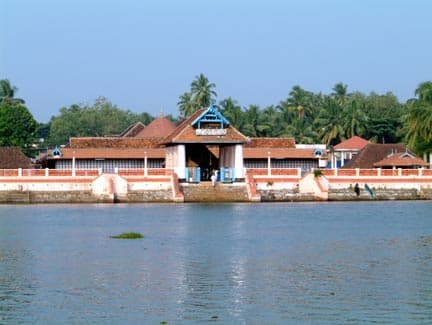
The Thriprayar Temple, also known as the Shree Ramaswami Temple, is a significant Hindu temple located in Triprayar, Thrissur district, Kerala, India. It is dedicated to Lord Rama, the seventh incarnation of Vishnu, who is depicted with four arms holding a conch, discus, bow, and garland. The temple's origin story involves the idol being worshipped by Krishna in Dwarka, later immersed in the sea, and eventually found by fishermen.