
Gnana Saraswati Temple, Basar
The Gnana Saraswati Temple, located on the banks of the Godavari River in Basara, Telangana, India, is a significant Hindu temple dedicated to Goddess Saraswati, the deity of knowledge and learning. It is renowned for the "Akshara abyasam" ceremony, where children are initiated into formal education, and is considered one of the two prominent Saraswati temples in the Indian subcontinent.
Key Facts
- ›Dedicated to Goddess Saraswati, the Hindu deity of knowledge and learning.
- ›Located on the banks of the Godavari River in Basara, Telangana, India.
- ›Children are brought for the "Akshara abyasam" ceremony before starting formal schooling.
- ›Believed to be one of three temples near the confluence of the Manjira and Godavari rivers.
- ›Historically, it was constructed in the sixth century by Karnataka King Bijialudu.
- ›The idols were reinstated in the 17th century by a chieftain after destruction by invaders.

Saraswati, Lakshmi, Kali, Mahakali
- Major Pilgrimage Site For the "Akshara Abyasam" Ceremony.
- One of Two Famous Saraswati Temples In the Indian Subcontinent.
- Considered the Abode of the Divine Trinity .
Maha Shivaratri, Vasantha Panchami, Devi Navarathrulu, Dasara
Bijialudu
Godavari River, Manjira River
About Gnana Saraswati Temple, Basar
The Gnana Saraswati Temple, situated on the banks of the sacred Godavari River in Basara, Telangana, India, is a prominent Hindu temple dedicated to Goddess Saraswati, the revered deity of knowledge, music, arts, wisdom, and learning. It holds the distinction of being one of the two most famous Saraswati temples in the entire Indian subcontinent, the other being Sharada Peeth. The temple is particularly renowned for its "Akshara abyasam" ceremony, a crucial ritual where children are brought to the temple for their first formal introduction to learning, involving the writing of alphabets, before they commence their schooling.
Historical Origins and Legends
Historical accounts and local traditions suggest that the site of the Gnana Saraswati Temple was once known as Dandaka forest. According to the Mahabharatha, the sage Maharishi Vyas and his disciples sought a tranquil environment for meditation and prayer after the Kurukshetra War. They are said to have found this serene location, where Maharishi Vyas spent considerable time in devotion, leading to the place being named "Vasara," which evolved into Basara due to the regional influence of the Marathi language. It is also believed that this temple is one of three significant temples established near the confluence of the Manjira and Godavari rivers.
Architectural and Historical Development
Historically, the temple's construction is attributed to 'Bijialudu,' a Karnataka king who ruled the province of Nandagiri with Nanded as his capital during the sixth century. The temple underwent destruction by Muslim invaders; however, in the 17th century, the idols were reinstated by a chieftain of Nandagiri (Nanded), preserving the sanctity of the site.
Religious Practices and Festivals
In the modern period, the Gnana Saraswati Temple continues to be a vital center for religious activities. Pilgrims flock to perform the "Akshara abhyasam" ceremony, where children are initiated into the world of letters, and their books and writing instruments are offered to the goddess. The temple's daily rituals begin at 4 am with an hour-long "Abhishekam," followed by "Alankarana" at 5 am, where the goddesses are adorned with new sarees. The "aarti" commences at 6 am, accompanied by the distribution of "prasadam" to devotees.
Major festivals celebrated with great fervor include Maha Shivaratri, which spans a period of 15 days starting from Vasantha Panchami and continuing for three days after the main festival. The Devi Navarathrulu festival is observed for ten days during the Dasara season.
Divine Presence and Significance
Adding to its spiritual significance, the temple complex features a Mahakali idol located on the first floor, near the main shrine. Devotees also undertake a pilgrimage to a nearby mountain where an idol of Goddess Saraswati is situated atop a rock. The sanctum sanctorum houses the image of Goddess Lakshmi standing beside Goddess Saraswati. The presence of these three prominent goddesses—Saraswati, Lakshmi, and Kali—leads to Basara being revered as the abode of the divine trinity.
Source: Wikipedia ↗
Frequently Asked Questions
What is the significance of the Gnana Saraswati Temple in Basara?
The Gnana Saraswati Temple is one of the two famous Saraswati temples in the Indian subcontinent and is dedicated to the Hindu Goddess of knowledge and learning. It is particularly known for the "Akshara abyasam" ceremony, where children are brought for their first lessons in learning.
What is the "Akshara abyasam" ceremony?
The "Akshara abyasam" is a learning ceremony performed for children at the Gnana Saraswati Temple before they begin their formal school education. During this ritual, children are guided to write letters and dedicate their books and writing materials to the goddess.
What is the historical background of the Gnana Saraswati Temple?
According to tradition, Maharishi Vyas chose this serene location for prayer and meditation, leading to the place being called "Vasara" and later Basara. Historically, the temple was constructed in the sixth century by a Karnataka king named Bijialudu. Its idols were later reinstated in the 17th century by a chieftain after facing destruction.
What other deities are associated with the Gnana Saraswati Temple?
Besides Goddess Saraswati, the temple complex also houses an idol of Mahakali on the first floor. The image of Goddess Lakshmi stands beside Saraswati in the sanctum sanctorum, making Basara considered the abode of the divine trinity of Saraswati, Lakshmi, and Kali.
When are the major festivals celebrated at the Gnana Saraswati Temple?
Special poojas and celebrations are held during Maha Shivaratri, commencing 15 days prior with Vasantha Panchami and continuing for three days after the festival. The Devi Navarathrulu festival is also celebrated for ten days during Dasara.
Related Temples (Hindu)
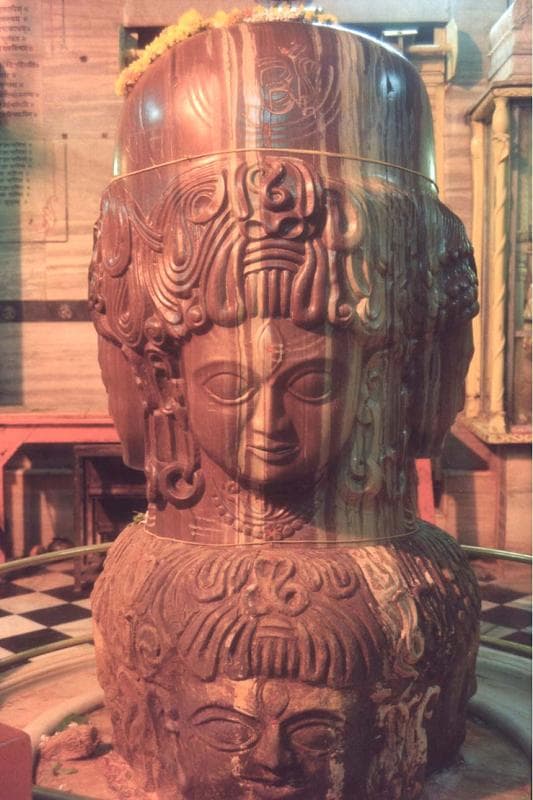
Pashupatinath Temple, Mandsaur
The Pashupatinath Temple in Mandsaur, Madhya Pradesh, India, is a significant Hindu temple dedicated to Lord Shiva, belonging to the Pashupatinath tradition within Shaivism. It is renowned for its rare eight-faced Shiva Linga, with the temple's sculpture dated to the 5th or 6th century CE, reflecting the artistic and cultural vibrancy of the Gupta Empire era.

Sharda Devi Temple Maihar satna
The Sharda Devi Temple in Maihar, Madhya Pradesh, is a significant Shakti Peeth dedicated to the goddess Sharda. According to legend, it is the site where the necklace of the goddess Sati fell. The temple is situated atop the Trikut hill and is a major pilgrimage destination, particularly during the Navratri festivals.

Harishchandragad
Harishchandragad is an ancient hill fort located in the Ahilyanagar district of India, with a history stretching back to the 6th century. It served as a strategic defensive point and cultural hub, featuring ancient caves, temples, and significant geological formations. The fort is renowned for its historical importance, architectural remnants, and natural beauty.