
Ghaghar Burhi
Ghaghar Burhi is a small, ancient shrine in Asansol, West Bengal, dedicated to Goddess Kali Mata. It is renowned for its annual country fair held on January 15, which includes animal sacrifices as part of the worship. Legend attributes a miraculous event of a subsided rivulet to the goddess's intervention, saving a marriage procession.
Key Facts
- ›Dedicated to Goddess Kali Mata.
- ›Located in Asansol, West Bengal, India.
- ›Considered the oldest temple in Asansol.
- ›Hosts an annual country fair on January 15.
- ›Animal sacrifices are performed as part of worship.
- ›Associated with a legend of a subsided rivulet.

Kali Mata
- Oldest Temple In Asansol
- Site of Annual Country Fair
- Religious Pilgrimage Destination For Devotees of Kali Mata
Annual Country Fair
Rivulet
About Ghaghar Burhi
Ghaghar Burhi is a modest shrine located in Asansol, West Bengal, India, dedicated to Goddess Kali Mata. It holds the distinction of being the oldest temple in the city. The temple is a site of active worship and is particularly known for its annual country fair, which takes place every year on January 15. A significant aspect of the worship during this festival involves animal sacrifices.
Legend and Significance
The temple is steeped in local legend. One prominent story recounts a marriage procession that was unable to cross a swollen rivulet. Their prayers and worship to the deity are said to have caused the waters to subside, allowing them safe passage. However, the legend continues that the king, despite promising a sacrifice, forgot his vow upon reaching safety. This led to a curse, and it is believed that the procession remains within the waters, a notion supported by local elders. The rivulet itself is described as narrow and small, but dangerous due to strong currents and eddies, and now serves as a sewage drainage for Asansol City.
Source: Wikipedia ↗
Frequently Asked Questions
What is Ghaghar Burhi and where is it located?
Ghaghar Burhi is a small shrine dedicated to Goddess Kali Mata. It is situated in Asansol city, West Bengal, India, by the side of the National Highway (Bypass).
What is significant about Ghaghar Burhi?
It is recognized as the oldest temple in Asansol. The temple is also known for its annual country fair and associated rituals.
What happens during the annual fair at Ghaghar Burhi?
A country fair is held at the temple every year on January 15. As part of the worship during this time, animals are sacrificed.
What is the legend associated with Ghaghar Burhi?
Legend tells of a marriage procession that was saved from a flooded rivulet after worshipping the deity. Although the king promised a sacrifice, he forgot, leading to a curse where the procession remained in the water, a phenomenon old people say can still be seen in the current dangerous rivulet.
Related Temples (Hindu)

Taraknath Temple
The Taraknath Temple, located in Tarakeswar, West Bengal, India, is a significant Hindu pilgrimage site dedicated to Lord Shiva, worshiped here as Tarakanatha. Constructed in 1729, it features a distinct Bengal architectural style with an 'atchala' structure and an adjacent 'natmandir'. The temple is renowned for its belief that a dip in the nearby Dudhpukur tank fulfills prayers and is considered one of the 64 Jyotirlingas.

Tanot Mata Temple
The Tanot Mata Temple is a significant Hindu shrine located in the Jaisalmer district of Rajasthan, India, near the Pakistan border. Revered as a form of Goddess Hinglaj Mata, the temple is famously associated with the Indian victories in the Indo-Pakistani Wars of 1965 and 1971, with local folklore attributing the successful outcomes to divine intervention. The Border Security Force of India now manages the temple complex, which also includes a victory tower and a war museum.
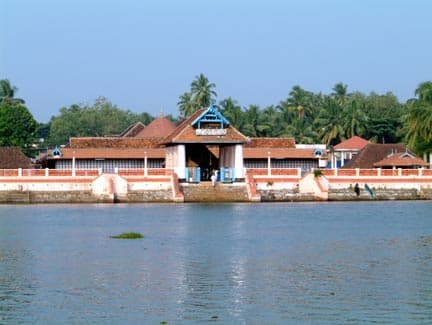
Thriprayar Temple
The Thriprayar Temple, also known as the Shree Ramaswami Temple, is a significant Hindu temple located in Triprayar, Thrissur district, Kerala, India. It is dedicated to Lord Rama, the seventh incarnation of Vishnu, who is depicted with four arms holding a conch, discus, bow, and garland. The temple's origin story involves the idol being worshipped by Krishna in Dwarka, later immersed in the sea, and eventually found by fishermen.