
Ganapati Temple, Redi
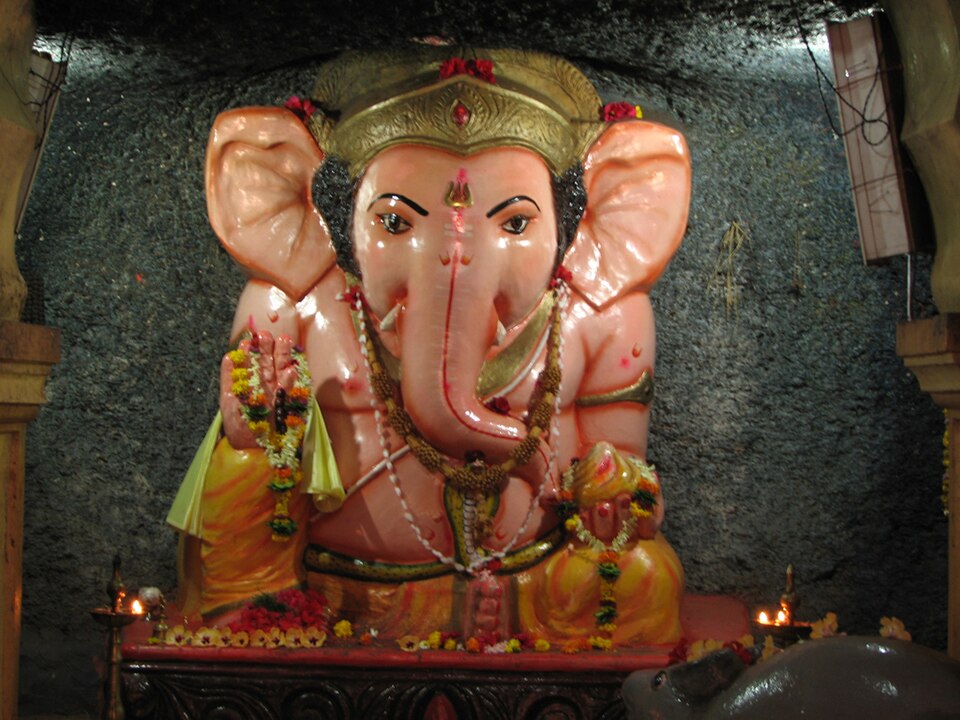
The Ganapati Temple in Redi, Maharashtra, India, is a notable Hindu shrine dedicated to Lord Ganesha. The temple's primary idol was discovered in an iron ore mine in 1976, with local tradition attributing its origin to the Pandavas.
Key Facts
- ›The Ganapati idol was discovered in an iron ore mine near Redi in 1976.
- ›The idol is approximately 6 feet tall and 4 feet wide, depicted in a sitting position.
- ›Unlike most Ganesha idols, this one is Dwibhuja (two-armed) rather than Chaturbhuja (four-armed).
- ›A mouse idol, the vahana of Ganesha, was found two months after the main idol.
- ›Local belief suggests the idol was made by the Pandavas during their reign.
Ganesha
Religious Pilgrimage, Archaeological Discovery
Pandava
Iron Ore
Sadashiv Kambli, Pandava
Dwibhuja Ganesha Idol
About Ganapati Temple, Redi
The Ganapati Temple in the village of Redi, Maharashtra, India, is a significant Hindu pilgrimage site dedicated to Lord Ganesha. Situated approximately 30 kilometers from Vengurla, the temple is renowned for its unique idol of Ganesha, which was discovered in 1976.
Discovery and Iconography
The idol of Lord Ganesha was unearthed from an iron ore mine near Rewati port. Local accounts credit a man named Sadashiv Kambli with visualizing the buried statue in a dream and inspiring its excavation from the seashore. Subsequent investigations have led to the belief that the statue was crafted by the Pandava brothers during their historical period of rule. The idol stands about 6 feet in height and 4 feet in width. Notably, it is depicted in a sitting position and is Dwibhuja, possessing two arms, which is a departure from the more common Chaturbhuja (four-armed) form of Ganesha idols. The vahana, or mount, of Ganesha, a mouse idol, was found through further digging approximately two months after the discovery of the main deity.
Significance
The Ganapati Temple at Redi holds importance as a religious destination and is also of interest due to the unique circumstances of its discovery and the specific iconography of its principal deity. The association with the Pandavas adds a layer of historical and mythological significance to the site.
Source: Wikipedia ↗
Frequently Asked Questions
Where is the Ganapati Temple, Redi located?
The Ganapati Temple is situated in the small village of Redi, approximately 30 km from Vengurla, in Maharashtra, India. The village is known for its iron ore mines.
How was the Ganapati idol discovered?
The Ganapati idol was found in 1976 within one of the iron ore mines near Rewati port. Local accounts suggest a person named Sadashiv Kambli had a dream about a buried statue and convinced workers to excavate it from the seashore.
What is unique about the Ganapati idol at Redi?
The idol is distinctive for being Dwibhuja, meaning it has two arms, whereas most Ganesha idols are Chaturbhuja with four arms. It is also depicted in a sitting posture.
What is the supposed origin of the Ganapati idol?
Historical investigation and local tradition suggest that the statue was created by the Pandava brothers during their period of rule.
When was the mouse idol found?
The mouse idol, which serves as the vahana (mount) for Lord Ganesha, was discovered through further excavation approximately two months after the main idol was unearthed.
Related Temples (Hindu)

Taraknath Temple
The Taraknath Temple, located in Tarakeswar, West Bengal, India, is a significant Hindu pilgrimage site dedicated to Lord Shiva, worshiped here as Tarakanatha. Constructed in 1729, it features a distinct Bengal architectural style with an 'atchala' structure and an adjacent 'natmandir'. The temple is renowned for its belief that a dip in the nearby Dudhpukur tank fulfills prayers and is considered one of the 64 Jyotirlingas.

Tanot Mata Temple
The Tanot Mata Temple is a significant Hindu shrine located in the Jaisalmer district of Rajasthan, India, near the Pakistan border. Revered as a form of Goddess Hinglaj Mata, the temple is famously associated with the Indian victories in the Indo-Pakistani Wars of 1965 and 1971, with local folklore attributing the successful outcomes to divine intervention. The Border Security Force of India now manages the temple complex, which also includes a victory tower and a war museum.
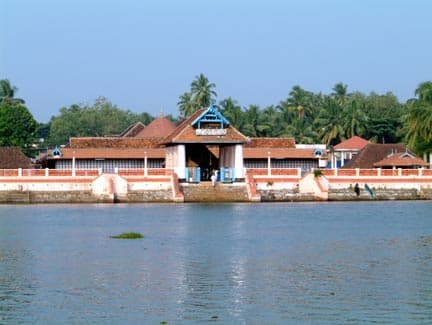
Thriprayar Temple
The Thriprayar Temple, also known as the Shree Ramaswami Temple, is a significant Hindu temple located in Triprayar, Thrissur district, Kerala, India. It is dedicated to Lord Rama, the seventh incarnation of Vishnu, who is depicted with four arms holding a conch, discus, bow, and garland. The temple's origin story involves the idol being worshipped by Krishna in Dwarka, later immersed in the sea, and eventually found by fishermen.