
Fullara
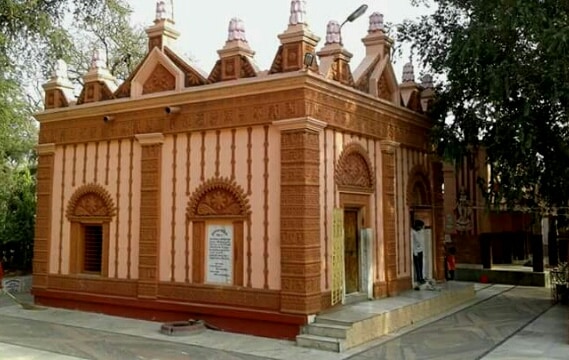
Fullara is a temple-town located in the Birbhum district of West Bengal, India. It is renowned as one of the 51 Shakti Peethas, a significant pilgrimage site where the lower lip of Goddess Sati is believed to have fallen. The temple's sanctum sanctorum houses a large stone, symbolizing Devi Sati, instead of an idol.
Key Facts
- ›Fullara is recognized as one of the 51 Shakti Peethas.
- ›The temple is dedicated to Goddess Sati, with her lower lip believed to have fallen here.
- ›There is no idol in the sanctum; a large stone representing Devi Sati is worshipped.
- ›A significant 10-day fair is held annually near the temple during Magh Purnima.
- ›A large pond is situated next to the temple, historically significant in local legends.
- ›The temple-town is located in the Bolpur subdivision of Birbhum district, West Bengal.
Sati, Durga
Shakti Peetha, Pilgrimage Site, Mythological Importance
Magh Purnima Fair
Pond
About Fullara
Fullara Temple
Fullara is a significant temple-town situated in the Birbhum district of West Bengal, India. It holds a prominent place in Hindu tradition, recognized as one of the revered 51 Shakti Peethas. These sites are believed to mark the locations where parts of Goddess Sati's body fell after Lord Shiva's Tandava dance, following her self-immolation.
Mythology and Worship
According to local mythology, the lower lip of Goddess Sati is said to have fallen at Fullara. The temple's sanctum sanctorum is unique in that it does not house an idol or image. Instead, a large stone, symbolizing Devi Sati, is the central object of worship. Adjacent to the temple lies a large pond, which features in local legends, including a story about Hanuman collecting lotuses from it.
Festivals and Significance
Fullara is an active site of worship and a destination for pilgrims. Annually, a 10-day fair is organized near the temple during Magh Purnima, attracting many devotees and visitors. Its status as a Shakti Peetha makes it a spiritually important location for Hindus.
Source: Wikipedia ↗
Frequently Asked Questions
What is Fullara famous for?
Fullara is a prominent temple-town in West Bengal, India, most famous for being one of the 51 Shakti Peethas. It is believed to be the site where the lower lip of Goddess Sati fell.
What is worshipped at the Fullara temple?
Instead of a traditional idol or image, the main object of worship in the sanctum sanctorum of the Fullara temple is a large stone, which symbolizes Goddess Sati.
Are there any special events or festivals at Fullara?
Yes, a notable 10-day fair is organized near the Fullara temple annually. This fair takes place during the period of Magh Purnima.
What is the significance of the pond near the temple?
A large pond is located adjacent to the Fullara temple. Local legends associate this pond with the story of Hanuman collecting 108 blue lotuses from it for Sri Ramachandra's worship of Goddess Durga.
Related Temples (Hindu)

Taraknath Temple
The Taraknath Temple, located in Tarakeswar, West Bengal, India, is a significant Hindu pilgrimage site dedicated to Lord Shiva, worshiped here as Tarakanatha. Constructed in 1729, it features a distinct Bengal architectural style with an 'atchala' structure and an adjacent 'natmandir'. The temple is renowned for its belief that a dip in the nearby Dudhpukur tank fulfills prayers and is considered one of the 64 Jyotirlingas.

Tanot Mata Temple
The Tanot Mata Temple is a significant Hindu shrine located in the Jaisalmer district of Rajasthan, India, near the Pakistan border. Revered as a form of Goddess Hinglaj Mata, the temple is famously associated with the Indian victories in the Indo-Pakistani Wars of 1965 and 1971, with local folklore attributing the successful outcomes to divine intervention. The Border Security Force of India now manages the temple complex, which also includes a victory tower and a war museum.
Thriprayar Temple
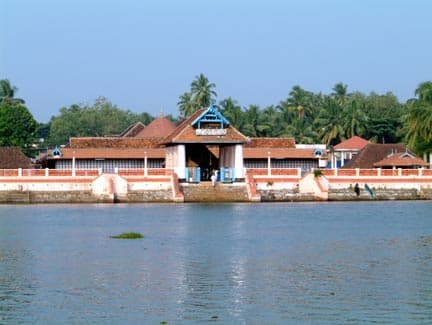
The Thriprayar Temple, also known as the Shree Ramaswami Temple, is a significant Hindu temple located in Triprayar, Thrissur district, Kerala, India. It is dedicated to Lord Rama, the seventh incarnation of Vishnu, who is depicted with four arms holding a conch, discus, bow, and garland. The temple's origin story involves the idol being worshipped by Krishna in Dwarka, later immersed in the sea, and eventually found by fishermen.