
Ettumanoor Mahadevar Temple
The Ettumanoor Mahadevar Temple is an ancient Shiva temple located in Kottayam, Kerala, India, and is considered one of the major Shiva temples in the region. The temple is renowned for its Dravidian mural paintings, particularly the "Dance of Shiva" fresco, and its significant festival featuring seven and a half golden elephants. Its name has multiple mythological origins, including associations with deer, eight Brahmin families, or Lord Shiva appearing in eight forms.
Key Facts
- ›The present temple structure was reconstructed in 1542 CE.
- ›It features extensive Dravidian mural paintings, including the famous Pradosha Nritham (Dance of Shiva).
- ›The temple is known for its grand annual festival which includes the display of seven and a half golden elephants (Ezharaponnana).
- ›Mythological origins of the name Ettumanoor are linked to deer, eight Brahmin families, or Lord Shiva's eight forms.
- ›The temple is believed to have been visited by the Pandavas and sage Vyasa.
- ›Adi Sankaracharya is said to have composed the 'Soundarya Lahari' while staying at the temple.

Shiva
- Major Shiva Temple In Kerala
- Renowned For Its Dravidian Mural Paintings, Especially the Pradosha Nritham
- Site of the Significant Ezharaponnana Festival and Offering
- Believed To Be A Site of Worship For the Pandavas and Sage Vyasa
- Associated With Adi Sankaracharya's Composition of Soundarya Lahari
Travancore Kingdom
Arattu Festival, Ezharaponnana Darshan
Copper Sheets, Gold Plates
Pandavas, Sage Vyasa, Adi Sankaracharya, Anizham Thirunal Marthanda Varma
Pradosha Nritham Fresco, Ezharaponnana
About Ettumanoor Mahadevar Temple
The Ettumanoor Mahadevar Temple is an ancient and significant Shiva temple located in Kottayam, Kerala, India. It is recognized as one of the prominent Shiva temples in Kerala, standing alongside other major temples in the region.
History and Mythology
The temple's name, Ettumanoor, is steeped in mythology. Various traditions attribute its origin to the Malayalam words 'man oor,' meaning 'place of deer,' or 'Ettu Mana Ooru,' referring to 'The Land of Eight Namboothiri Manas' (Brahmin families) who were its original custodians. Another legend suggests the name derives from Lord Shiva appearing in eight (Ettu) distinct forms (maanam) at this location. Temple lore also states that the Pandavas and the sage Vyasa worshipped here.
Architecture and Art
The present temple structure, including its gopuram and surrounding fortification, was reconstructed in 1542 CE. The temple is celebrated for its exquisite Dravidian mural paintings adorning its inner and outer walls. The fresco depicting Pradosha Nritham (Dance of Shiva) is considered one of the finest wall paintings in India. Architecturally, the temple showcases the engineering prowess of the Vishwakarma Sthapathis. Its roofs are covered with copper sheets and feature 14 ornamental tops. Within the temple, a golden flagstaff is surmounted by an idol of a bull, encircled by small bells and metal banyan leaves. Subordinate deities such as Bhagavathi, Sastha, Dakshinamoorthy, Ganapathy, and Yakshi are also installed, with a separate shrine dedicated to Lord Krishna.
Festivals and Rituals
The Ettumanoor Mahadevar Temple hosts the grand arattu festival, celebrated annually on the Thiruvathira day in February or March. A unique highlight of this festival is the 'Ezharaponnana' (seven and a half golden elephants), gold statuettes weighing approximately 13 kg, which are displayed to the public. The Thulabharam is another significant ritual where devotees offer items, often gold, fruits, or other materials, by weighing them against a person for whom a vow has been made. The Ezharaponnana Darshan, held at midnight on the eighth day of the ten-day festival, is a major draw for devotees.
Significance and Patronage
The temple is believed to be one of the wealthiest Devaswoms in Kerala, possessing numerous valuable assets. Tradition suggests that the philosopher Adi Sankaracharya composed his famous work 'Soundarya Lahari' during his stay at the temple. The Ezharaponnana statuettes are said to have been presented by Anizham Thirunal Marthanda Varma, the founder of the Travancore kingdom, though alternative stories attribute their origin to different historical events, including offerings made during periods of conflict.
Geography
Ettumanoor Mahadevar Temple is strategically located between the Ernakulam and Kottayam districts in Kerala, approximately 54 km from Ernakulam and 12 km from Kottayam.
Source: Wikipedia ↗
Frequently Asked Questions
What is the significance of the Ezharaponnana at Ettumanoor Mahadevar Temple?
The Ezharaponnana refers to eight golden elephant statuettes, seven large and one half-sized, kept in the temple vault. They are displayed annually during the temple festival on the eighth night, a significant event for devotees.
What are the architectural features of Ettumanoor Mahadevar Temple?
The temple architecture is a testament to Vishwakarma Sthapathis' engineering skills, featuring Dravidian mural paintings on its walls and 14 ornamental tops with copper-sheeted roofs. A golden flagstaff topped with a bull idol is also present.
What is the mythological origin of the name Ettumanoor?
The name Ettumanoor has several mythological origins. One theory suggests it comes from 'man oor,' meaning 'place of deer.' Another links it to 'Ettu Mana Ooru,' signifying 'The Land of Eight Namboothiri Manas' or Brahmin families. A third belief is that Lord Shiva appeared in eight (Ettu) different forms (maanam) here.
What are the main rituals or festivals celebrated at Ettumanoor Mahadevar Temple?
The most significant festival is the arattu festival, celebrated on Thiruvathira day in February-March. The Ezharaponnana Darshan, a key ritual during this festival, attracts many devotees. Thulabharam, where individuals are weighed against offerings, is another important ritual.
Who is believed to have worshipped at Ettumanoor Mahadevar Temple in ancient times?
Temple tradition holds that the Pandavas, the heroes of the Mahabharata, and the sage Vyasa worshipped at this temple. It is also believed that the philosopher Adi Sankaracharya wrote his renowned work 'Soundarya Lahari' while staying here.
Related Temples (Hindu)

Chintalarayaswami Temple
The Chintalarayaswami Temple, also known as Sri Chintala Venkataramana Temple, is a Hindu Vaishnavite temple located in Tadipatri, Andhra Pradesh. Dedicated to Venkateswara, a form of Vishnu, it is renowned for its Vijayanagara architecture and granite sculptures, including a chariot-shaped Garuda Mandapa with rotating wheels.
Kotappakonda
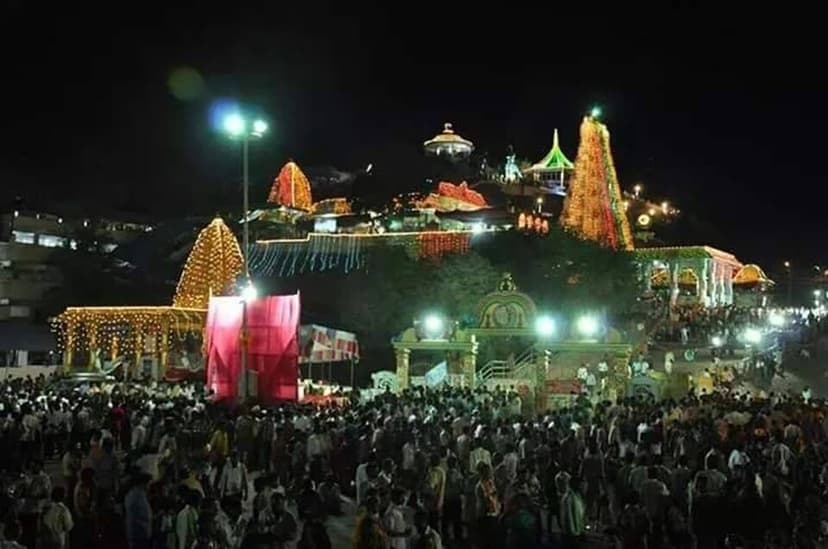
Kotappakonda is a significant Hindu pilgrimage site in Andhra Pradesh, India, centered around the ancient Sri Trikoteswara Swamy Temple, dedicated to Lord Shiva. Renowned for its three distinct peaks, the site is a major Shaivite center, drawing large crowds, especially during the annual Maha Shivaratri festival.

Kumararama
The Kumararama Temple, also known as Bhimarama or Chalukya Kumararama Bhimeswara Temple, is a significant Hindu temple dedicated to Lord Shiva, located in Samalkota, Andhra Pradesh. It is one of the five Pancharama Kshetras and is renowned for its unique limestone Shiva Lingam, which is 16 feet tall and pierces through the roof to the second floor.