
Elephanta Caves
5th-9th centuries CE·India
The Elephanta Caves are a collection of rock-cut temples on Elephanta Island in Mumbai Harbour, India, predominantly dedicated to the Hindu deity Shiva. These UNESCO World Heritage Site caves, carved from solid basalt rock, are renowned for their intricate sculptures depicting Hindu legends and syncretism with Buddhist iconography, dating primarily from the 5th to 9th centuries CE.
Key Facts
- ›The Elephanta Caves are a UNESCO World Heritage Site located on Elephanta Island, Mumbai, India.
- ›They consist of five Hindu caves and some Buddhist stupa mounds and caves.
- ›The caves are primarily dedicated to Lord Shiva and feature rock-cut stone sculptures, mostly in high relief.
- ›The most celebrated sculpture is the Trimurti Sadashiva, a three-faced depiction of Shiva.
- ›The caves date from the 5th to 9th centuries CE, with many scholars placing their completion around 550 CE.
- ›The Portuguese colonialists named the site Elephanta after finding elephant statues, and the main cave ceased to be an active place of worship during their rule.

Shiva
- Unesco World Heritage Site
- Significant Examples of Rock-Cut Architecture and Sculpture
- Showcases Syncretism of Hindu and Buddhist Iconography
- Depicts Key Shaivism Legends and Theology
Basalt Rock
Trimurti Sadashiva, Nataraja, Yogishvara, Ardhanarishvara, Gangadhara, Shiva Slaying Andhaka, Wedding of Shiva
Ganges River
About Elephanta Caves
The Elephanta Caves form a collection of rock-cut temples situated on Elephanta Island, also known as Gharapuri, within Mumbai Harbour, India. Designated as a UNESCO World Heritage Site, these caves are predominantly dedicated to the Hindu deity Shiva and are renowned for their magnificent rock-cut stone sculptures, primarily in high relief. The artwork within the caves displays a syncretism of Hindu and Buddhist ideas and iconography, carved from solid basalt rock.
Historical Context and Dating
The Elephanta Caves are generally dated between the 5th and 9th centuries CE, with many scholars suggesting completion around 550 CE. While the exact ruling dynasties responsible for their creation are debated among scholars, the style of the carvings has led to attributions to various Hindu dynasties of the period. The Portuguese colonialists, who established a base on the island, named the site "Elefanta" after discovering elephant statues. During their rule, the main cave, Cave 1, ceased to be an active place of worship.
Architectural and Sculptural Highlights
The caves are hewn from solid basalt rock, and their layout often follows a mandala pattern. Cave 1, also known as the Great Cave, is the largest and most significant. It houses several celebrated sculptures that narrate Hindu legends. Among the most prominent are the Trimurti Sadashiva, a colossal three-faced depiction of Shiva, and panels illustrating the Nataraja (Lord of the Dance) and Yogishvara (Lord of Yogis) forms of Shiva. Other notable sculptures include Ardhanarishvara (a composite of Shiva and Parvati), Gangadhara (Shiva bringing the Ganges river to earth), and depictions of Shiva slaying the demon Andhaka, as well as the wedding of Shiva and Parvati.
Significance and Preservation
Beyond their artistic and architectural merit, the Elephanta Caves hold significant religious and historical importance. They offer profound insights into Shaivism, as well as themes from Shaktism and Vaishnavism. Although much of the artwork has suffered defacement and damage over time, efforts for preservation began in the early 20th century under British India officials, with extensive restoration undertaken by the Indian government in the 1970s. Today, the site is maintained by the Archaeological Survey of India, ensuring its continued protection and accessibility for visitors.
Source: Wikipedia ↗
Frequently Asked Questions
Where are the Elephanta Caves located?
The Elephanta Caves are situated on Elephanta Island, also known as Gharapuri, in Mumbai Harbour, approximately 10 kilometers east of Mumbai in the Indian state of Maharashtra. The island is located less than 2 kilometers west of the Jawaharlal Nehru Port.
What deities are primarily worshipped at the Elephanta Caves?
The Elephanta Caves are predominantly dedicated to the Hindu god Shiva. While Shiva is the primary deity, the artwork also reverentially displays themes from the Shaktism and Vaishnavism traditions of Hinduism.
What is the historical period of the Elephanta Caves?
The rock-cut temples at Elephanta date from the 5th to the 9th centuries CE. Many scholars consider them to have been completed by approximately 550 CE.
What is the most famous sculpture at Elephanta?
The most celebrated and important sculpture at Elephanta is the Trimurti Sadashiva, a colossal 5.45-meter-high carving of a three-faced Shiva. This masterpiece is located on the south wall of the main cave.
Are the Elephanta Caves still an active place of worship?
The main cave, Cave 1, was a Hindu place of worship until the Portuguese arrived. During their rule, the island ceased to be an active place of worship. Today, the site is a protected monument maintained by the Archaeological Survey of India.
What architectural or artistic styles are evident at Elephanta?
The Elephanta Caves are known for their rock-cut architecture and high-relief sculptures. The main temple's orientation and layout form a mandala pattern. The artwork shows a syncretism of Hindu and Buddhist ideas and iconography, with influences from the Gupta period visible in some panels.
Related Temples (Hindu)

Chennakeshava Temple, Belur
The Chennakeshava Temple, located in Belur, Karnataka, is a 12th-century Hindu temple dedicated to Vishnu. Commissioned by King Vishnuvardhana, the temple is renowned for its intricate architecture, detailed sculptures, and narrative friezes depicting scenes from Hindu epics and daily life. It stands as a significant pilgrimage site and a testament to the artistic and theological achievements of the Hoysala Empire.
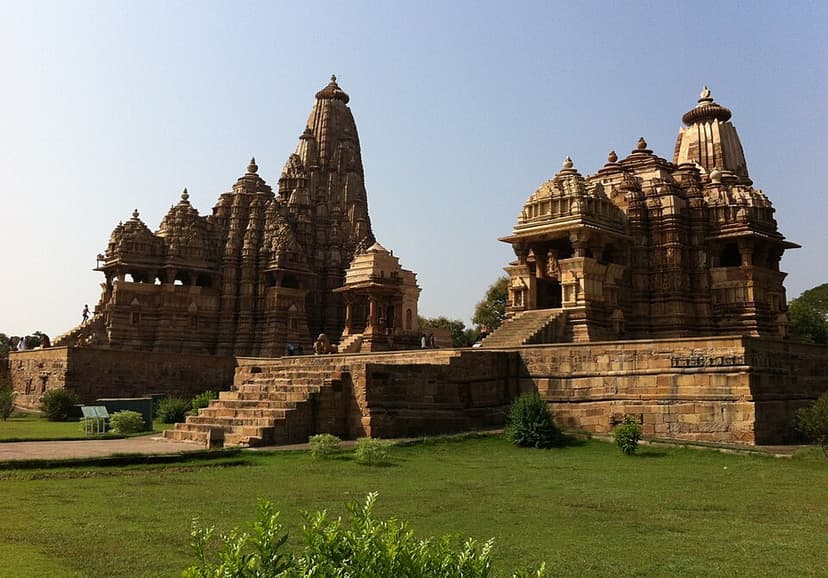
Khajuraho Group of Monuments
The Khajuraho Group of Monuments is a collection of Hindu and Jain temples located in Madhya Pradesh, India, renowned for their Nagara-style architecture and intricate sculptures, including notable erotic carvings. Primarily constructed by the Chandela dynasty between the 9th and 11th centuries, these temples showcase a blend of religious acceptance and artistic expression, reflecting aspects of medieval Indian life and Hindu philosophy.

Konark Sun Temple
The Konark Sun Temple, a 13th-century Hindu temple in Odisha, India, is dedicated to the Sun god Surya. Designed as a colossal chariot with immense stone wheels and horses, it represents the zenith of Kalingan architecture and artistic achievement. Though much of the temple now lies in ruins, its surviving structures are celebrated for their intricate carvings, depicting religious themes, daily life, and erotic scenes.