
Ekvira Mata Mandir
The Ekvira Aai Mandir is a Hindu temple located near the historic Karla Caves in Maharashtra, India. Dedicated to the goddess Ekvira, a form of Parvati, Yamai, and Renuka Devi, it is a significant pilgrimage site, particularly for the Koli and Agri communities. Devotees ascend approximately 500 steps to reach the temple, which is situated on a hill.
Key Facts
- ›The temple is dedicated to the Hindu goddess Ekvira, considered a form of Parvati, Yamai, and Renuka Devi.
- ›It serves as the Kuladevi (family deity) for the Koli community and is also worshipped by the Chandraseniya Kayastha Prabhu community.
- ›The temple is located near the ancient Buddhist site of Karla Caves.
- ›Devotees must climb around 500 steps to reach the temple, which is situated on a hill.
- ›The temple complex originally featured three shrines facing west, with the central and southern ones largely preserved.
- ›It is a prime worship spot for the Agri and Koli people, with devotees thronging the temple during Navaratri festivals.
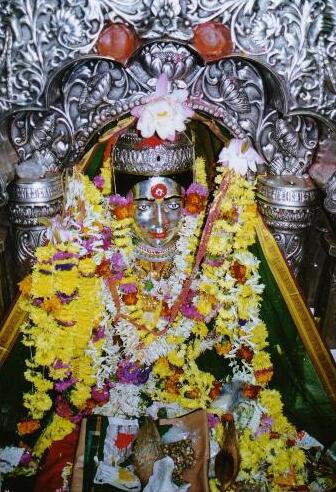
Ekvira, Parvati, Yamai, Renuka Devi, JogeśVarī Devi
- Kuladevi For the Koli Community
- Significant Pilgrimage Site For Koli and Agri People
- Located Near the Historic Karla Caves
- Associated With the Goddess Ekvira's Believed Magical Powers
Navaratri, Chaitra Navratra
About Ekvira Mata Mandir
Ekvira Aai Mandir
The Ekvira Aai Mandir is a significant Hindu temple located in the vicinity of the historic Karla Caves, near Lonavala in Maharashtra, India. The temple is dedicated to the goddess Ekvira, who is revered as a form of the goddesses Parvati, Yamai, and Renuka Devi. It holds particular importance as the Kuladevi (family deity) for the Koli community and is also a site of worship for the Chandraseniya Kayastha Prabhu community.
Location and Access
Situated on a hill, the temple requires devotees to ascend approximately 500 steps to reach its premises. The temple complex is surrounded by the ancient Karla Caves, a site of historical and archaeological interest now protected by the Archaeological Department. The worship of Goddess Ekvira takes place adjacent to these once-prominent Buddhist centers.
Architecture and Structure
The temple complex originally consisted of three similar shrines, all oriented to face west. While the central and southern shrines are largely preserved, the full extent of the remaining structures is known only from plans. In front of these main shrines are a maha-mandapa, a varsha-mandapa, and a gopura. The three primary shrines are encircled by sixteen smaller shrines dedicated to additional parivara devatas (attendant deities).
Religious Significance and Worship
The Ekvira Aai Mandir is a prime center of worship for the Agri and Koli people. Devotees gather in large numbers, especially during the occasions of Navaratri and Chaitra Navratra, to offer their prayers and celebrate. The goddess Ekvira is traditionally believed to possess magical powers. Alongside the main deity, a murti of Jogeshwari Devi is also present within the temple.
Source: Wikipedia ↗
Frequently Asked Questions
Who is the primary deity worshipped at Ekvira Aai Mandir?
The primary deity is the Hindu goddess Ekvira, who is regarded as a form of Parvati, Yamai, and Renuka Devi. She is considered the Kuladevi (family deity) for the Koli community.
Where is the Ekvira Aai Mandir located?
The Ekvira Aai Mandir is situated near the Karla Caves, close to Lonavala in Maharashtra, India. It is located on a hill overlooking the surrounding area.
What is the significance of Ekvira Aai Mandir for the Koli community?
Ekvira Mata is the Kuladevi, or family deity, of the Koli community. They hold the temple in high regard and celebrate festivals there, paying respects to the goddess annually.
What is the architectural history of the temple?
The temple complex originally comprised three similar shrines built in a row, all facing west. While the central and southern shrines are preserved, other structures exist only in plan. A maha-mandapa, varsha-mandapa, and gopura are located in front of these shrines.
What is the pilgrimage experience like at Ekvira Aai Mandir?
Reaching the temple involves an ascent of approximately 500 steps up a hill. Devotees often visit during Navaratri and Chaitra Navratra to worship and celebrate the goddess, who is believed to possess magical powers.
Related Temples (Hindu)

Taraknath Temple
The Taraknath Temple, located in Tarakeswar, West Bengal, India, is a significant Hindu pilgrimage site dedicated to Lord Shiva, worshiped here as Tarakanatha. Constructed in 1729, it features a distinct Bengal architectural style with an 'atchala' structure and an adjacent 'natmandir'. The temple is renowned for its belief that a dip in the nearby Dudhpukur tank fulfills prayers and is considered one of the 64 Jyotirlingas.

Tanot Mata Temple
The Tanot Mata Temple is a significant Hindu shrine located in the Jaisalmer district of Rajasthan, India, near the Pakistan border. Revered as a form of Goddess Hinglaj Mata, the temple is famously associated with the Indian victories in the Indo-Pakistani Wars of 1965 and 1971, with local folklore attributing the successful outcomes to divine intervention. The Border Security Force of India now manages the temple complex, which also includes a victory tower and a war museum.
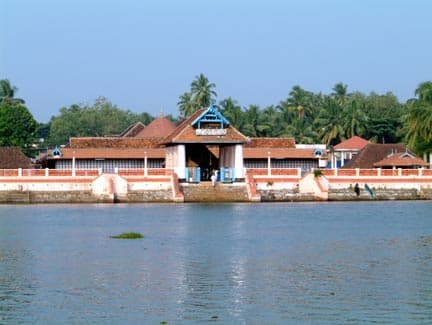
Thriprayar Temple
The Thriprayar Temple, also known as the Shree Ramaswami Temple, is a significant Hindu temple located in Triprayar, Thrissur district, Kerala, India. It is dedicated to Lord Rama, the seventh incarnation of Vishnu, who is depicted with four arms holding a conch, discus, bow, and garland. The temple's origin story involves the idol being worshipped by Krishna in Dwarka, later immersed in the sea, and eventually found by fishermen.