
Doul Govinda Temple
The Doul Govinda Temple, located in Rajaduar, North Guwahati, Assam, is a significant Hindu temple primarily dedicated to Lord Krishna. Originally built over 150 years ago and renovated in 1966, it is renowned for its vibrant Holi celebrations, which attract thousands of pilgrims annually.
Key Facts
- ›The temple is situated on the northern bank of the Brahmaputra River, at the foothills of Chandra Bharati hill.
- ›It is primarily dedicated to Lord Krishna, with a Namghar present within the same premises.
- ›The temple was first erected more than 150 years ago and underwent renovation in 1966.
- ›It is particularly famous for its five-day Holi celebrations in February-March, drawing about five thousand pilgrims.
- ›Daily worship includes bathing the idol, Archana, and evening Arati with devotional songs.
- ›Special ferry services are available from Guwahati to Rajaduar during the Holi festival.

Krishna
Religious Pilgrimage, Cultural Celebrations
Holi
Ganga Ram Barooah
Brahmaputra River
About Doul Govinda Temple
The Doul Govinda Temple is an important Hindu place of worship located in Rajaduar, North Guwahati, Assam, India. Situated on the northern banks of the Brahmaputra River, at the foothills of Chandra Bharati hill, the temple is primarily dedicated to Lord Krishna. The temple complex also includes a Namghar, a traditional prayer hall common in Assamese Vaishnavite culture.
History and Construction
Historical accounts suggest that the deity was brought to this location by Ganga Ram Barooah from Sandhyasar, a place near Nalbari. The initial structure of the Doul Govinda Temple was erected over 150 years ago. The temple underwent a significant renovation in 1966, preserving its spiritual and architectural heritage.
Religious Significance and Festivals
The Doul Govinda Temple holds considerable religious importance, particularly for its vibrant Holi celebrations. Observed annually in February-March, the festival spans five days and attracts approximately five thousand pilgrims to the temple premises. Numerous programs are organized during this time, making it a major event for devotees and the local community. Special ferry services are arranged from Guwahati to Rajaduar to facilitate the travel of pilgrims during the Holi period.
Daily Worship and Visitor Experience
Daily religious activities at the temple begin early in the morning with the opening of the doors at 7 AM. The priest performs rituals such as bathing the idol and offering Archana. Devotees start arriving about an hour later and continue their prayers throughout the day, with a break in the afternoon. The evening concludes with Arati, accompanied by devotional songs or 'Kirtaan'. Prasada, a sacred food offering, is distributed to devotees in an open hall during the afternoon.
The temple's location offers scenic views and opportunities for leisure. Between November and April, visitors can enjoy river cruises on the Brahmaputra and walk along its sandy beaches. The temple is accessible year-round, providing a spiritual retreat for visitors.
Access and Transportation
Reaching the Doul Govinda Temple is convenient, with regular ferry and steamer services operating from Fancy Bazaar Ferry Ghat in Guwahati to Rajaduar. From the Rajaduar landing, it is a short five-minute walk to the temple. Additionally, trekkers are available from various points, including Kharguli, Adabari, and Jalukbari, offering alternative routes for visitors.
Source: Wikipedia ↗
Frequently Asked Questions
Where is the Doul Govinda Temple located?
The Doul Govinda Temple is located in Rajaduar, on the northern banks of the Brahmaputra River, at the foothills of Chandra Bharati hill in North Guwahati, Assam, India.
What deity is worshipped at Doul Govinda Temple?
The Doul Govinda Temple is primarily devoted to Lord Krishna. There is also a Namghar within the temple premises.
When was the Doul Govinda Temple built?
The first structure of the Doul Govinda Temple was erected more than one hundred and fifty years ago. It was subsequently renovated in 1966.
What is the Doul Govinda Temple famous for?
The temple is well-known for its Holi celebrations, which are observed for five days in February-March. This festival attracts approximately five thousand pilgrims and features various programs.
What are the daily activities at Doul Govinda Temple?
Daily activities commence at seven in the morning with the opening of the doors, followed by the priest bathing the idol and performing Archana. Worshipers arrive an hour later. The temple closes in the afternoon and reopens for evening Arati with devotional songs. Prasada and Bhoga are distributed daily.
How can one reach Doul Govinda Temple?
The temple is accessible via ferries and steamers from Fancy Bazaar Ferry Ghat to Rajaduar, which is a five-minute walk from the landing point. Trekkers are also available from Kharguli, Adabari, and Jalukbari.
Related Temples (Hindu)

Taraknath Temple
The Taraknath Temple, located in Tarakeswar, West Bengal, India, is a significant Hindu pilgrimage site dedicated to Lord Shiva, worshiped here as Tarakanatha. Constructed in 1729, it features a distinct Bengal architectural style with an 'atchala' structure and an adjacent 'natmandir'. The temple is renowned for its belief that a dip in the nearby Dudhpukur tank fulfills prayers and is considered one of the 64 Jyotirlingas.

Tanot Mata Temple
The Tanot Mata Temple is a significant Hindu shrine located in the Jaisalmer district of Rajasthan, India, near the Pakistan border. Revered as a form of Goddess Hinglaj Mata, the temple is famously associated with the Indian victories in the Indo-Pakistani Wars of 1965 and 1971, with local folklore attributing the successful outcomes to divine intervention. The Border Security Force of India now manages the temple complex, which also includes a victory tower and a war museum.
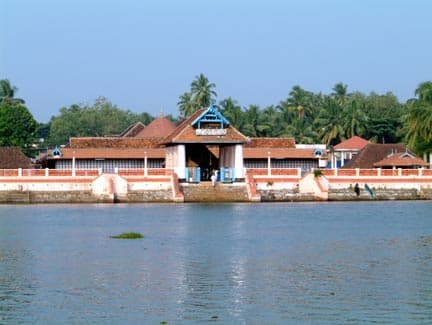
Thriprayar Temple
The Thriprayar Temple, also known as the Shree Ramaswami Temple, is a significant Hindu temple located in Triprayar, Thrissur district, Kerala, India. It is dedicated to Lord Rama, the seventh incarnation of Vishnu, who is depicted with four arms holding a conch, discus, bow, and garland. The temple's origin story involves the idol being worshipped by Krishna in Dwarka, later immersed in the sea, and eventually found by fishermen.